Hieromartyr
Nilus Smirnov
Cleric martyred for the faith of Christ in 1938, during the Soviet persecution.
- Feast
- September 19old style October 2
- Reposed
- 193820th century
- Order
- Martyrs
Life
Holy Hieromartyr Nilus Smirnov was an archpriest in Moscow and died in the Bamlag camp, at the Izvestkovaya station, on 2 October 1938.
His life
He was born on 5 November 1881 in the village of Peresypkino in the Kirsanov district of the Tambov province, in the family of the teacher Michael Smirnov; his mother was the daughter of a priest. After the town school of Kirsanov he worked between 1897 and 1921 on the railway in various posts: clerk, assistant freight cashier, assistant ticket cashier, ticket cashier, telegraphist, head of the household of the Jubilee settlement of workers of the Moscow-Kazan Railway. In 1921 he asked for ordination and acceptance into the clergy of Moscow. He served as deacon at the church of the Resurrection in Sokolniki, and two weeks later, on 22 October 1921, he was ordained priest for the church of the Holy Unmercenaries Cyrus and John at the Serbian metochion in Moscow. In November 1921 Patriarch Tikhon confirmed him as priest of the church of the Resurrection in Sokolniki. In August 1923 he was moved to the church of the Dormition at the Kartyni churchyard, Mozhaisk district, and in November 1925 again to the church of the Resurrection in Sokolniki. In 1930 he began to act as rector and a year later was confirmed; in 1931 he was raised to archpriest.
On 17 February 1933 he was arrested and imprisoned at Butyrka. A false witness, questioned as early as June 1932, had said that Father Nilus "always gives fiery sermons... enjoys great authority among the dark masses of believers, workers and former people, merchants, and believers have warned him several times that he speaks too openly against Soviet power". On 23 February, before the investigator, he said: "I received the priesthood at a time when the struggle with unbelief had taken fierce forms, when a strong departure of the faithful from the Church had begun, and, seeing this ebb of the people from Orthodoxy, I resolved to devote my life to the Church... In my sermons I tried to call the faithful to keep the moral rules; all these sermons called to the struggle with unbelief and atheism." On 22 March 1933 the Special Council of the OGPU sentenced him to three years of exile in the Northern Territory. He served it at Kargopol, where he unloaded timber from rafts, stacked it and sawed firewood.
Returned from exile in 1936, he was named to the church of the Epiphany in the village of Buygorod, Volokolamsk district. In May 1937, at the invitation of the priest Boris Nedumov, he served at the church of Saint John the Baptist in the village of Ivanovskoye on the Lama, Lotoshino district. The prosecutor of the Lotoshino district had sent the NKVD chief as early as April 1937 two letters about the "counter-revolutionary actions" of the priests; one said that the priests Boris Nedumov and Nilus Smirnov, "staying in the village only a month and a half, took a series of measures for the revival of religious propaganda", founded a choir and organised evenings with music, collections of 50 kopecks or a rouble. In March, taking his daughter Ekaterina to school in Buygorod, Father Nilus had told the director that his daughter was a believer, went to church and wore a cross, so the school's anti-religious work should not concern her and she should not be forced into the pioneers; the director, as a witness, later told the investigator that the girl's wearing of the cross influenced the other pupils and that some pupils had begun to go to church.
In August 1937 he went to the diocesan administration to ask for appointment to the village of Nizhnee Vasilyevskoye, but, before the decision, he was arrested on 20 August and imprisoned at the Taganka. He denied belonging to a counter-revolutionary group, but admitted that on 26 July 1937 he had said in a sermon: "Heavy taxes have been laid on the clergy, I ask the parishioners to help the clergy with money." He admitted that at the Paschal service of 1937 he had told the faithful that, under the new law, the Church was no longer the state's and Soviet power had no right to touch it. He denied the rumour about the "president" and the flight to the North Pole. Of his work in the Lotoshino district he said: "I see no counter-revolutionary action in my work. Indeed, I speak very often to the faithful from the ambo... I told the school director not to force people with anti-religious work." On 22 September he was interrogated for the last time and answered: "No, I do not admit guilt." On 9 October 1937 an NKVD troika sentenced him to ten years in a camp. He was sent to the Bamlag, in the Amur region, to the Izvestkovaya station, where he died on 2 October 1938 and was buried in an unknown place.
He is remembered on 2 October, on 7 February (a movable day) in the Synaxis of the New Martyrs and Confessors, on 13 July in the Synaxis of the Saints of the Birobidzhan diocese, and on 5 September (a movable day) in the Synaxis of the Saints of Moscow, in the new style.
Commemorated the same day September 19
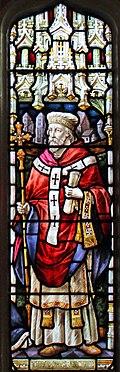 Theodore of CanterburySaint · Archbishop of CanterburySep 19
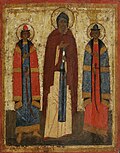 Theodore the BlackRight-Believing · Prince of Smolensk and YaroslavlSep 19
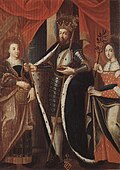 Goeric of MetzSaint · Bishop of MetzSep 19
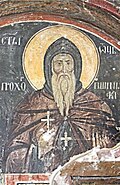 Prochorus of PčinjaVenerable · Monk of PčinjaSep 19
 The 156 Martyrs of PalestineMartyrSep 19
 Trophimus, Sabbatius and DorymedonHoly Martyrs · Martyrs of SynnadaSep 19
 Lantpert of FreisingSaint · Bishop of FreisingSep 19
 Alexis of Zosima HermitageVenerable · Elder of Zosima HermitageSep 19
 Constantine GolubevHieromartyr · Archpriest at BogorodskSep 19
- Konstantin UlemetsRight-Believing · Prince of YaroslavlSep 19
 David FyodorovichRight-Believing · Prince of YaroslavlSep 19
- Nicholas of IskrivkaHieromartyrSep 19