Saint
Pardus of Larino
Saint of the 6th and 7th centuries associated with Larino, whose cathedral is dedicated to him.
- Feast
- May 25old style June 7
- Reposed
- 6017th century
- Place
- Lucera
Life
Saint Pardus (Pardo), according to tradition a bishop from the Peloponnese, who lived in Italy, in the region of Lucera, and is the patron of the town of Larino, whose cathedral bears his name. The dates of his life are very uncertain: the second, fourth, sixth or seventh century are mentioned. He is commemorated on 25, 26 and 27 May (at Larino), and on 17 October. Our sources call him a saint of the Roman Catholic Church and show no formal Orthodox veneration.
The sources
His Life survives in two redactions: an anonymous "Vita brevior" (about the tenth century) and a "Vita prolixior" written by Radoino, a Levite of Larino (about the tenth to eleventh century), whose data contradict each other. The chronology is uncertain: he is usually linked to the seventh century, with the traditional year of death 650, but a strong tradition links him with Pope Gregory II (715 to 731). He is often called the first bishop of Larino, but, according to his Lives, he was bishop of an unknown city of the Peloponnese (or perhaps Myra), driven from his see.
The story
According to the Lives, he was a little old man with a thick white beard, who lacked a thumb. "Inflamed with indignation against the impious, he was forced to go into exile." He left his church in the Peloponnese with some clerics and, wandering, reached Rome, the pope (according to the "Vita prolixior" Cornelius, and according to the "Vita brevior" an unknown pope, who, in the view of Bishop Pietro Ranzano of Lucera, might have been Gregory the Great). Some of his fellow citizens asked him to return to his place, but, old and weak, he refused and, on the advice of the pope, gave them the chance to elect another bishop. The pope offered him many bishoprics, but he chose to retire to the region of Lucera, in Foggia, to spend the rest of his life in prayer: a choice not random, since Lucera had been part of ancient Magna Graecia and many communities of Greek descent were there. On the way he spent three years at Larino (the ancient Larinum), where he preached the Gospel. At Lucera he helped build two churches, then spent his last years in penance and prayer and died, on 17 October, in an unknown year, in his little cell. The documents do not say that he was bishop of Lucera.
The translation of the relics
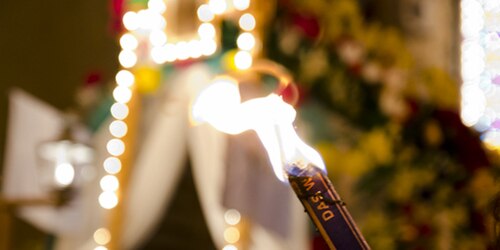
According to the two Lives, Larino was taken by the Saracens and destroyed (some historians give the years 841 to 842); the inhabitants scattered to the villages round about, and in the deserted city the people of Lesina stole the relics of Saints Primianus and Firmianus. Returning, the Larinesi learned of the theft and that it had been carried out by the Lesinesi together with people of Lucera, who had moved there with their bishop before the destruction of their city by Constans II, in 663. They organized and set out for Lesina to take their relics, but, inexplicably, took the road toward Lucera and, passing it, reached the place where Saint Pardus was buried, finding his body intact except for the thumb. They took the finding of the body as a sign of God's will and, taking a farm cart adorned with flowers, carried the remains to Larino, whose patron he was proclaimed. It was 26 May 842. According to tradition, near the town the oxen, tired from the journey, stopped; the guide begged Saint Pardus to help him and was shown to plant his staff in the ground; at once water gushed forth, which quenched the oxen's thirst, and to this day, in memory of the event, in that place is the Spring of Saint Pardus.
Commemorated the same day May 25
 Urban ISaint · Bishop of RomeMay 25
 Aldhelm of MalmesburySaint · Bishop of SherborneMay 25
 Zenobius of FlorenceSaint · First Bishop of FlorenceMay 25
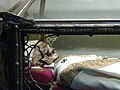 Dionysius of MilanSaint · Bishop of MilanMay 25
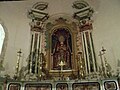 Canius of AtellaHieromartyr · Bishop of AcerenzaMay 25
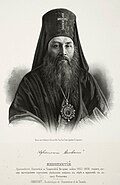 Innocent of KhersonSaint · Archbishop of Kherson and TauridaMay 25
- Dúnchad of IonaVenerable · Abbot of IonaMay 25
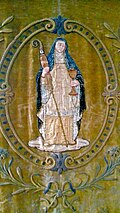 Adela of Orp-le-GrandSaintMay 25
- CelestineMartyrMay 25
- Cruimther Cael of Cill MorVenerableMay 25
- DizanSaintMay 25
- EgilhardMartyrMay 25