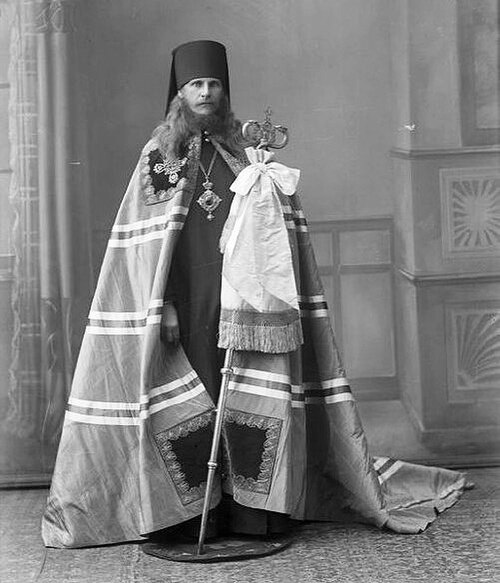
Hieromartyr
Peter Zverev
Archbishop of Voronezh
Archbishop of Voronezh and Zadonsk who died in 1929 on Anzer Island at Solovki, a New Martyr of Russia.
- Feast
- January 25old style February 7
- Reposed
- 192920th century
- Place
- Anzersky Island
- Order
- Martyrs
Life
Saint Peter Zverev, Hieromartyr, was Archbishop of Voronezh and Zadonsk, a pastor beloved by the people, who died in the Solovki camp, on Anzer Island, on 7 February 1929. Born in 1878 at Moscow into a priest's family, he was numbered among the New Martyrs of Russia by the Council of Bishops in August 2000. He is commemorated on 25 January (7 February New Style), the day of his death.
Youth
Born Vasily Konstantinovich Zverev into a priest's family, with his mother Anna and his brothers Arseny, Cassian (an officer, killed at the front in 1914) and Vasily, and sister Varvara, his father served at the church of a village near Moscow, then at the church of Alexander Nevsky beside the house of the governor-general of Moscow and finally at the church of Saint Sergius of the Chudov monastery in the Kremlin. He studied at the classical gymnasium in Moscow from 1886, and in 1895 entered the historical-philological faculty of Moscow University, then the Kazan Theological Academy, where he received monasticism with the name Peter and was ordained hieromonk. He graduated in 1902 as candidate of theology, with a thesis "Exegetical Analysis of the First Two Chapters of the Epistle of the Apostle Paul to the Hebrews".
He taught at the Oryol seminary (1902), in 1903 was first rector of the Prince Vladimir church by the diocesan house in Moscow and diocesan missionary, was inspector at the Novgorod seminary (1907 to 1908), and in 1909 was named abbot of the Transfiguration monastery at Belyov, close to Optina, which he often visited. In 1910 he was raised to archimandrite, and in 1915 received the Order of Saint Anna. In October 1916 the Holy Synod decided to send him to the United States for missionary service, but the journey did not take place and in 1916 and 1917 he was a preacher at the front. On 6 March 1918 he was named abbot of the Dormition monastery at Tver, was taken hostage by the Cheka, but was soon released.
Bishop
On the Meeting of the Lord, 15 February 1919, he was consecrated by Patriarch Tikhon Bishop of Balakhna, vicar of the Nizhny Novgorod diocese. He introduced strict services by the typikon at the Pechersky monastery and taught children the Law of God. In May 1921 he was arrested on the charge of inflaming religious fanaticism, held at Lubyanka, Butyrka and Taganka, where he fell gravely ill, then at Petrograd, and was released on 4 January 1922 through the intercession of the faithful. On 2 January 1922 he was named Bishop of Staritsa, vicar of Tver, and on 31 March he urged his flock to give for those starving on the Volga and ordered that all valuables be given from churches except what was needed for services; he himself always served as a simple priest. In summer 1922 he condemned the Renovationist movement. On 24 November 1922 he was arrested and exiled for two years to Turkestan, to Perovsk, where he lived in hard conditions, got scurvy and lost his teeth. He was released in 1924, reached Moscow and for a short time governed the Moscow diocese.
On 16 July 1925 Metropolitan Peter Polyansky sent him to Voronezh, to help the aged Archbishop Vladimir Shimkovich; he served at the Holy Trinity church on Ternovaya Polyana and the Transfiguration church of the Pokrovsky girls' convent, and his services drew many faithful. From January 1926, after Vladimir's death, he was named, at the faithful's request, Archbishop of Voronezh and Zadonsk. He was a wonderful preacher and orator and encouraged congregational singing. His authority caused that same year a great return of the faithful from Renovationism to the Patriarchal Church. This clashed with the opposition of the authorities: he was summoned many times to the militia and the secret police, and the faithful formed a group of ten to twelve to guard him and tried a demonstration in his defence; when in August they wanted to interrogate him again, about three hundred faithful came after him, dispersed by mounted militia. Tuchkov, head of the secret police section, demanded his removal from Voronezh. In autumn 1926 a group of nine believing workers sent a telegram to the 15th party conference, writing that Tuchkov demanded that the only archbishop chosen by the people, Peter Zverev, go to Moscow, and asking that the reason be inquired into.
In the night of 29 November 1926 he was arrested, accused of spreading counter-revolutionary rumours and setting believers against the authorities. He did not admit guilt; on 22 March 1927 he was sentenced to ten years' imprisonment. His associates were also convicted, among them the lathe operator Vasily Siroshtan, who admitted that he had initiated the telegram, with five years, and Dmitry Moskalyov, with ten, and the archbishop's cell attendant, Archimandrite Innocent Beda, with three.
At Solovki
He was sent to the Solovki camp. He worked as an accountant at the food store, where to prevent theft only clergy were placed. He could serve in the church of Saint Onuphrius the Great, kept the rule of prayer strictly and lived by the typikon. After Hieromartyr Archbishop Hilarion Troitsky was sent away from Solovki, he was chosen by the exiled bishops as head of the Orthodox clergy in the camp. He led secret services, and after the antimension was taken from the clergy, the services were performed on the breast of Archbishop Peter. He was sent to the punishment isolator on the Zayatsky islands. The writer Oleg Volkov, also a prisoner at Solovki, recalled: "It was revenge on a man who had risen above the bustle of persecutions and humiliations. Invulnerable by the height of his moral appearance, even with a broom in his hand, as sweeper or watchman, he inspired reverence. Even the guards, trained in rudeness, stepped aside from his path and could not refrain from greeting him; he answered as always, raising his hand and blessing with a barely visible sign. If he passed a high chief, the chief saw him from afar and turned away, as if not noticing the bishop; chiefs in mirror-polished boots took independent poses: they quailed before the archbishop's dignified calm. His Grace Peter walked slowly, leaning lightly on his staff and not bowing his head, and against the background of the ancient monastery walls it looked like a prophetic vision: the departing figure of a shepherd, as if leaving the earth where triumphant violence had established itself." In this time he wrote an akathist to Venerable Herman of Solovki.
Death
He fell ill with typhus in January 1929 and was put in the typhus barracks opened at the Golgotha-Crucifixion skete on Anzer island, where he died after two weeks. Before death he wrote in pencil on the wall: "I no longer wish to live, the Lord calls me to Himself." Against the ban of the administration, he was vested in mantle and klobuk, with the omophorion, with cross, prayer rope and Gospel in his hands, and the funeral service was done; a cross was placed on the grave.
Veneration
On 1 November 1981 the Council of Bishops of the Russian Church Outside Russia canonized the Synaxis of the New Martyrs and Confessors of Russia, without names, and later Archbishop Peter was also included. In June 1999 Patriarch Alexy II blessed a working group, headed by Hieromonk Damascene (Orlovsky) and Hegumen Herman of Solovki monastery, to search for the place of burial; the relics were found on 17 June 1999 and placed at Solovki monastery. A witness recalls that the bodies of all those buried, dead of typhus, were black, except one, later confirmed to be Archbishop Peter's, which was white. At the Council of Bishops in August 2000 he was glorified as hieromartyr. On 9 August 2009, eighty years after his repose and ten years after the finding of the relics, they, except the venerable head, which by Patriarch Kirill's resolution stayed at Solovki, were brought to the Alexeevsky Akatov convent in Voronezh.
Commemorated the same day January 25
 Gregory the TheologianSaint · Archbishop of ConstantinopleJan 25
 Felicitas of RomeMartyrJan 25
 Vladimir of KyivHieromartyr · Metropolitan of Kyiv and HalychJan 25
- Castinus of ByzantiumSaint · Bishop of ByzantiumJan 25
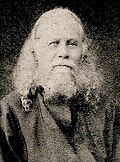 Anatoly of OptinaVenerable · Elder of OptinaJan 25
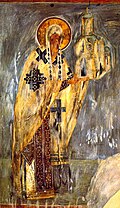 Moses of NovgorodSaint · Archbishop of Novgorod and PskovJan 25
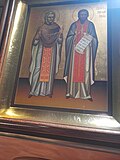 Constantine VeretskyHieromartyr · ArchpriestJan 25
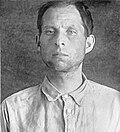 Andrew ArgunovMartyr · Chairman of the parish councilJan 25
- Bretanion of TomisSaint · Bishop of TomisJan 25
 Joasaph of BorovskHieromartyr · Archimandrite of the Trinity LavraJan 25
 Nicholas PopovHieromartyr · ArchpriestJan 25
 Sergius KrestnikovVenerable Martyr · Choir directorJan 25