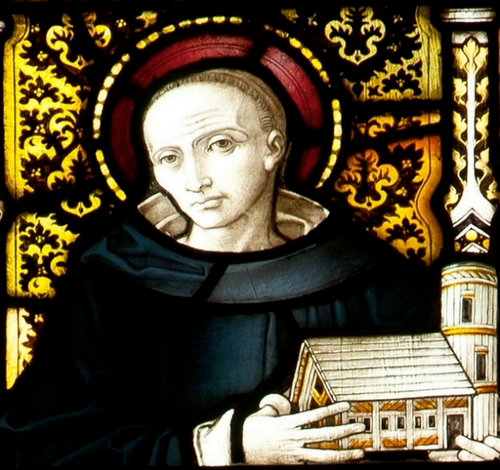
Venerable
Piran of Cornwall
Abbot in Cornwall
Cornish abbot of the fifth century, possibly of Irish origin, patron of tin miners.
- Feast
- March 5old style March 18
- Era
- unknown
- Place
- Perranzabuloe
- Order
- Venerables
Life
Saint Piran of Cornwall (Pyran, Perran) was an abbot and saint of the fifth century in Cornwall, probably of Irish origin. He is the patron of the tin miners and is generally regarded as patron of Cornwall, although Michael and Petroc also have some claim to this title. His flag, a white cross on a black field, is the flag of the county of Cornwall, and his feast falls on 5 March.
Origin
Most scholars hold that Piran was Irish, that he spent some time in Wales, and that he was expelled from Ireland because of his influential preaching of the Gospel of Christ. G. H. Doble thought him a Welshman from Glamorgan, citing a chapel dedicated to him at Cardiff, now lost. From medieval times he was identified with Saint Ciaran of Saighir, founder of the monastery of Seir-Kieran in County Offaly. Joseph Loth, however, argued on philological grounds that the names Piran and Ciaran cannot belong to the same person. Charles Plummer proposed an identification with Ciaran of Clonmacnoise, but this is doubtful, since that saint died young of yellow fever and was buried at Clonmacnoise.
Life
The Life of Saint Piran, written in the fourteenth century, probably at Exeter Cathedral, is a copy of an earlier Middle Irish life of Ciaran of Saighir, with different parentage and a changed ending which takes in his works in Cornwall, especially details of his death and the movements of his shrine. For this reason scholars hold that no certain history can be drawn from it.
According to tradition, pagans in Ireland tied him to a millstone and cast him from a cliff into the stormy sea. The sea grew calm at once and Piran came safely to the sandy shore in Cornwall now called Perranzabuloe. He lived first as a hermit, then many Christians came to him and founded the monastery of Lanpiran, of which he became abbot. Again according to tradition, one day on his hearth, blackened with soot and perhaps made of tin ore, tin melted into a white cross, from which the flag of Cornwall is said to come. A late source says that he was put to death in 480 by Theodoric or Tador, king of Cornwall, and that with him were buried at Perranzabuloe the relics of the Blessed Martin the Abbot, brought by him from Ireland.
Veneration
Piran was buried at Perranzabuloe. His relics were later found and distributed throughout the country, among others to Exeter Cathedral, and his head was kept in a reliquary in the old church at Perranzabuloe. Churches and wells are dedicated to him in Cornwall, and in Brittany the villages of Loc-Pezran and Saint-Péran bear his name. His feast is on 5 March, and a calendar of Launceston gives also 18 November. At Perranzabuloe the Perran Feast is kept on the last Monday of October, and on the Sunday before it services are held at the site of his old oratory.
Commemorated the same day March 5
 Nikolaj VelimirovićSaint · Bishop of Ohrid and ŽičaMar 5
 Ivan ShishmanRight-Believing · Tsar of BulgariaMar 5
 Mark the AsceticVenerable · Ascetic writerMar 5
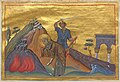 Phocas the GardenerMartyr · Martyr of SinopeMar 5
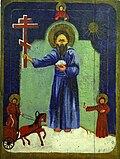 Conon the GardenerMartyr · Martyr of PamphyliaMar 5
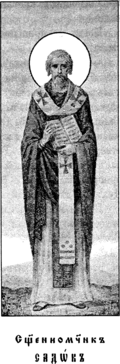 Sadoth of PersiaHieromartyr · Bishop of Seleucia-CtesiphonMar 5
- Theophilus of CaesareaSaint · Bishop of Caesarea in PalestineMar 5
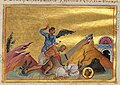 Adrian of CaesareaMartyr · Martyr of Caesarea in PalestineMar 5
 Conon of IsauriaHieromartyr · Martyr of IsauriaMar 5
- Nicholas PokrovskyHieromartyr · PriestMar 5
- John the BulgarianNew Martyr · New Martyr of ConstantinopleMar 5
- Archelaus of AntinoeMartyrMar 5