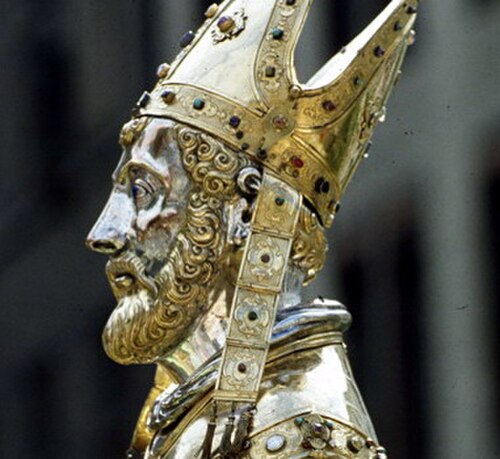
Saint
Servatius of Maastricht
Bishop of Tongeren
Bishop of Tongeren, patron saint of the city of Maastricht, who died in 384.
Life
Saint Servatius of Tongeren, hierarch, was bishop of Tongeren and is counted the first bishop of Maastricht, the patron of the city of Maastricht. He passed to the Lord on 13 May 384. His name was very widespread in the Middle Ages, and his day, 13 May, is among the days of the “Ice Saints”, in mid-May.
Bishop and man of the councils
Servatius was a widely travelled man, sent on missions, and a determined opponent of Arianism. His presence is recorded at several councils. In 343 he took part in the Council of Sardica, today Sofia, where he upheld faith in the Holy Trinity, against most of the Eastern bishops, who held with Arianism, and was, according to Athanasius, a defender of his against the Arians. When Athanasius, the leading opponent of Arianism, was exiled to Trier, in 336 or 343, he may have met Servatius, for both worked against the Arian bishops and priests of the region. According to Sulpicius Severus, at the Council of Rimini, in 359, he again spoke strongly against Arianism. It is told, however, that there he was deceived and signed an Arian creed; the sources are unclear. After the co-emperor Constans was killed, in 350, Servatius was sent to the emperor Constantius II, at Edessa, as envoy of the usurper Magnentius, to present Constans as an unworthy tyrant; the mission did not succeed, but shows how highly he was thought of.
The later accounts
An important source, though not from his time, is Gregory of Tours, who writes, at the end of the sixth century, of an Aravatius, regarded by most scholars as Servatius, bishop of Tongeren, who died at Maastricht. According to him, when the Huns threatened Tongeren, the bishop, keeping vigil at the tomb of Saint Peter, at Rome, had a vision in which the destruction of Tongeren was foretold because of its sins, and Peter gave him the keys of heaven, with the power to forgive sins. He returned, brought the relics of his predecessors to Maastricht, where he died and was buried beside the Roman road, near the bridge. It is not known how much of the account is history. Two old lives make him born in Armenia and a cousin of Saint John the Baptist, and medieval legends also credited him with three hundred and seventy-five years of life. In 1075 the priest Jocundus wrote a new Life and a book of miracles after the saint’s death.
Relics and church
Servatius may be the founder of several early churches in the diocese, among them the basilica of Our Lady at Tongeren, where excavations in the 1980s revealed a fourth-century church, and the one at Maastricht. In the basilica of Saint Servatius at Maastricht, excavations in the 1990s showed the remains of a sixth-century church, built by Bishop Monulph, with a late Roman structure at its center, perhaps the saint’s tomb. His relics are kept in the basilica of Saint Servatius at Maastricht; a part is in the basilica of Saint Lambert at Düsseldorf. In the twelfth century Heinrich von Veldeke wrote his life in verse, in the Limburg dialect. He is patron of the towns of Maastricht, Grimbergen and Schijndel.
Commemorated the same day May 13
 Euthymius the AthoniteVenerable · Georgian monk on Mount AthosMay 13
 Agnes of PoitiersVenerable · Abbess of the Holy Cross ConventMay 13
 Glyceria of HeracleaMartyr · Virgin of HeracleaMay 13
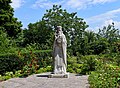 Macarius of KanivVenerable Martyr · Archimandrite of KanivMay 13
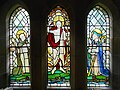 MaelVenerable · Hermit on Bardsey IslandMay 13
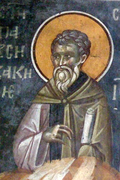 Pausicacus of SynadaSaint · Bishop of SynadaMay 13
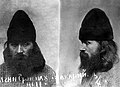 Macarius TeleginVenerable Martyr · Hieromonk of Chudov MonasteryMay 13
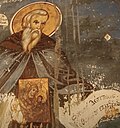 Gabriel the IberianVenerable · Monk of Iviron MonasteryMay 13
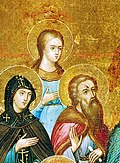 Glykeria of NovgorodRighteous · Righteous virginMay 13
 Macarius of GlushitsaVenerableMay 13
- Natalis of MilanSaint · Archbishop of MilanMay 13
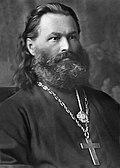 Basil SokolovHieromartyr · PriestMay 13