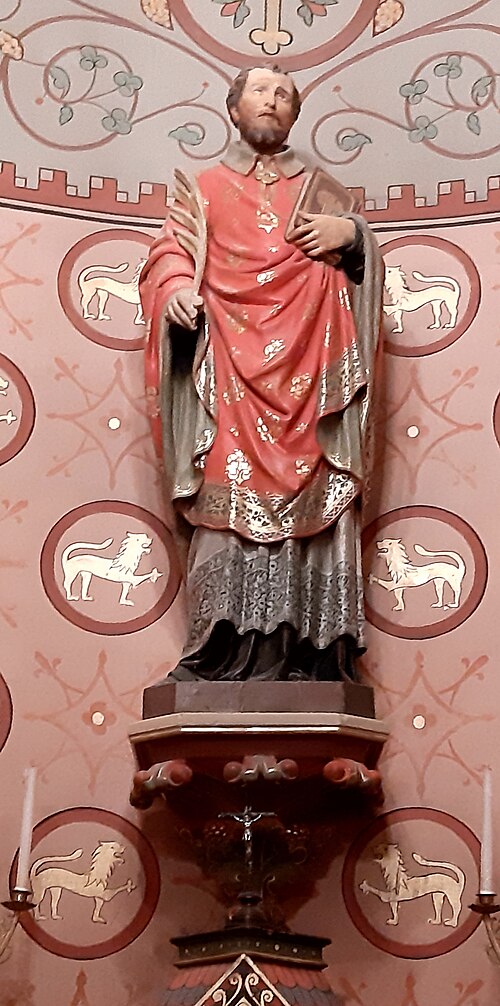
Martyr
Severus of Novempopulania
Saint of Novempopulania, who reposed in the 5th century, venerated in the Western Church.
- Feast
- November 3old style November 16
- Reposed
- 4075th century
- Place
- Saint-Sever
- Order
- Martyrs
Life
Severus of Novempopulania (Saint Sever) is one of the evangelizers of Novempopulania, who died a martyr around 407, and he must not be confused with the many other saints named Severus. His feast, at first on 1 November, a sign of great antiquity, was moved to 3 November when the feast of All Saints was established in the 9th century; it is confirmed by a bull of Pope Clement V to Gaillard, abbot of Saint-Sever from 1307 to 1312. There are three versions of the saint's anonymous life, written in the 11th century, which differ.
According to some sources, Severus was a Vandal, a grandson of Genseric and a nephew of King Huneric, first in line to the throne but set aside and banished for his conversion to Christianity. According to another, he was a Catholic Gothic legionary from a family that had taken part in the westward migration of the Gothic peoples. Setting out from Carthage for Jerusalem with his companions Geroncius, Justin, Clarus, Babylas, John and Polycarp, he reached Rome, where the pope judged them worthy of the priesthood and sent them to evangelize Novempopulania, where the Arian Visigoths were persecuting the Christians. Severus was put at the head of the mission, and Clarus was consecrated bishop. Landing at Agde, they parted at Toulouse: Clarus to the north, Geroncius to the south, Severus to the west, into Aquitaine, with the relics of Saint Saturninus, which he left at Sos. He founded chapels dedicated to the children martyred at Cyricus, from which the Saint-Cricq place names come.
His preaching grew, and the governor of the fort of Palestrion received the order to arrest him. The governor's daughter was ill, and Severus healed her; the governor became a Christian and placed Severus and his companions under his protection. Learning of this, the Gothic king was enraged, marched with his troops on Palestrion and had Severus beheaded in 407, on the slope of Brille. According to the hagiography, Severus became a cephalophore: as soon as he was beheaded he took his head in his hands and walked to a neighbouring hill, where the abbey of Saint-Sever was built, from which the town of the same name came. According to other sources, in 445 Severus was captain and physician of Palestrion and was killed in the attack of the Vandal king Genseric. A holy martyr of the undivided Church, venerated in the West.
Commemorated the same day November 3
 PirminVenerable · Missionary and founder of monasteriesNov 3
 WinefrideMartyr · Virgin of WalesNov 3
 Libertinus of AgrigentoHieromartyr · First bishop of AgrigentoNov 3
 Acepsimas, Joseph and AeithalasHieromartyr · Martyrs of PersiaNov 3
 Rumwold of BuckinghamConfessorNov 3
 Alexander ZverevHieromartyr · ArchpriestNov 3
 Anna Vsevolodovna of KyivVenerable · Princess of KyivNov 3
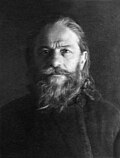 Basil ArkhangelskyHieromartyr · PriestNov 3
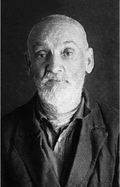 Peter OrlenkovHieromartyr · PriestNov 3
- AcepsimasVenerable · Syrian priest and hermitNov 3
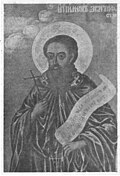 Pimen of ZografVenerable · Monk and icon painterNov 3
- Nikoloz MnatobiSaintNov 3