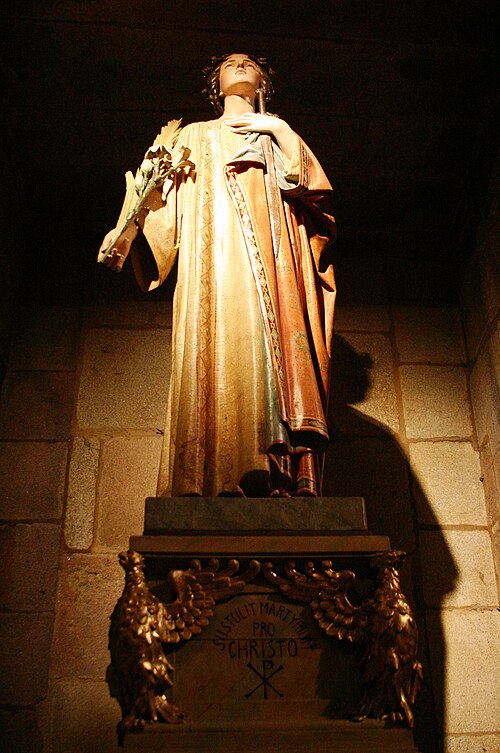
Venerable Martyr
Susanna of Rome
Virgin and martyr of Rome, put to death in the persecution of Diocletian around 295.
Life
Saint Susanna of Rome, virgin and martyr, is remembered as one of the martyrs of the persecution of Diocletian, at the end of the third century. The account of her life, written between 450 and 500, is largely legend, but behind it stands, in the view of scholars, a real martyr of this name. Her feast is on 11 August.
The tradition of her life
According to tradition, Susanna was the daughter of the priest Gabinus and the niece of Bishop Caius of Rome, and a kinswoman of the Emperor Diocletian. She was brought up in the Christian faith and received a fine education, and her beauty was joined with purity and a burning love for Christ. She lived in her father's house, in which there was a house church.
The emperor wished to give her in marriage to a relative of his, Maximian, who ruled with him, and in some accounts Maximian is the son of Diocletian. Susanna refused, wishing to remain a virgin after the example of the Mother of God. To persuade her she was brought to the palace, and the empress Serena, a secret Christian, encouraged her to stand firm. The account adds that Maximian, coming to her by night, saw her at prayer and an angel shining above her, and fled in fear.
Martyrdom
The consul Macedonius summoned her to the forum and demanded that she offer sacrifice to Jupiter. She refused and confessed her faith. By order of Diocletian her head was cut off, about the year 295, in her father's house. Her relatives, the official Claudius with his wife Prepedigna, their sons Alexander and Cuphius and Maximus, the brother of Claudius, received baptism and were put to death as well. Her father Gabinus and Bishop Caius received the crown of martyrdom soon after her. According to tradition, the empress secretly buried her body.
Veneration
Her house was turned into a church, and the building, first named after Caius, bore the name of Susanna by the year 595, probably because of the popularity of the martyr's story. Today it is the church of Santa Susanna in Rome. Her commemoration in the General Roman Calendar was removed in 1969 because of the legendary character of the account, and her veneration has remained tied to this church. It is also said that her relics were brought from Braga to Santiago de Compostela in the twelfth century, where a church bears her name, and Susanna is, together with Saint James, patron of the city. The Orthodox Church commemorates her on 11 August.
Commemorated the same day August 11
 Nephon II of ConstantinopleSaint · Patriarch of ConstantinopleAug 11
 Alexander the Charcoal-burnerHieromartyr · Bishop of Comana in PontusAug 11
 Tiburtius of RomeMartyr · Martyr of RomeAug 11
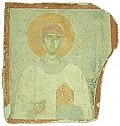 Euplus of CataniaMartyr · Deacon of CataniaAug 11
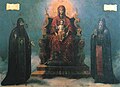 Basil and Theodore of the Kiev CavesHoly Venerable Martyrs · Monks of the Kiev CavesAug 11
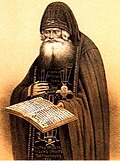 John of SviatohirskVenerable · Recluse of Sviatohirsk MonasteryAug 11
- Maximus of Asia MinorMartyrAug 11
- Alexander of RomeMartyrAug 11
- Anastasios PanerasNew MartyrAug 11
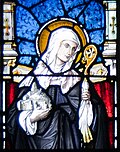 AttractaVenerableAug 11
- BanbhnatVenerableAug 11
- Basil of the CavesVenerable MartyrAug 11