Venerable
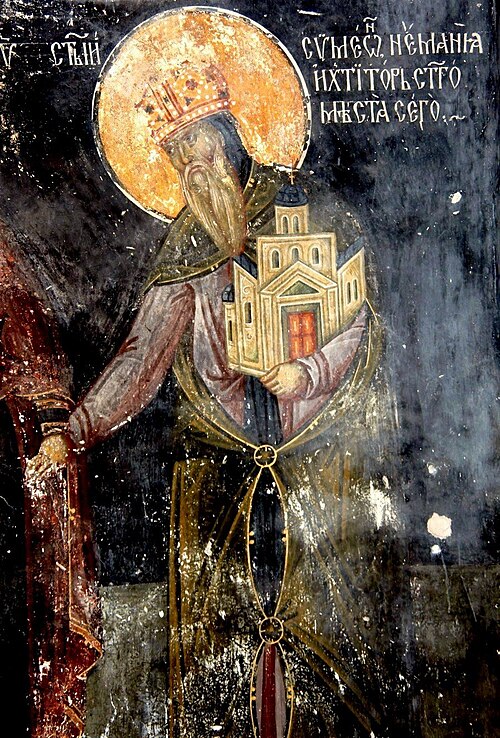
Symeon the Myrrh-streamer
Grand Prince of Serbia
Ruler of Serbia from 1166 to 1196, founder of the Nemanjić dynasty, tonsured at Hilandar with his son Sava.
- Feast
- February 13old style February 26
- Reposed
- 119912th century
- Place
- Hilandar
- Order
- Venerables
Life
Venerable Symeon the Myrrh-streamer, in the world Stefan Nemanja, was grand župan of Serbia from 1166 to 1196, founder of the Nemanjić dynasty and of the medieval Serbian state. In old age he gave up his throne, became a monk, and died at the monastery of Hilandar on Mount Athos on 13 February 1199 (some sources give 1200). The Serbian Orthodox Church honours him as one of its greatest saints.
Beginnings
He was born around 1113 or 1114 at Ribnica in Zeta, near today's Podgorica, a son of Zavida, a prince of Zahumlje. Because western Zeta belonged to the Church of Rome, he first received a Latin baptism. After the family moved to the land of Raška, he was baptized again in the Eastern rite at Ras, in the church of the Holy Apostles Peter and Paul, and he remained faithful to Orthodoxy for the rest of his life.
The grand župan
In 1166 the emperor Manuel I Komnenos set Nemanja's elder brother Tihomir over the Serbs and gave Nemanja lands around the Ibar. A struggle for power followed among the brothers. According to the tradition kept by his son, Nemanja was imprisoned by his brothers in a cave and came out by help from above. He then defeated Tihomir and became grand župan of all Serbia, taking the name Stefan.
His relations with Byzantium were stormy. After a revolt, in 1172 he came barefoot, with a rope around his neck, before Manuel at Niš and laid his sword at the emperor's feet; Manuel left him in his office as a vassal. After Manuel's death in 1180 Nemanja allied with Hungary and enlarged his country with Zeta, Travunia and parts of the Morava valley and Kosovo. In 1189 he received the emperor Frederick Barbarossa at Niš, as the Third Crusade passed through. In 1191 he was defeated by the emperor Isaac II Angelos, but kept most of his land.
He also fought the Bogomils, at an assembly held around 1176, with harsh measures: their books were burned and their property confiscated, and he gave that property to lepers and the poor. He was a great builder of churches: Saint George at Ras (Đurđevi Stupovi, 1171), Saint Nicholas near Kuršumlija and above all Studenica, whose white marble church of the Mother of God, finished in 1190, became a model for Serbian art. With his wife Ana he had three sons, Vukan, Stefan and Rastko, and three daughters.
The monk
In 1192 his youngest son, Rastko, went to Mount Athos and became a monk with the name Sava, to his father's sorrow. On 25 March 1196, at an assembly at Ras, Nemanja handed the throne to his middle son Stefan (later called the First-Crowned) and became a monk with the name Symeon, while Ana received the monastic habit as Anastasia. He withdrew to Studenica, she to the convent at Kuršumlija. After about eighteen months he left for Athos to join his son.
With the emperor's permission, Symeon and Sava raised the monastery of Hilandar from its ruins and made it a home for Serbian monks. The charter of the monastery dates from that time. Symeon lived there in humility and ascetic labour. At the end, at nearly eighty-six, he asked to be laid on a mat before the icon of the Mother of God Hodegetria with a stone for a pillow, and he departed to the Lord before Sava and the brethren.
Relics and veneration
Sava composed his father's service, and both Sava and Stefan the First-Crowned later wrote his Life. In 1207 he brought the body to Serbia, where his brothers Stefan and Vukan were at war, and according to tradition they made peace when the relics arrived. The saint was laid to rest at Studenica, his own foundation, and myrrh flowed from the grave. This gave him his name, the Myrrh-streamer. The miracles at his tomb led to his canonization soon after his death.
His relics rest at Studenica, and he is also venerated at Hilandar. The Serbian Church keeps his feast on 26 February, which is 13 February by the Julian calendar.
Commemorated the same day February 13
 Aquila and PriscillaHoly Apostles · Missionary CoupleFeb 13
 Eulogius of AlexandriaSaint · Patriarch of AlexandriaFeb 13
 Fusca of RavennaMartyr · Child martyr of RavennaFeb 13
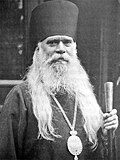 Seraphim SobolevSaint · Russian archbishop in BulgariaFeb 13
 Martinian of CaesareaVenerableFeb 13
 Zoe and PhotinaHoly Venerables · Venerables of PalestineFeb 13
 Seraphima of SezenovoVenerable · Abbess of Sezenovo ConventFeb 13
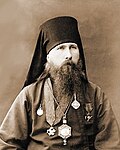 Eugene ZernovHieromartyr · Metropolitan of GorkyFeb 13
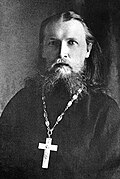 Zosima TrubachevHieromartyr · ArchpriestFeb 13
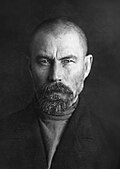 Basil GorbachevMartyr · Priest and iconographerFeb 13
- AimoVenerableFeb 13
- Anna KorneevaVenerable MartyrFeb 13