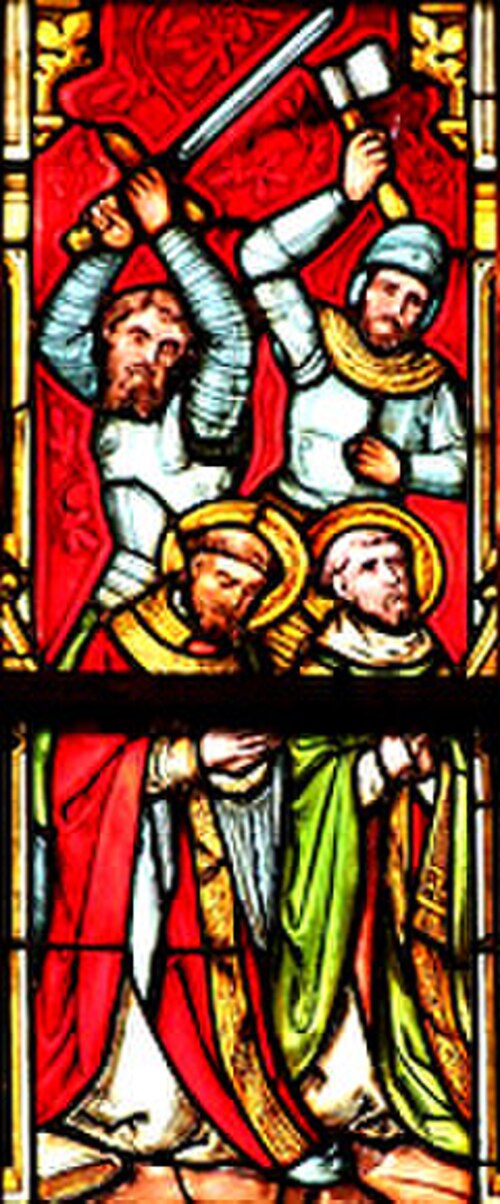
Holy Hieromartyrs
The Two Hewalds
Missionaries in Saxony
Anglo-Saxon missionaries killed in Old Saxony around 692, told apart by the color of their hair and complexion.
Life
The Two Hewalds, Hewald the Black and Hewald the White, were two Anglo-Saxon missionaries killed in Old Saxony about the year 692 (some say 695), told apart by the colour of their hair and complexion. They are honoured as patrons of Westphalia and are remembered on 3 October.
Both priests and companions, they were natives of Northumbria in England. Like many in their time, they spent years of study in the schools of Ireland. Hewald the Black was the more learned, but both were equally renowned for holiness of life. They seem to have known Saint Willibrord, the apostle of Frisia, and were moved by his zeal for the conversion of the Germans. Some sources number them among his eleven companions, but more probably they set out from England after Willibrord's departure, to bring their own cousins in Old Saxony to the faith. They began their mission about 690, in the land of the ancient Saxons, now part of Westphalia, in the dioceses of Münster, Osnabrück and Paderborn.
They were first lodged in the house of the steward of a Saxon chieftain. Bede says that the old Saxons have no king but are governed by several ealdormen, who cast lots for leadership in war and are equal in power in peace. The steward kept them for several days and promised to take them to the chieftain, whom they wished to convert and for whom they said they had a message of great importance. But the pagans, seeing them pray, sing psalms and receive communion, suspected that they planned to convert their lord, destroy their temples and change their religion. Inflamed with anger, they resolved on their death. An uprising followed, and both were seized. Hewald the White was killed quickly with the sword, while Hewald the Black was tortured and torn limb from limb. Their bodies were thrown into the Rhine. It is believed that this happened on 3 October at Aplerbeck, today a district of Dortmund, where a chapel still stands. When the chieftain heard of it he was angry and afraid of reprisals, and he put the murderers to death and burned their villages.
Christian sources describe miracles after their death: their bodies were carried, against the current, some forty miles to the place where their companions lived, and above them a light like a pillar of fire was seen, seen even by the murderers. One of their companions, the monk Tilmon, was shown in a vision by one of the martyrs that the bodies lay where he would see a pillar of light reaching from earth to heaven. Tilmon found them and buried them with the honours due to martyrs. A spring is said to have gushed forth at the place of martyrdom. From then on their memory has been kept every year in those parts.
Pepin, Duke of Austrasia, hearing of the wonders, had the bodies buried at Cologne in the collegiate church of Saint Kunibert. The heads were given to Bishop Frederick of Münster by Archbishop Anno of Cologne when the shrine was opened in 1074. The relics were probably destroyed by the Anabaptists in 1534. Saint Norbert, at Cologne in 1121, received two small vessels with relics of several saints, among them bones of the Hewalds. They are honoured as patrons of Westphalia, and their feast is kept in the dioceses of Cologne and Münster. Until the martyrdom of Saint Boniface in 754 they were the last missionaries killed in that region. At Druten in the Netherlands a church bears their name.
Commemorated the same day October 3
 Dionysius the AreopagiteHieromartyr · Bishop of AthensOct 3
 Damaris the AthenianMartyr · Athenian convert of Saint PaulOct 3
 Dionysius of the Kiev CavesVenerable · Hieromonk of the Kiev CavesOct 3
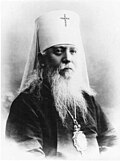 Agathangel PreobrazhenskyConfessor · Metropolitan of YaroslavlOct 3
 RusticusHieromartyr · Priest, companion of St. DenisOct 3
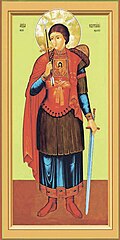 Eustathius of ApsiliaMartyrOct 3
- Menna of LorraineMartyrOct 3
- AbdalmasihMartyrOct 3
- Candidus of RomeMartyrOct 3
- ClervieSaintOct 3
- Dionysius of NovgorodVenerableOct 3
- EusebiusMartyrOct 3