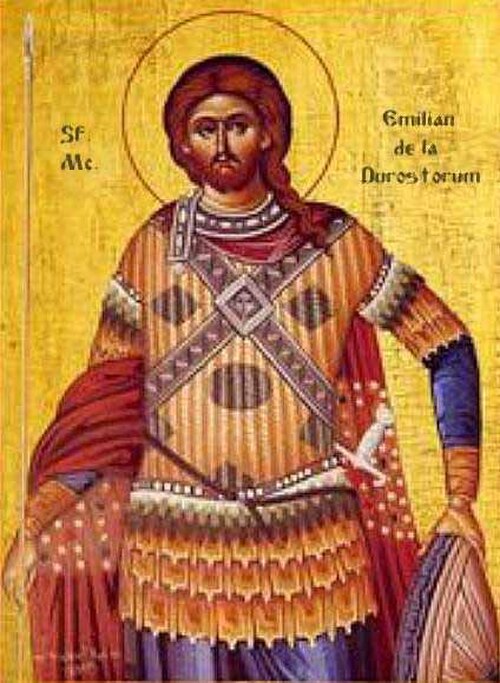
Martyr
Aemilianus of Durostorum
Soldier of Durostorum
Soldier of Durostorum, martyred in the year 362 under Julian the Apostate.
Life
Saint Aemilianus (Emilian) of Durostorum (today Silistra, Bulgaria) was a Roman soldier, burned alive on the bank of the Danube under the emperor Julian the Apostate, in the year 362 (some sources say 363). The Orthodox Church commemorates him on 18 July; the Serbian calendar commemorates him on 31 July.
The sources
We know of Aemilianus from Blessed Jerome, from Theodoret, and from a letter of Saint Ambrose of Milan to the emperor Theodosius the Great. The Bulgarian sources add Theophanes the Confessor and Nikephoros Kallistos and show that his life entered Slavonic hagiography from later copies, through the Paschal Chronicle, the Synaxarion of Constantinople and the Menologion of the emperor Basil II. It is believed that a first life was written soon after his death. Two early redactions survive: one based on Codex Vaticanus 866, the other on the ninth-century Codex Parisiensis.
The deed and the martyrdom
Julian the Apostate wanted to restore paganism, and this caused unrest. To Durostorum (Dristra) was sent as governor a certain Capitolinus, charged with uprooting Christianity. The inhabitants, frightened by his reputation, hid that many of them were Christians and showed themselves zealous pagans. Pleased, the governor gave a banquet. Aemilianus, a Christian, slipped into the pagan sanctuary and smashed the statues of the gods with a hammer (in another version he entered the feast itself and overturned the altar, ruining the sacrifice). According to the Romanian source, on 16 July 362 some men of Dristra, enjoying religious freedom, offered sacrifice to a god and held a feast; Aemilianus mingled with them, overturned the altar and fled.
For his deed an innocent man was accused. One source says that some soldiers seized a peasant, made him drunk and meant to burn him alive as a scapegoat; another, that the crowd was beating a peasant who happened to pass. Learning of this, Aemilianus came forward and confessed that he was the guilty one. The city was fined for hiding Christians. Aemilianus was scourged twice, then burned at the stake by the Danube after two days, on 18 July 362 according to the Romanian and Bulgarian sources. According to a legend, the fire did not touch him but burned his executioners, and he fell asleep peacefully in prayer; the Serbian and Ukrainian sources say that he lay down on the glowing coals and died praying, in 363. It is also said that Capitolinus's wife, herself a Christian, asked for the saint's relics and took care of the burial.
How the sources differ
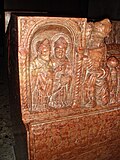
The sources do not agree in several respects. On the place and day of the martyrdom: according to the first redaction, based on Codex Vaticanus, Aemilianus was burned on 3 September at Gedina (located near today's village of Golesh); according to the second, based on Codex Parisiensis, on 18 July at Gezedina, beside Durostorum, near the village of Ostrov. In both he was buried near the place of his torment. At the beginning of the twenty-first century archaeological finds confirmed the existence of the places described, and earlier research (the 1970s) even connected the saint with a figure in an ancient tomb: a middle-aged man holding a hammer in his hand, the tool with which, according to his life, he shattered the idols. Medieval legends tell of a multitude of torments and date his death to 3 September, but these have no historical basis, says the Romanian source.
On his social rank: the later Slavonic redactions make him a slave or servant of the governor of Durostorum; the earliest show him of noble birth, son of the city's governor Sebastian (Sabbastianus, called prefect in the Romanian source), and a soldier, probably of the Legio XI Claudia. The Serbian and Ukrainian sources call him a Slav, with which the others do not agree, and say he was the governor's slave. The Serbian and Ukrainian sources also say that Julian had ordered the execution of all Christians in every province; the others do not mention this. The day of commemoration varies: 18 July among the Romanian and Bulgarian Orthodox, 31 July in the Serbian calendar, where he is remembered with the six ecumenical councils.
Commemorated the same day July 18
 Arnulf of MetzSaint · Bishop of MetzJul 18
 Stephen II of ConstantinopleSaint · Patriarch of ConstantinopleJul 18
 Philastrius of BresciaSaint · Bishop of BresciaJul 18
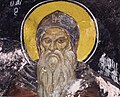 Pambo of NitriaVenerable · Desert FatherJul 18
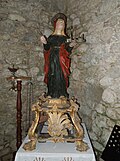 Symphorosa of TivoliMartyr · Martyr of TivoliJul 18
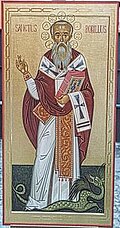 Rufillus of ForlimpopoliSaint · First bishop of ForlimpopoliJul 18
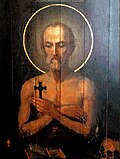 John the Much-SufferingVenerable · Monk of the Kiev CavesJul 18
- Hyacinthus of AmastrisMartyrJul 18
 Pamva the RecluseVenerable · Recluse of the Caves LavraJul 18
 Arnold of ArnoldsweilerRight-BelievingJul 18
- Arnulf of YvelinesSaintJul 18
- AthanasiusSaintJul 18