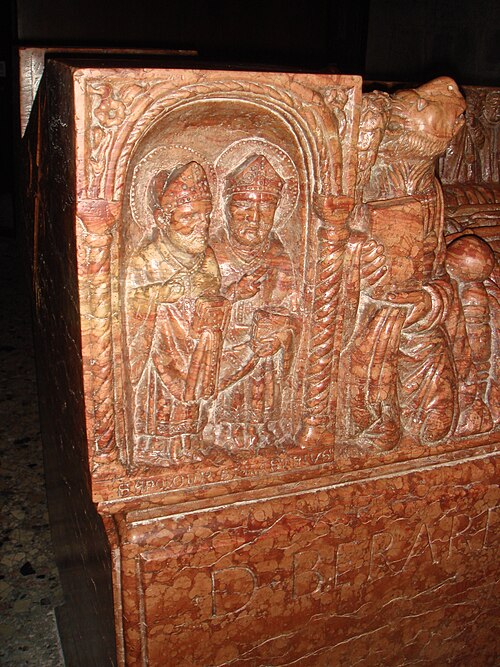
Saint
Philastrius of Brescia
Bishop of Brescia
Bishop of Brescia in the fourth century, present at the synod of Aquileia in 381.
Life
Saint Philastrius was bishop of Brescia in the fourth century and took part in the synod of Aquileia in 381. He fell asleep before 397 (according to some sources, before 387). His feast is on 18 July.
He was born around 330 and ordained at about thirty. The sermon of his successor Gaudentius describes him leaving his homeland and family inheritance to give himself wholly to the spiritual life, likening his departure to Abraham's. He traversed the Roman world and preached against pagans, Jews and above all the Arian heretics; according to the same sermon, he bore on his body the wounds left by the Arians who had scourged him, like the Apostle Paul. At Milan he was a significant supporter of the Catholic party in the time of Auxentius, the Arian predecessor of Saint Ambrose; Augustine met him there around 383. At Rome he held disputations, public and private, with heretics and, it is said, converted many. His wanderings ended when he was chosen bishop of Brescia. He was buried in the ancient cathedral of Saint Andrew at Brescia; his remains now rest in the crypt of the Old Cathedral.
Around 384 he composed a book on heresies (Diversarum Hereseon Liber), with one hundred and fifty-six heresies. The scholar R. Lipsius discovered that, for the Christian heresies up to Noetus, Philastrius drew on the same source as Epiphanius of Salamis in the Panarion: the lost Syntagma of Hippolytus; with the aid of the two works and the Adversus omnes haereses of Pseudo-Tertullian it has been possible to reconstruct much of the lost treatise. Among the writings of Gaudentius there is a sermon purporting to have been preached on the fourteenth anniversary of Philastrius's death; some historians have questioned its genuineness, but others have defended it on linguistic grounds. His work was first printed at Basel, in 1528.
Commemorated the same day July 18
 Arnulf of MetzSaint · Bishop of MetzJul 18
 Stephen II of ConstantinopleSaint · Patriarch of ConstantinopleJul 18
 Pambo of NitriaVenerable · Desert FatherJul 18
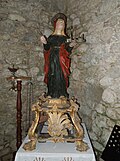 Symphorosa of TivoliMartyr · Martyr of TivoliJul 18
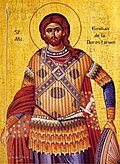 Aemilianus of DurostorumMartyr · Soldier of DurostorumJul 18
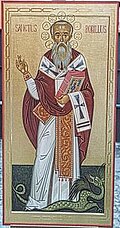 Rufillus of ForlimpopoliSaint · First bishop of ForlimpopoliJul 18
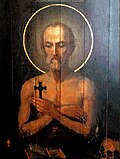 John the Much-SufferingVenerable · Monk of the Kiev CavesJul 18
- Hyacinthus of AmastrisMartyrJul 18
 Pamva the RecluseVenerable · Recluse of the Caves LavraJul 18
 Arnold of ArnoldsweilerRight-BelievingJul 18
- Arnulf of YvelinesSaintJul 18
- AthanasiusSaintJul 18