
Hieromartyr
Ambrose of Sarapul
Bishop of Sarapul and Yelabuga
Bishop of Sarapul and Yelabuga, born Vasily Gudko, who died a martyr in 1918; canonized in 2000.
Life
Saint Ambrose, Hieromartyr, bishop of Sarapul and Yelabuga, in the world Vasily Ivanovich Gudko, was killed in the summer of 1918, in the first months of Bolshevik power. The Russian Church canonized him in the year 2000, and he is remembered on 9 August.
He was born on 28 December 1867 in the small town of Tyshovtsy, in the province of Lublin (today in Poland), of Uniate parents, who joined the Orthodox Church in 1875. He graduated from the seminary at Kholm and the Theological Academy of Saint Petersburg in 1893, with the degree of candidate in theology. He became a monk in 1891 and was ordained hieromonk on 30 May 1893. First he headed the missionary catechetical school at Biysk in Altai, until 1897. In the same year the Holy Synod decided to open an Orthodox mission at Seoul, and Archimandrite Ambrose was named its head. The Korean authorities refused to receive them, so the missionaries settled for a time at Vladivostok, then at Novokievsk, where they learned the Korean language among the Koreans there. Ambrose served at a regimental church and rebuked the Russian officers for a dissolute life which, he said, disgraced the Russian name. The officers denounced him, and in 1899 he was recalled to Saint Petersburg and made superintendent of the Donskoy Ecclesiastical School in Moscow. In 1901 he was made rector of the Volyn Theological Seminary.
On 30 April 1904, in the cathedral of Zhytomyr, he was consecrated bishop of Kremenets, vicar of the Volyn diocese. From 1909 he was bishop of Balta, vicar of the Podolia diocese, from 1914 bishop of Sarapul, vicar of the Vyatka diocese, and from 5 October 1916 bishop of Sarapul and Yelabuga. He preached in Ukrainian while serving in the south and promoted congregational singing in churches. He preached against drunkenness, and with his blessing temperance brotherhoods were founded at Sarapul and Yelabuga. He was regarded as a supporter of active preaching of Christianity among the Tatars. He had a conflict with some social democrats of Sarapul, whom he barred from Holy Communion.
On 18 March 1917, as a consistent monarchist, he was retired and appointed to administer the monastery of the Mother of God at Sviyazhsk in the diocese of Kazan. He was loved by the people of Sviyazhsk and the surrounding villages. Finding the monastery's affairs neglected, the services done irregularly and some monks living improperly, he tried to put things in order, which led to conflict with part of the brotherhood, and the hierodeacon Theodosius even made an attempt on his life. At the beginning of March 1918 he was brought before the revolutionary tribunal of Sviyazhsk, accused of “counter-revolutionary actions.” The main witness for the prosecution was Theodosius, who by then had joined the militia. Many witnesses spoke in the bishop's defence, and he was acquitted. In June 1918 he was arrested, but released after a few days, and returned to Sviyazhsk. When asked to delay his departure, because of the strained relations with the authorities and the clear danger to his life, he answered: “We should rejoice that the Lord has brought us to live at a time when we can suffer for Him. Each of us sins all his life, and a short suffering and a crown of martyrdom...”
He was killed by soldiers of the Red Army on 9 August 1918, near Sviyazhsk (in some sources, at Tyurlema station). His canonization, for veneration throughout the Russian Church, took place in the year 2000.
Commemorated the same day July 27
 SethRighteous · The ForefatherJul 27
- Aurelius and NataliaHoly MartyrsJul 27
 Clement of OhridEqual-to-the-Apostles · Bishop of OhridJul 27
 PanteleimonGreat Martyr · The HealerJul 27
 Herman of AlaskaVenerable · Missionary to AlaskaJul 27
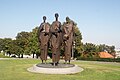 Gorazd of MoraviaSaint · Disciple of St. MethodiusJul 27
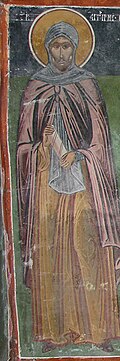 AngelarVenerable · Disciple of Saints Cyril and MethodiusJul 27
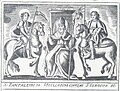 Maurus, Pantalemon and SergiusHoly Martyrs · Martyrs of BisceglieJul 27
- Anthusa of MantineaVenerable · Abbess in ConstantinopleJul 27
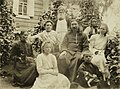 Platon GornykhHieromartyr · PriestJul 27
- John SolovyovHieromartyr · PriestJul 27
- 153 Martyrs of ThraceHoly MartyrsJul 27