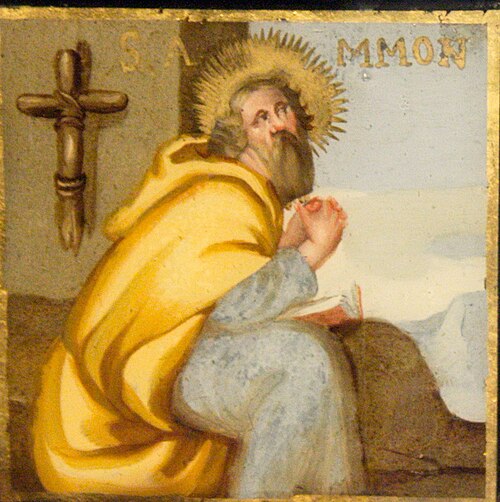
Venerable
Ammon of Nitria
Founder of the Nitria community
Egyptian ascetic of the fourth century, founder of one of the most celebrated monastic communities in Egypt.
- Feast
- October 4old style October 17
- Reposed
- 3564th century
- Place
- Wadi El Natrun
- Order
- Venerables
Life
The Venerable Ammon (Amun, Ammonas, Abba Amoun) of Nitria was an Egyptian ascetic of the fourth century, the founder of one of the most celebrated monastic communities in Egypt, that of Nitria. Saint Athanasius the Great mentions him in the Life of Saint Anthony the Great. His name is that of the ancient Egyptian god Amun.
He was born in Egypt into a well-to-do family. Orphaned, he was pressed by his relatives to marry at twenty (in other sources, twenty-two), but he persuaded his bride, following the teaching of the Apostle Paul in the first Epistle to the Corinthians, that both should live in chastity. They lived so for eighteen years, working and praying, cultivating, it is said, balsam. Then, at his wife's wish, they parted: Ammon withdrew into the desert of Nitria and Scetis, south of Lake Mareotis, while she founded a convent in her own house. He visited his sister-wife twice a year and lived in the desert twenty-two years until the end. He worked in the spirit of Saint Anthony the Great and gathered his monks under his guidance, turning solitary hermits into a monastery; the community of Nitria came to have, in its flowering, five thousand monks. According to tradition, advised by Anthony, he also founded the community of Kellia, farther south, but this cannot be proved; it is certain that his piety and fame drew others to those places.
It was said that he had the gift of healing and of spiritual sight. Disciples of his named in the Paterikon were Benjamin, Macarius of Alexandria, Pambo and Pior. The year of his death is not known, but he is thought to have died at the age of sixty-two, before Anthony the Great; Anthony, according to Athanasius, saw Ammon's soul carried by angels to heaven, and Ammon is reckoned to have fallen asleep around 320. Seventeen or nineteen Rules of Asceticism are ascribed to him, preserved in Greek manuscript, twenty-two Ascetic Institutions, letters and Instructions for Novices, surviving in Greek, Latin and English. The historians Palladius, Sozomen and Socrates tell many things about his piety, character and miracles. His feast is on 4 October; in the Coptic Church, on 20 Pashons.
Commemorated the same day October 4
 Vladimir of NovgorodRight-Believing · Prince of NovgorodOct 4
 Hierotheos the ThesmotheteHieromartyr · Bishop of AthensOct 4
 Dumitru StăniloaeConfessorOct 4
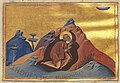 Paul the SimpleVenerable · Disciple of Saint Anthony the GreatOct 4
- Luke ZhidiataSaint · Bishop of NovgorodOct 4
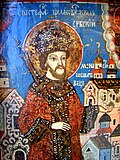 Stefan ŠtiljanovićRight-Believing · Serbian noblemanOct 4
 Gurias of KazanSaint · First Archbishop of KazanOct 4
 Arcadius of NovgorodSaint · Bishop of NovgorodOct 4
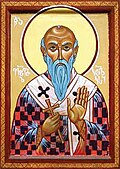 Eudemus I of GeorgiaHieromartyr · Catholicos-Patriarch of GeorgiaOct 4
 Gaius of CorinthApostle · of CorinthOct 4
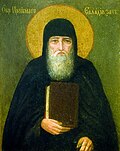 Helladius of KievVenerable · Recluse of the Kiev CavesOct 4
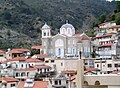 John LampadistisVenerableOct 4