Martyr
Anthia of Rome
The mother of Saint Eleutherius, martyred at Rome in 138 for her faith in Christ.
- Feast
- December 15old style December 28
- Reposed
- 1202nd century
- Place
- Aecae
- Order
- Martyrs
Life
Holy Martyr Anthia of Rome is commemorated together with her son, Holy Hieromartyr Eleutherius, bishop of Illyria, and the martyr Corybus. She suffered in the time of Emperor Hadrian (117 to 138), according to tradition in the year 120. She is commemorated on 28 December, and the Orthodox service in her honour is also on 15 December.
Eleutherius was born in Rome, in a family whose father held a high position at court. After the father's early death, his mother, Anthia, joined with her son, in secret, the growing Christian community, helping with money a small group of disciples of the Holy Apostle Paul. According to one tradition, she received Baptism as a girl from the Apostle himself. One day the bishop of Rome Anacletus (76 to 88, the third bishop of Rome after Peter and Linus) noticed the young man's piety and good manners and resolved to help him receive suitable upbringing and education. At fifteen he became a deacon, at seventeen a priest, at twenty a bishop. After his episcopal consecration he went to shepherd Christ's flock at Avlona (now Vlora, in present-day Albania). Anthia went with him. Soon the news of the young wonderworking bishop spread through all Illyria and Epirus (now northern Greece), and his fame was so great that the Roman authorities became uneasy and began to put obstacles in his way. In the end he was taken into custody by order of Emperor Hadrian.
One of the centurions who came to take him entered the church just when Eleutherius was preaching. Listening to the sermon, the centurion, named Felix, wished to become a Christian and asked to be baptised. He received Baptism and then, at Eleutherius's own insistence, fulfilled the order and brought the bishop to Rome. Eleutherius was put to torments, watched by the local governor Corybus. Seeing that the saint remained unharmed after immersion in boiling oil, torment on a red-hot iron grate, scourging and being put in a burning furnace, the governor also accepted Christianity. Bishop Eleutherius, the centurion Felix, the governor Corybus and several others brought to faith by Eleutherius were beheaded. The bishop's mother, Anthia, stood in prayer by her son's body. She was seized and her head too was cut off. It is believed that the relics of mother and son were taken to Avlona by their followers.
The saint's relics are in the church of the Dormition in the Nea Ionia district of Athens; a particle is also in the Italian town of Rieti. It is said that at Avlona too a particle remains and that miracles are wrought by the saint's prayers. The location of the relics of the martyr Anthia is not known. Saints Eleutherius and Anthia are considered protectors of pregnant women and women in childbirth. The name Eleutherius means "freedom", and so fighters for independence in the time of the Greek revolt and believers of the Greek Church in Albania, under the weight of communist atheism, prayed to him. Bishop Eleutherius should not be confused with Eleutherius, Pope of Rome (175 to 189).
Commemorated the same day December 15
 Tryphon of PechengaVenerable · Founder of Pechenga MonasteryDec 15
 UrbiciusVenerable · Hermit of the Aragon PyreneesDec 15
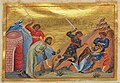 Eleutherius and AnthiaHoly Hieromartyrs · Bishop of Illyricum and his motherDec 15
 Stephen of SurozhSaint · Archbishop of SugdeaDec 15
- Offa of EssexRight-Believing · King of EssexDec 15
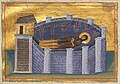 Susanna the DeaconessVenerable Martyr · Deaconess of PalestineDec 15
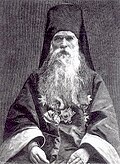 Gury KarpovSaint · Archbishop of Taurida and SimferopolDec 15
- Paul of LatrosVenerableDec 15
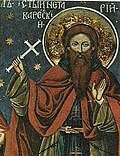 Nectarius of BitolaSaintDec 15
- Pardus the HermitVenerableDec 15
- Gurius of PechengaHieromartyr · Abbot of Pechenga MonasteryDec 15
- DrosisMartyrDec 15