
Venerable
Anthony of Leokhnovo
Founder of Leokhnovo Monastery
Born Anthony Veniaminov in Tver, founder of the Leokhnovo Monastery near Novgorod, greatly venerated in the region, who died in 1612.
- Feast
- October 17old style October 30
- Reposed
- 161017th century
- Place
- Veliky Novgorod
- Order
- Venerables
Life
Venerable Anthony of Leokhnovo (in the world Anthony Veniaminov, about 1526-1612) was a monk and ascetic, founder and protector of the Leokhnovo Monastery near Novgorod, one of the most venerated saints of the Novgorod region. His commemoration is local and is kept on 30 October (17 October by the old calendar) and on the second Friday after 12 July.
Life
He was born around 1526 at Tver. His parents raised him in the fear of God and instilled in him a love of virtue. Grown more mature, he longed for harder labours and, rejecting nobility and earthly honours, chose the way of devoting himself wholly to God in a solitary place. He came to the land of Novgorod and settled in the Rublev wilderness. The place was hilly and covered with thick forest. He dug himself a small cave, in which he began a strict life, with the damp earth for a bed and bread for ordinary food, which he ate after sunset to strengthen his failing body. Leading a righteous spiritual life in the Rublev wilderness, he received the gift of working miracles. Despite his seclusion, his fame spread far and many wished to meet him.
While he prayed unceasingly, an angel appeared to him and told him to go to a place called Leokhna. He obeyed and went. There he was tonsured a monk by the hieromonk Tarasius, with whom he built a church. The Archbishop of Novgorod allowed the church to be consecrated and sent an antimension, and the church was consecrated on the feast of the Transfiguration. In time other faithful came to the ascetics of Leokhnovo, a monastery arose, and the place that had been wild was filled with the faithful. Anthony gave guidance to the other ascetics and gave them an example of complete devotion to God.
He died at the age of eighty-six at Novgorod and was buried in the church of Saint Luke the Evangelist in the city. The year of his death is given as 1611, 1612 or 1613. In 1630 his relics were moved to the Leokhnovo Monastery. Miracles during his life include foretelling the battle of Orsha, extinguishing a fire by prayer, healing a young man bitten by a snake and near death, and healing of the blind, Joseph and Stephen, at the translation of the incorrupt relics.
The monastery
Anthony and Hieromonk Tarasius built at Leokhnovo a church of the Transfiguration. At the beginning of the seventeenth century the monastery was laid waste by the Swedes and almost all the monks were killed, but the church was restored. In 1764 the monastery was abolished and turned into a parish church, in 1788 all the buildings burned, but the parishioners built in the same year a stone church of the Transfiguration, with side chapels dedicated to the Kazan Mother of God and to Venerable Anthony. In 1938 the church was closed and desecrated, made into a club and storehouse. When an attempt was made to take the relics, a miracle occurred: a flame burst from the tomb. After the war the faithful managed to defend the church. At the end of the twentieth century restoration began, and in 2005 a wooden church of Venerable Anthony was built in the Rublev wilderness, at the site of his first settlement. A great role in restoring his veneration was played by Father Alexander Murinson (1953-2012).
Commemorated the same day October 17
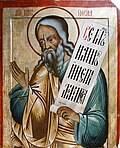 HoseaProphet · The ProphetOct 17
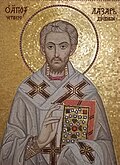 LazarusRighteous · The Four-Days-DeadOct 17
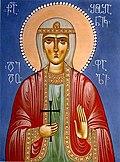 ShushanikMartyrOct 17
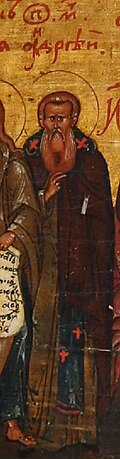 Andrew of Crete the MartyrVenerable Martyr · Monk and martyr, defender of iconsOct 17
- Heron of AntiochHieromartyr · Bishop of AntiochOct 17
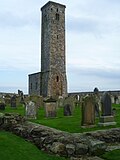 Regulus of PatrasSaint · Monk or bishop of PatrasOct 17
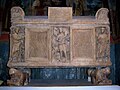 CatervusSaint · Patron of TolentinoOct 17
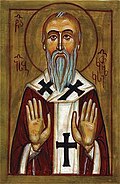 Joseph JandieriSaint · Catholicos-Patriarch of GeorgiaOct 17
- Anatoly IvanovskyHieromartyr · PriestOct 17
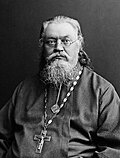 Neophytus LyubimovHieromartyr · Archpriest in MoscowOct 17
- Anstrudis of LaonVenerable · Abbess at LaonOct 17
- Anthimus of CiliciaMartyrOct 17