Martyr
Antipater of Cyzicus
A martyr of Cyzicus, put to death for his faith in Christ.
Life
Holy Martyr Antipater of Cyzicus is commemorated together with the martyrs Theognidus, Rufus, Theostichus, Artemas, Magnus, Theodotus, Thaumasius and Philemon, nine in all, who suffered at Cyzicus, in Asia Minor, on the shore of the Dardanelles, at the end of the third century (about the years 284 to 292). They are commemorated on 12 May.
Christianity had begun to spread in Cyzicus already in the time of the preaching of the Holy Apostle Paul, but the persecutions of the pagans caused some Christians to flee the city and others to keep the faith secret. So at the end of the third century Cyzicus was largely pagan, although it had a Christian church. This state of things grieved the true Christians, who wished to strengthen the faith of Christ. To them belonged also the nine holy martyrs. They came from various places and were of various ages: young, like Saint Antipater, and old, like Saint Rufus; they held various places in society: among them were soldiers, peasants, townsmen and clerics. All were united by faith in Christ and a fervent desire to spread and strengthen the true faith.
Arriving at Cyzicus, the saints boldly confessed Christ and fearlessly rebuked pagan impiety. They were seized and brought to the judgment of the governor of the city. For several days they were tortured, shut in prison and brought out again, promised freedom for denying Christ. But the brave soldiers of Christ went on glorifying the Name of Christ. All nine were beheaded, and their bodies were buried near the city. When, in 324, Saint Constantine the Great came to rule the eastern half of the empire and the persecution of Christians ceased, the Christians of Cyzicus took from the earth the incorrupt bodies of the nine martyrs and laid them in a church built in their honour. From the holy relics various wonders came: the sick were healed, the mad came to their senses. The faith of Christ was strengthened in the city through the intercession of the holy martyrs, and many of the pagans turned to Christianity.
When Julian the Apostate came to the throne (361 to 363), the pagans of Cyzicus complained to him of the Christians for the destruction of pagan temples. Julian ordered the pagan temples restored and Bishop Eleusius imprisoned. After Julian's death Bishop Eleusius was freed, and again at Cyzicus the light of faith in Christ shone, under the protection of the holy martyrs. In Russia, not far from the city of Kazan, a monastery was founded in honour of the nine martyrs of Cyzicus by the hierodeacon Stephen, who brought with him from Palestine a part of their holy relics. The monastery was founded in hope of deliverance, through their intercession and prayers, from various diseases, especially the fever that raged at Kazan in 1687; "for," writes Saint Demetrius of Rostov, author of the service to the nine martyrs, "to these saints abundant grace has been given for driving away feverish diseases". Saint Demetrius also described the sufferings of the holy martyrs and composed a homily for the day of their commemoration.
Commemorated the same day April 29
 Basil of OstrogSaint · Bishop of ZahumljeApr 29
 Torpes of PisaMartyr · Martyr of PisaApr 29
 Memnon the WonderworkerVenerable · Abbot in Egypt and wonderworkerApr 29
 Amphilochius of PochayivVenerable · Monk of the Pochayiv LavraApr 29
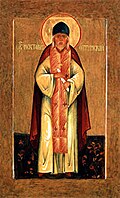 Nectarius of OptinaVenerable · Elder of OptinaApr 29
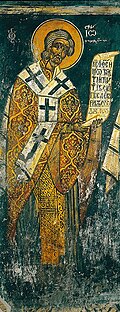 John Kaloktenes the NewSaint · Metropolitan of ThebesApr 29
- Three Hundred Laz MartyrsHoly New MartyrsApr 29
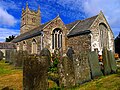 EndelientaVenerable · Hermit of CornwallApr 29
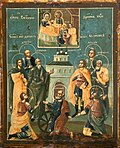 Nine Martyrs of CyzicusHoly Martyrs · Martyrs of CyzicusApr 29
- Sopater of BereaApostle · of BereaApr 29
- AemilianusMartyr · Martyr of CirtaApr 29
- Agapius and CompanionsHoly MartyrsApr 29