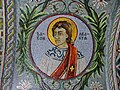
Prophet
Azariah
Old Testament prophet
Prophet named in Second Chronicles, who urged King Asa to remain faithful to the Lord.
- Feast
- December 17old style December 30
- Reposed
- 900 BC9th century BC
- Order
- Prophets
Life
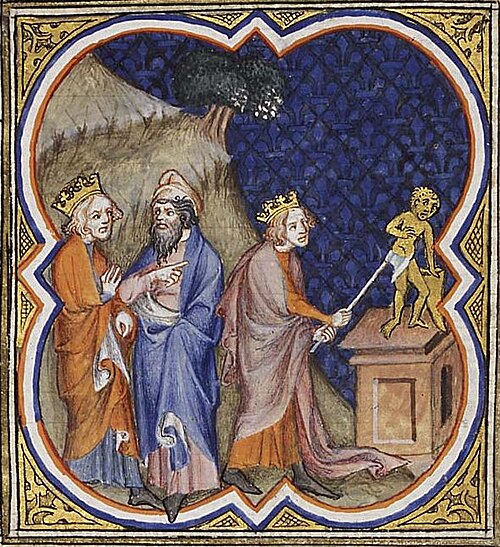
Saint Azariah the Prophet (in Hebrew "the Lord has helped") was a prophet in Judah in the time of King Asa, in the tenth century before Christ, the son of Oded. The Second Book of Chronicles speaks of him briefly, in chapter 15. The Orthodox Church commemorates him on 3 February.
The prophecy in the time of Asa
After King Asa of Judah had defeated King Zerah (Egyptian or Ethiopian, according to interpretation; the Russian source gives the name Osorkon I) in the battle described in chapter 14, the Spirit of God came upon Azariah, who went out to meet the king returning victorious from the war and urged him to a renewal of faith. He called the king and all Judah and Benjamin to listen, not only those at the top but all the people. His word was a kind of historical review for the people. His message has three parts: the Lord is with you while you are with Him; if you seek Him, He will let Himself be found; but if you forsake Him, He will forsake you.
Obeying the prophet, Asa gathered the people, destroyed the idols, renewed the altar of the Lord in the temple at Jerusalem and renewed the covenant. The book says that for this obedience God gave him a time of peace (verse 19). He does not appear to have been a permanent prophet, but one of those whom God calls once for a particular task.
His father's name
The text of the book calls him "the son of Oded" (verse 1), but the Masoretic text omits Azariah's name in verse 8, which means either that the prophecy belongs to Oded himself or, more probably, that a copying error left out the name. The Greek translation of the Septuagint gives at verse 8 the name Adad. It is not clear whether the prophet Oded is the same as Azariah's father.
In Orthodox tradition
According to Orthodox tradition and the synaxaria, the prophet's father was called Addo, and Azariah came from the land of Sembata or Simvata; he died in peace and was buried in his own field. In Pontus, at Katyora, the saint's name was turned by the people into "Azareas" and linked with a word meaning "to wrinkle"; on his day expectant women must not work, so that the child may not be born wrinkled and weak.
Commemorated the same day December 17
 DanielProphet · The ProphetDec 17
 Ananias, Azarias and MisaelHoly The Righteous · The Three Holy YouthsDec 17
 BeggaVenerable · Founder of Andenne AbbeyDec 17
 Avakum the DeaconNew Martyr · Deacon of Moštanica MonasteryDec 17
- Sergius FlorinskyHieromartyr · Archpriest at RakvereDec 17
- Hadji-Georgis the AthoniteVenerable · Monk from CappadociaDec 17
- Michael the SynkellosVenerable · Confessor of ConstantinopleDec 17
- Abramius of EleutheropolisMartyrDec 17
- Alexander SavelovHieromartyrDec 17
- AnaniasMartyr · Youth of BabylonDec 17
- AnthonyHoly VenerablesDec 17
- BriarchVenerableDec 17