Hieromartyr
Sergius Florinsky
Archpriest at Rakvere
Archpriest at Rakvere in Estonia, killed in the nearby forest on 30 December 1918.
- Feast
- December 17old style December 30
- Reposed
- 191820th century
- Place
- Rakvere
- Order
- Martyrs
Life
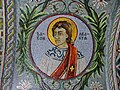
Holy Hieromartyr Sergius Florinsky (Sergei Fyodorovich Florinsky, also called Sergius of Rakvere) was an archpriest, born on 4 March 1873 at Suzdal and killed on 30 December 1918 in the Palermo forest, near the town of Rakvere (in German Wesenberg), in Estonia. He was numbered among the new martyrs and confessors of Russia in 2002. He is remembered on 30 December (17 December on the old calendar).
Youth and service to soldiers
He was born in the family of the priest Theodore Florinsky, of the church of the Holy Unmercenaries Cosmas and Damian in Suzdal. In 1893 he finished the Vladimir seminary. Between 1893 and 1900 he was a teacher at the zemstvo school of Yaksaevo, Suzdal district. On 5 March 1900 he was ordained priest and sent as priest to the church of the 151st Pyatigorsk infantry regiment, in the settlement of Bereza-Kartuzskaya, Grodno province. In 1904 and 1905 he took part, with some of the soldiers of his regiment, in the Russo-Japanese war and received the order of Saint Anna and a bronze commemorative medal. From 1914 to 1917 he was, with the regiment, in the front-line army and received the orders of Saint Anna, Saint Vladimir fourth class and a gold pectoral cross on the St George ribbon, given for special merit on the field of battle. The regimental commander, Colonel D. L. Ardaziani, said of him that Father Sergius was an exemplary pastor in all respects, an irreplaceable spiritual man on the battlefield and a splendid man.
From 22 June 1917 he was priest at the 29th reserve field hospital, which was then in Estonia, in the town of Wesenberg (now Rakvere). He served in the hospital until it was disbanded, on 22 March 1918. In January the hospital committee refused to carry out the commissariat's order to dismiss all the clergy from the army and decided to keep him, "by the wish of all the staff". He remained to live in Wesenberg, since the local Estonian authorities did not give him permission to leave for his homeland.
Martyrdom
On 16 December 1918 the Red Army occupied Wesenberg. After three days Archpriest Sergius was arrested as a representative of the old reactionary order and as a suspicious person found in Estonia without definite occupation. He was also accused of having had a part in forming units of the Northern Corps. On 20 December he was interrogated, and on 26 December 1918 the death sentence was given. "I consider one thing: my guilt is that I am a priest, and this I sign", said Father Sergius at the end of his single, short interrogation, the record of which takes up only one handwritten page. He was shot with other condemned in the Palermo forest, where there is now a memorial stone. In all, eighty-two people were killed there, among them a Lutheran pastor. After the Bolsheviks left, all those shot were buried again. Archpriest Sergius Florinsky was buried at the city cemetery.
Canonization and finding of the relics
In 2002 the Russian Church numbered him among the holy hieromartyrs for veneration throughout the Church. The finding of his relics took place on 2 July 2003, in the presence of Metropolitan Cornelius of Tallinn and all Estonia; the grave was opened after a molieben. The service of the finding of relics was performed in Estonia for the first time. The relics of the hieromartyr Sergius Florinsky were placed in a shrine, shown in the church of the Nativity of the Mother of God at Rakvere, for veneration. Since then the church has been visited by many pilgrims, tourists and delegations from Russia, England, France, the United States, Finland, Latvia, Lithuania and Ukraine. A particle of the relics was given as a gift to the diocese of Saint Petersburg and placed in the Naval cathedral of Saint Nicholas. His wife, from 1900, was Elizabeth Ivanovna Smolenskaya, the daughter of Archpriest John Smolensky, priest of the regiment of the Guards Lancers. Their grandson is the history professor Mikhail Fyodorovich Florinsky.
Commemorated the same day December 17
 DanielProphet · The ProphetDec 17
 Ananias, Azarias and MisaelHoly The Righteous · The Three Holy YouthsDec 17
 BeggaVenerable · Founder of Andenne AbbeyDec 17
 AzariahProphet · Old Testament prophetDec 17
 Avakum the DeaconNew Martyr · Deacon of Moštanica MonasteryDec 17
- Hadji-Georgis the AthoniteVenerable · Monk from CappadociaDec 17
- Michael the SynkellosVenerable · Confessor of ConstantinopleDec 17
- Abramius of EleutheropolisMartyrDec 17
- Alexander SavelovHieromartyrDec 17
- AnaniasMartyr · Youth of BabylonDec 17
- AnthonyHoly VenerablesDec 17
- BriarchVenerableDec 17