
Martyr
Bacchus of Rome
A martyr of the 4th century, put to death for his faith in 303.
Life
Holy Martyr Bacchus of Rome was an officer in the guard of the Emperor Maximian and died flogged at Barbalissos in Syria, around the year 303, together with his friend Sergius. Their common feast is on 7 October.
Sergius and Bacchus served in Maximian's army, distinguished by their bravery in battle and their self-control in daily life; the emperor appointed them primicerius of the school of the Gentiles and secundicerius respectively. When he learned that his two chosen soldiers were Christians, he did not want to believe it. To convince himself, he held a ceremony of sacrifice in a pagan temple and summoned Sergius and Bacchus to take part. The two refused and confessed Christ with great courage. Enraged, the emperor took away the insignia of their ranks and, after mocking them in various ways, sent them to the duke of the East, Antiochus, a cruel man. He flogged Bacchus to death. To Sergius, who had once done him a kindness, he proposed to spare him if he would deny Christ; Sergius answered with the words of the Apostle Paul, "For me to live is Christ, and to die is gain," and was beheaded.
In 547 the Emperor Justinian built in Constantinople a church called the Little Hagia Sophia in honour of the two martyrs and placed their relics in it. Parts of the relics are kept in several places: the head of Saint Bacchus is at Curtea de Argeș Monastery in Romania, and fragments are at Vatopedi and at the Alexander Nevsky Lavra in Saint Petersburg, while in the West relics attributed to them are at Venice, Pavia, Heiligenstadt and Prague.
Commemorated the same day October 7
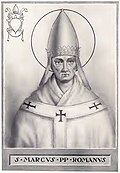 Mark of RomeSaint · Bishop of RomeOct 7
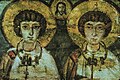 Sergius and BacchusHoly MartyrsOct 7
 Caesarius of TerracinaHieromartyr · Deacon of TerracinaOct 7
 Jonah of HankouSaint · Bishop of HankouOct 7
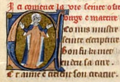 OsythVenerable · Mercian prioressOct 7
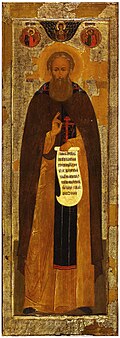 Sergius of NuromVenerable · Founder of Nurom MonasteryOct 7
- Dubthach of ArmaghSaint · Bishop of ArmaghOct 7
- Sergius the ObedientVenerableOct 7
- Adalgis of NovaraSaint · Bishop of NovaraOct 7
- Aetherius of LyonSaint · Bishop of LyonOct 7
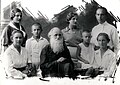 Aleksiy Mogilnitsky of LelchitsyHieromartyrOct 7
- AndechiusMartyrOct 7