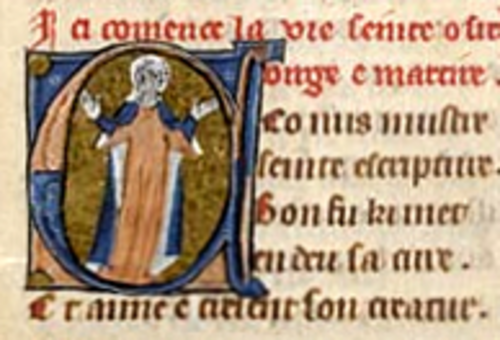
Venerable
Osyth
Mercian prioress
Mercian noblewoman and prioress, venerated as an English saint since the eighth century; the village of St Osyth in Essex bears her name.
- Feast
- October 7old style October 20
- Reposed
- 6537th century
- Place
- Quarrendon
- Order
- Venerables
Life
Saint Osgyth, also called Osyth, was a Mercian noblewoman, a nun and the first abbess of a convent in Essex. She has been venerated as a saint in England from the eighth century, soon after her death, and the village of St Osyth in Essex, near Colchester, bears her name. She is commemorated on 7 October and is counted among the saints of Britain and Ireland.
Family and youth
She was born at Quarrendon in Buckinghamshire, then part of Mercia, the daughter of Frithuwald, a sub-king of Mercia in Surrey. Her mother was Wilburh, of the royal house of Mercia and a daughter of the pagan king Penda. The saint was a niece of Saints Edburga of Bicester and Edith of Aylesbury. Her parents, with Saint Earconwald, founded Chertsey Abbey in 675.
She grew up in the care of her maternal aunts and, according to some sources, in a convent in Warwickshire under Saint Modwenna. She longed to become an abbess, but she was too important in dynastic politics to be left alone.
The monastic life
Her father forced her into marriage with Sighere, king of Essex, and she is thought, though it is not certain, to have borne him a son, Offa. One day, while her husband was away on a long hunt after a beautiful white stag, Osgyth persuaded two local bishops to receive her vows as a nun. When he returned some days later, the king reluctantly accepted her decision and granted her land at Chich near Colchester, now called St Osyth. There she founded a convent and ruled it as its first abbess.
Martyrdom
She was killed by Danish raiders, around 653, perhaps because she resisted being carried off. Tradition says she was beheaded beside a stream near Quarrendon. Some counted her death a martyrdom, though Bede does not mention her.
Legends
It is told that in her childhood her aunt Edith sent her to carry a book to Saint Modwenna. On the way she had to cross a stream by a bridge, but the water was swollen and the wind high, and the child fell in and drowned. Her absence went unnoticed for two days. On the third day Edith went to Modwenna, and the two abbesses, learning that the girl was lost, searched for her and found her lying by the bank. They prayed for her and commanded her to rise from the water, and she came to them. A similar tale is found in Irish hagiography.
A later legend, repeated by the chronicler Matthew Paris, says that after her execution Osgyth rose, took up her head in her hands like Saint Denis of Paris, and walked to the door of a nearby convent, where she fell. The place of her martyrdom was moved to the holy spring at Quarrendon. For this reason she is shown carrying her severed head.
Veneration
Her cult was promoted by Maurice, bishop of London, and a shrine to her stood in Saint Paul's Cathedral. Around 1121 Richard de Belmeis, bishop of London, founded on the site of the former convent at Chich a priory for canons of Saint Augustine and obtained the relic of an arm for its church. He was buried in the chancel in 1127 and left the church and tithes to the canons. They elected as their first prior William de Corbeil, later Archbishop of Canterbury, who took the other arm for Canterbury. The priory grew rich through the gifts of Henry II and was dissolved in 1536. The gatehouse, called the Abbot's Tower, and some buildings remain.
At Aylesbury, in the church of Saint Mary the Virgin, her grave was a place of great though unofficial pilgrimage until a papal decree of 1500 ordered the bones removed and buried in secret. A house in Aylesbury still bears her name.
Commemorated the same day October 7
 Mark of RomeSaint · Bishop of RomeOct 7
 Sergius and BacchusHoly MartyrsOct 7
 Caesarius of TerracinaHieromartyr · Deacon of TerracinaOct 7
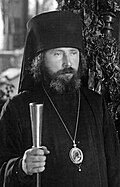 Jonah of HankouSaint · Bishop of HankouOct 7
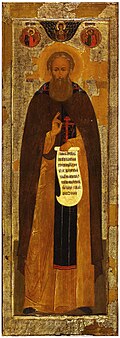 Sergius of NuromVenerable · Founder of Nurom MonasteryOct 7
- Dubthach of ArmaghSaint · Bishop of ArmaghOct 7
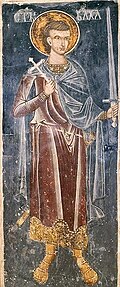 Bacchus of RomeMartyrOct 7
- Sergius the ObedientVenerableOct 7
- Adalgis of NovaraSaint · Bishop of NovaraOct 7
- Aetherius of LyonSaint · Bishop of LyonOct 7
 Aleksiy Mogilnitsky of LelchitsyHieromartyrOct 7
- AndechiusMartyrOct 7