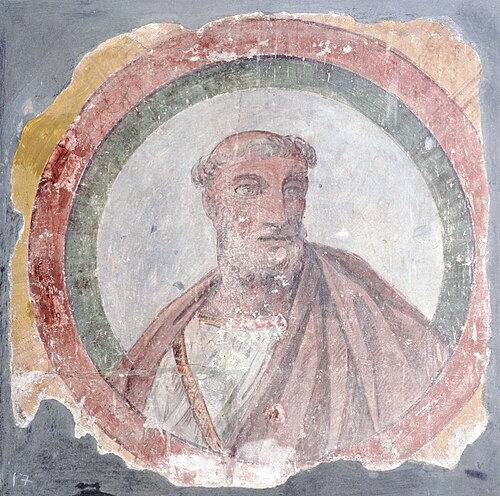
Hieromartyr
Callixtus I
Bishop of Rome
Bishop of Rome from about 218 to 222, who died a martyr in the time of Emperor Alexander Severus.
- Feast
- October 14old style October 27
- Reposed
- 2223rd century
- Place
- Rome
- Order
- Martyrs
Life
The holy Hieromartyr Callixtus I was bishop of Rome from about 217 to 222, in the time of the emperors Elagabalus and Alexander Severus. He passed through slavery and forced labour before shepherding the Church of Rome, and ended his life as a martyr.
Slavery and exile
Most of what is known of his youth comes from Hippolytus, his enemy, and must be received with caution. According to him, Callixtus was the slave of a Christian named Carpophorus, who entrusted him with funds gathered by Christians for widows and orphans. The money was lost, Callixtus fled and was caught, and later he was arrested after a brawl in a synagogue. Condemned to the mines of Sardinia, he was freed with other Christians at the request of the presbyter Hyacinthus, an envoy of Marcia, the favourite of Emperor Commodus. Weakened by illness, he was sent to Antium, where Pope Victor I gave him a pension.
Deacon and bishop
In 199 Pope Zephyrinus made him a deacon and gave him charge of the Christian cemetery on the Appian Way, which still bears the name Catacomb of Callixtus and where several bishops of Rome of the third century were buried. After Zephyrinus died, in 217, he was elected bishop.
He received into the Church, without long penance, converts from sects, and established the absolution of all sins, including adultery and murder. Hippolytus found this practice too lax and, because of doctrinal differences too, was elected bishop of Rome by his own party, the first antipope. Callixtus also condemned Sabellius, who confused the Persons of the Holy Trinity. The church of Santa Maria in Trastevere is linked to his name.
Martyrdom
He died as a martyr around 222 or 223, perhaps in a popular uprising. The apocryphal Acts say that he was thrown into a well and that the priest Asterius buried his body secretly. He was laid in the cemetery of Calepodius on the Aurelian Way. His commemoration on 14 October is attested in the fourth-century Depositio martyrum and in the Western Orthodox calendar.
Commemorated the same day October 14
 Paraskeva of the BalkansVenerable · of EpivatesOct 14
 Burchard of WürzburgSaint · First Bishop of WürzburgOct 14
 Donatian of ReimsSaint · Bishop of ReimsOct 14
 Gaudentius of RiminiHieromartyr · Bishop of RiminiOct 14
 Domninus of ThessalonikiMartyr · Martyr of ThessalonikiOct 14
 NazariusMartyr · Martyr of MilanOct 14
 Fortunata of CaesareaMartyrOct 14
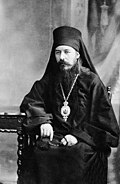 Ambrose PolyanskySaint · Bishop of Kamianets-PodilskyiOct 14
- 40 Martyrs of Egypt and PalestineHoly MartyrsOct 14
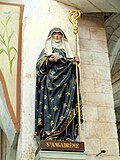 AngadrismaVenerableOct 14
- Bernard of ArceConfessorOct 14
- CaelestiusSaint · Bishop of MetzOct 14