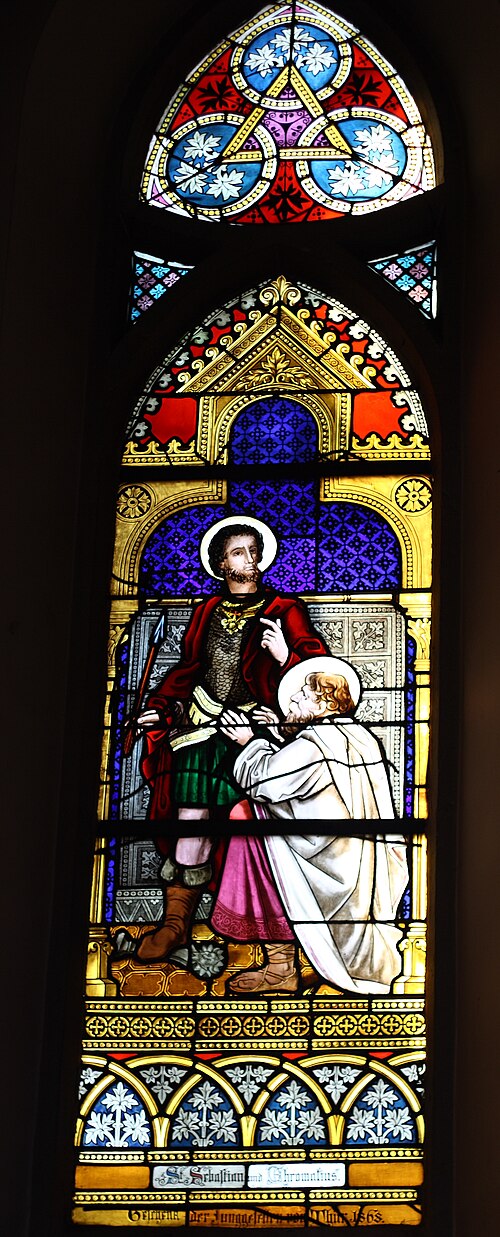
Saint
Chromatius of Aquileia
Bishop of Aquileia
Bishop of Aquileia, born and raised in that city, who died around 407.
- Feast
- December 2old style December 15
- Reposed
- 4075th century
- Place
- Grado
- Order
- Hierarchs
Life
Saint Chromatius of Aquileia, hierarch, was bishop of Aquileia in northern Italy from 388 until about 407, one of the most honoured hierarchs of his time, a friend of Saints Ambrose and Jerome, an interpreter of Scripture and a defender of Saint John Chrysostom. He lived before the separation of the Churches, and his commemoration is on 2 December.
Childhood and priesthood
He is believed to have been born and raised at Aquileia. His father died when he was an infant, and he was raised by his mother and his older brothers and sisters. He was ordained priest of the Church of Aquileia in 381 and took part in the small synodal gathering held at Aquileia under the leadership of Saint Ambrose of Milan. After the death of Bishop Valerian, in 388, he was chosen bishop.
Bishop and mediator between friends
Chromatius corresponded with Ambrose, with Jerome and with Rufinus of Aquileia. He baptized Rufinus and was something of a mentor to him. As a learned theologian, he urged his friends to write works. He encouraged Ambrose to compose writings interpreting Scripture. Jerome dedicated to him translations and commentaries made at his urging, among them the translation of the books of Chronicles, of Tobit and of the books of Solomon and a commentary on the prophecy of Habakkuk. Chromatius helped pay for Jerome's work.
In the bitter quarrel between Jerome and Rufinus over Origenism, Chromatius, who rejected the teachings of Origen, tried to reconcile them. He kept church communion with Rufinus and urged him not to answer Jerome's last attack, but to devote himself to new works, above all the translation into Latin of Eusebius's Church History.
The struggle for the faith
Chromatius opposed Arianism with great zeal and rooted it out of his diocese. He steadfastly supported John Chrysostom, patriarch of Constantinople, when he was unjustly persecuted, and wrote on his behalf to Emperor Honorius in the West, who sent the letter on to his brother, Arcadius; the intervention was without success.
Writings
Chromatius was also an interpreter of Scripture. Until our times only seventeen of his treatises on the Gospel according to Matthew were known, to which is added a fine homily on the eight Beatitudes, counted as an eighteenth. In 1969 the scholar Henri Lemarié discovered and published thirty-eight of his sermons. Chromatius died around 406 to 407. He is commemorated on 2 December.
Commemorated the same day December 2
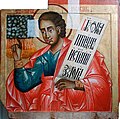 HabakkukProphet · The ProphetDec 2
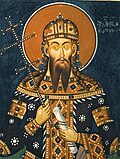 Stefan Uroš VRight-Believing · Tsar of the SerbsDec 2
 BibianaMartyrDec 2
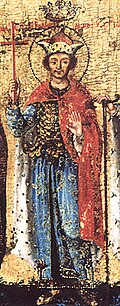 Jovan BrankovićRight-Believing · Despot of SerbiaDec 2
 NonnusSaint · Bishop of EdessaDec 2
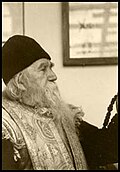 Cleopa of SihăstriaVenerable · Archimandrite and abbot of SihăstriaDec 2
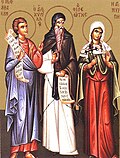 Mirope of ChiosMartyrDec 2
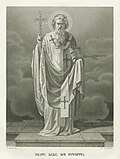 Ise of TsilkaniVenerable · One of the Syrian FathersDec 2
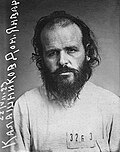 Danact KalashnikovVenerable Martyr · HieromonkDec 2
- Avitianus of RouenSaint · Bishop of RouenDec 2
- Tadec of LandevennecHieromartyr · Hieromonk of LandevennecDec 2
- Herman of PechengaVenerable Martyr · Monk of PechengaDec 2