Holy Martyrs
Crispus, Crispinianus and Benedicta
Martyrs, remembered in the ancient martyrologies of the Church.
Life
Holy Martyrs Crispus, Crispinianus and Benedicta were Roman martyrs, honoured as saints, put to death, according to tradition, on 27 June 362, in the wake of the martyrdom of Saints John and Paul, in the time of the emperor Julian the Apostate.
The account was put together by the Bollandists from the Acts of Saints John and Paul and the Hieronymian Martyrology. Crispus was a priest, Crispinianus a cleric of indeterminate rank, and Benedicta a "venerable woman" (venerabilis femina); the Bollandists call her a virgin, and Bosio calls her a matron. John and Paul, condemned and awaiting their death, sent for the three so that the priest might celebrate the Liturgy for them and so that they might tell the other Christians of their sufferings. After ten days the three tried to see them again, but the guards turned them away. John and Paul were killed in secret and buried in their house. Crispus, Crispinianus and Benedicta mourned in their home and prayed every day to receive a sign of where they were buried; God showed them the place. Caught praying at the tomb, they were brought before Julian. Crispus confessed that he was "a priest and a sinner" and refused to sacrifice to the idols, saying that he sacrificed day and night to his Lord Jesus Christ. Crispinianus called himself "the servant of the servants of Christ". Benedicta, when ordered to sacrifice and to accept a husband, answered in a loud voice that she was a Christian, that Christ was her bridegroom, and that his gods were to her like the dirt under her feet. The three were put to death and their bodies left for the dogs; at night they were taken secretly by three men, the priests John and Pimeneus and the layman Fabianus, and buried in the house of John and Paul, on 28 June.
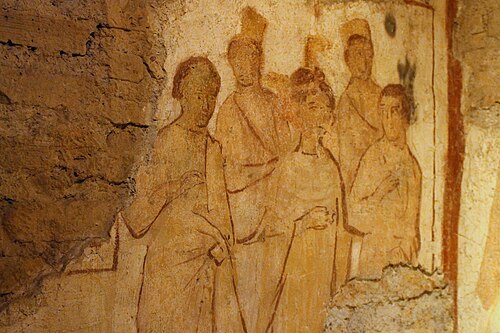
The burial place of John and Paul was later transformed into the basilica of Saints John and Paul. Excavations in the nineteenth century revealed a complex of Roman houses, with a confessio. Frescoes from the end of the fourth century show the arrest of three persons, in whom Crispus, Crispinianus and Benedicta are recognised, with a dog beside the authorities carrying out the execution. They are saints of the undivided Church.
Commemorated the same day June 27
 Cyril LucarisSaintJun 27
 Joanna the Myrrh-bearerRighteous · Myrrh-bearer, wife of ChuzaJun 27
 George the HagioriteVenerable · Georgian monk on Mount AthosJun 27
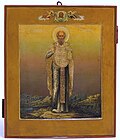 Sampson the HospitableVenerable · Protector of the poor of ConstantinopleJun 27
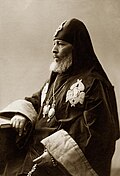 Kyrion II of GeorgiaSaint · Catholicos-Patriarch of GeorgiaJun 27
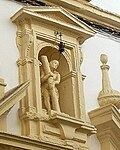 Zoilus of CórdobaMartyrJun 27
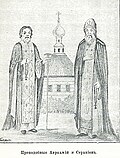 Serapion of KozheozeroVenerable · Founder of Theophany MonasteryJun 27
- Martin of TurovVenerable · Recluse monkJun 27
- Adeodatus of NaplesSaint · Bishop of NaplesJun 27
- AedhSaintJun 27
- Alexander SidorovHieromartyrJun 27
- Anectus of CaesareaMartyrJun 27