Martyr
Cyril of Sebaste
Martyr of Sebaste, who suffered for Christ.
Life
Holy Martyr Cyril of Sebaste is one of the forty martyrs of Sebaste in Armenia, Christian soldiers from Cappadocia who suffered for Christ around the year 320. The Azbyka page honours them all together and says nothing particular about him.
In 313 the emperor Constantine the Great issued the law of freedom of faith, and his co-emperor Licinius signed it as well. In the lands that Licinius ruled, however, the persecution went on: Licinius was preparing for war with Constantine and, fearing betrayal, wished to purge his army of Christians. At Sebaste in Armenia the commander Agricolaus, a zealous pagan, had under him a company of forty Cappadocians, brave soldiers who had won many battles, all of them Christians. When they refused to sacrifice to the pagan gods, Agricolaus shut them up. The soldiers gave themselves to earnest prayer and one night heard a voice: "He who endures to the end will be saved".
The next day Agricolaus tried flattery, praising their courage, youth and strength, but they refused again. After seven days the dignitary Lysias arrived at Sebaste and tried them. The saints answered firmly that he might take not only their military rank but also their lives, for nothing was dearer to them than Christ God. Lysias ordered them stoned, but the stones flew wide of their mark, and the stone Lysias himself threw struck Agricolaus in the face. In prison the soldiers spent the night in prayer and heard again the voice of the Lord: "He who believes in Me, though he die, shall live. Take courage and do not fear, for you will receive incorruptible crowns".
It was winter and bitterly cold. The holy soldiers were stripped, led to a lake near the city and set under guard on the ice all night. To break their will, a bath was heated on the shore: whoever wished to save his life had only to tell the jailer that he had renounced Christ. In the first hour of the night one of the soldiers could bear it no longer, ran to the bath and fell dead as soon as he crossed the threshold. About the third hour the Lord sent the martyrs comfort: it grew light, the ice melted and the water of the lake grew warm. The guards were all asleep, and only one, named Aglaius, was awake. Looking at the lake, he saw a bright crown over the head of each martyr and counted thirty-nine; he understood that the soldier who had fled had lost his crown. Aglaius woke the other guards, threw off his clothes, said "I too am a Christian" and joined the martyrs. Standing in the water he prayed, "Lord God, I believe in You, in whom these soldiers believe; join me to them, that I may be counted worthy to suffer with Your servants".
In the morning the tormentors saw with amazement that the martyrs were alive and that their guard Aglaius was glorifying Christ with them. Then they brought them out of the water and broke their shins. During this agonizing execution the mother of the youngest of the soldiers, Meliton, urged her son not to be afraid and to endure to the end. The bodies of the martyrs were laid on wagons and taken to be burned. The young Meliton was still breathing and was left lying on the ground; his mother lifted him and carried him on her shoulders behind the wagon. When Meliton breathed his last, his mother laid him on the wagon beside the bodies of his holy companions. The bodies of the saints were burned on a pyre, and the half-burned bones were thrown into the water so that the Christians might not gather them.
After three days the martyrs appeared in a dream to the blessed Peter, bishop of Sebaste, and commanded him to bury their remains. The bishop, with a few clergy, gathered the remains of the glorious martyrs by night and buried them with honour. The names of the forty have been preserved: Cyrion, Candidus, Domnus, Hesychius, Heraclius, Smaragdus, Eunoicus, Valens, Vivianus, Claudius, Priscus, Theodulus, Eutychius, John, Xanthias, Ilian, Sisinius, Angias, Aetius, Flavius, Acacius, Ecdicius, Lysimachus, Alexander, Elias, Gorgonius, Theophilus, Domitian, Gaius, Leontius, Athanasius, Cyril, Sacerdon, Nicholas, Valerius, Philoctimon, Severian, Chudion, Meliton and Aglaius.
The commemoration of the forty martyrs is one of the best loved in the Church. It falls on 9 March in the old style, which is 22 March in the new style, and on that day the strictness of Great Lent is eased and the Liturgy of the Presanctified Gifts is served. Their passion is also found in the Lives of the Saints by Saint Dimitry of Rostov.
Commemorated the same day March 9
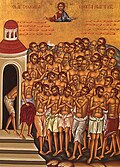 Forty Martyrs of SebasteHoly Martyrs · Soldiers of the Twelfth LegionMar 9
 Bruno of QuerfurtHieromartyr · Missionary ArchbishopMar 9
 Pacian of BarcelonaSaint · Bishop of BarcelonaMar 9
 Caesarius of NazianzusSaint · Brother of Gregory the TheologianMar 9
- Urpasianus of NicomediaMartyrMar 9
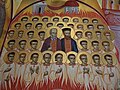 The 42 Martyrs of MomišićiHoly New MartyrsMar 9
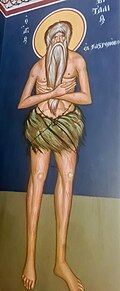 Vitalis of CastronovoVenerable · Hermit and abbot in southern ItalyMar 9
- Aetius of SebasteMartyrMar 9
- Aglaius of SebasteMartyrMar 9
- Alexander of SebasteMartyrMar 9
- Alexandra SamoylovaVenerable MartyrMar 9
- Alexis SmirnovHieromartyrMar 9