Martyr
Eugenia Domozhirova
A Russian woman who died a martyr for her faith in Christ during the communist persecution.
Life
Holy Martyr Eugenia Domozhirova was born in 1871 in the city of Riga, in the family of General Peter Domozhirov, and died on 18 January 1933 in the prison at Alma-Ata, on the way to exile. The Russian Church honours her among the New Martyrs and Confessors of the twentieth century.
For five years she studied at the institute for noble girls in Warsaw and at the same time at the Red Cross school. In 1896, at twenty-five, she entered a military hospital in Warsaw, where she worked several months, then the Alexander-Mariinsky Institute, where she worked eleven years, first as a nurse, then as head of the hospital. She did not marry and kept her chastity, giving her life to the service of God and people.
In 1907 she moved to Moscow and worked as a nurse at the Institute of the Moscow nobility. Not strong in health by nature, she began to fall ill often and in 1912 left her work. But as soon as the First World War began, despite her weak health, she took a post as nurse in a hospital on the Western front, then in the city of Polotsk, where she worked until the collapse of the state and the front in 1917.
Illnesses that made themselves felt constantly forced her to leave the hospital and she moved to Tver, into a house with her sister, and soon retired. Being a deeply churchly and educated person, she was well acquainted with the clergy of Tver.
On 15 March 1932 the OGPU arrested several Tver priests and laymen, among them the servant of God Eugenia. At the interrogations she was asked about acquaintances. For her it was strange to deny them and she answered directly, finding nothing blameworthy in her answers: Kupriyanov, Benemansky, Troitskaya and Bolotov she knew well, had been at their homes many times, and they, except Kupriyanov, had been at hers; she had known them long.
She did not admit guilt of anti-state activity. On 9 July 1932 the OGPU troika sentenced the arrested priests and Eugenia Domozhirova to exile in Kazakhstan for three years. Although all were sentenced to exile and were to live in Kazakhstan as administrative exiles, that is, outside prison walls and without barbed wire, the troika's sentence stipulated that the exiles must go to the place of exile by stages, that is, through all the prisons of Russia on the southern route.
For the condemned this became a kind of additional punishment, sometimes the journey by stages being harder than imprisonment, and not all endured it. On 18 January 1933, on the eve of the feast of Epiphany, Eugenia Domozhirova died in the Alma-Ata prison and was buried in an unknown grave.
She is commemorated on 18 January and on 7 February in the Synaxis of the New Martyrs and Confessors of the Russian Church (new style).
Commemorated the same day January 5
 Edward the ConfessorRight-Believing · King of EnglandJan 5
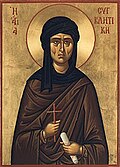 Syncletica of AlexandriaVenerableJan 5
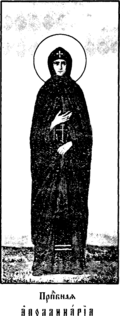 Apollinaria SyncleticaVenerable · Hermit of EgyptJan 5
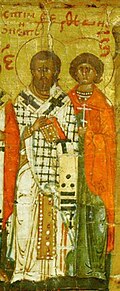 Theopemptus and TheonasHoly Martyrs · Martyrs of NicomediaJan 5
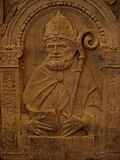 Rusticianus of BresciaSaint · Bishop of BresciaJan 5
 Theopemptus of NicomediaHieromartyr · Bishop of NicomediaJan 5
 Andrew ZiminHieromartyr · ArchpriestJan 5
- Acutus of AfricaSaintJan 5
- Amelia of GironaMartyrJan 5
- Astolfus of MainzSaint · Archbishop of MainzJan 5
- CiaraSaintJan 5
- Ciaran son of AedhSaintJan 5