
Saint
Gabriel of Imereti
Hierarch of Imereti
Hierarch of Imereti in Georgia.
- Feast
- January 25old style February 7
- Reposed
- 189619th century
- Place
- Imereti
- Order
- Hierarchs
Life
Saint Gabriel of Imereti, born Gerasime Kikodze, was bishop of Imereti in Georgia. He was born on 15 November 1825 in the village of Bakhvi in the Ozurgeti district of Guria, the son of the priest Maxime Kikodze, and he died in Kutaisi on 25 January 1896.
Studies and sorrow
He studied in Tbilisi and at the seminaries in Pskov and Saint Petersburg, and in 1849 graduated from the Saint Petersburg Theological Academy with a master's degree. That year he married and returned to Georgia, where he was appointed rector of Tbilisi Seminary. In 1854 he was ordained deacon and later priest. In 1856 an epidemic took his wife and five children. After this grief, with the blessing of Exarch Isidore, he was tonsured a monk at Davit Gareji Monastery, and in 1858 he was enthroned abbot there.
Shepherd of Imereti
In the same year he was consecrated bishop of Gori, and on 2 July 1860 he was transferred to Imereti, where he shepherded his flock to the end of his life. From 1869 he also had charge of the Abkhazeti diocese. He labored tirelessly to strengthen the faith, traveled constantly through the villages, preached and helped those in need. In his eyes there was no difference among petitioners: old or young, prince or pauper, relative or stranger. He would not tolerate lawlessness or immorality. His simplicity showed in his clothing, his dwelling and his food, so that visitors sometimes took him for a servant. He was a merciful almsgiver and gave aid to widows and orphans. He sought to establish universal primary schooling, housed many young people and paid for their studies, and at the dinners he gave for them he led long talks to instill good thoughts and a love of humility. He lived by the saying: "Nothing is my own; all belongs to God." His diaries record how many beggars he buried, how many naked he clothed and how many sick he supplied with medicine; in winter he often sent firewood and money anonymously to families suffering hunger and cold.
Last years
Even so, he received letters accusing him of injustice, ambition and selling church property. His defense of the Georgian language often brought him into conflict with the Russian exarch Evsevi, and the Russian officials regarded him as untrustworthy and had him watched. In 1885 his secretary, the publicist Evstati Mchedlidze, was killed, and the bishop received threatening letters. He decided to leave Georgia but never did. In his last years he suffered severe inner torment and terrible visions, and he repeated unceasingly the prayer "God, be merciful to me, a sinner." As he breathed his last he said: "Remember me, O Lord, when Thou comest in Thy Kingdom."
The winter of his death was unusually harsh, the roads were buried in snow, and his relics could not be carried to Gelati. They stayed in the city cathedral of Kutaisi, which was destroyed in the Communist period. For forty-six days all Georgia mourned him, and his body showed no decay. As he willed, his possessions were distributed to widows, orphans and the poor. His parting address, in which he forgave his flock their sins and asked forgiveness for his own, was published as a lasting testament. He is commemorated on 25 January (new style; 7 February on the old calendar).
Commemorated the same day January 25
 Gregory the TheologianSaint · Archbishop of ConstantinopleJan 25
 Felicitas of RomeMartyrJan 25
 Vladimir of KyivHieromartyr · Metropolitan of Kyiv and HalychJan 25
- Castinus of ByzantiumSaint · Bishop of ByzantiumJan 25
 Peter ZverevHieromartyr · Archbishop of VoronezhJan 25
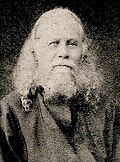 Anatoly of OptinaVenerable · Elder of OptinaJan 25
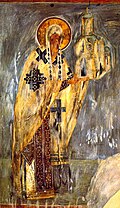 Moses of NovgorodSaint · Archbishop of Novgorod and PskovJan 25
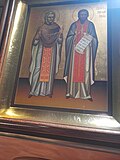 Constantine VeretskyHieromartyr · ArchpriestJan 25
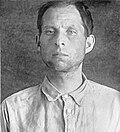 Andrew ArgunovMartyr · Chairman of the parish councilJan 25
- Bretanion of TomisSaint · Bishop of TomisJan 25
 Joasaph of BorovskHieromartyr · Archimandrite of the Trinity LavraJan 25
 Nicholas PopovHieromartyr · ArchpriestJan 25