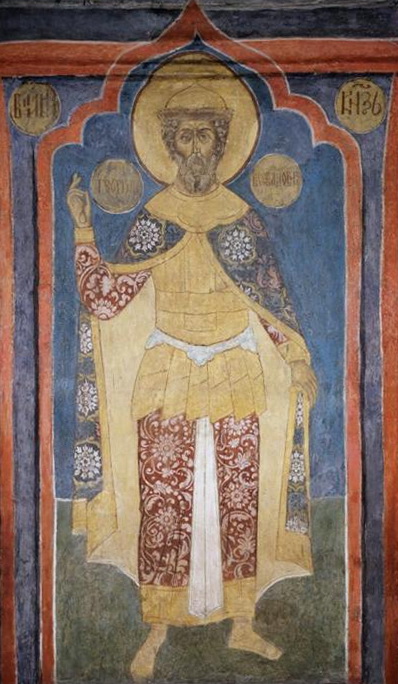
Right-Believing
George of Vladimir
Grand Prince of Vladimir
Grand prince of Vladimir, killed in 1238 in the battle with the Mongols at the Sit River.
- Feast
- February 4old style February 17
- Reposed
- 123813th century
- Place
- Yaroslavl Oblast
Life
Saint Grand Prince George (Yuri) II Vsevolodovich was grand prince of Vladimir from 1212 to 1216 and from 1218 to 1238, founder of the city of Nizhny Novgorod, and died in battle with the Mongols at the river Sit on 4 March 1238. He is honoured by the Russian Orthodox Church as a right-believing prince and commemorated on 4 March. His relics lie in the Dormition Cathedral at Vladimir.
Youth
He was born at Suzdal on 26 November 1188, third son of Grand Prince Vsevolod III the Big Nest and Maria Shvarnovna, honoured as Saint Maria of Vladimir. Baptized by Bishop Luke, he received on 28 July 1192 the knightly tonsure and was set on a horse the same day, with great joy in the city. He distinguished himself in 1207 in the fighting with the prince of Ryazan and, in 1208-1209, in the expedition to Torzhok against the Novgorodians. In 1211 he married Agafia, daughter of Prince Vsevolod Svyatoslavich Chermny of Chernigov, in the Dormition Cathedral at Vladimir. In the same year his father decided, after counsel with the boyars and Bishop John, to leave him the throne of Vladimir, setting aside the right of the elder son, Konstantin.
Reign
At Vsevolod’s death, in 1212, the brothers quarrelled and a war of succession broke out. Konstantin allied himself with Mstislav the Bold of Novgorod; after the battle on the Lipitsa River, in April 1216, Yuri lost Vladimir and received Gorodets. In 1218, after the death of Konstantin, who had named him successor, Yuri returned to Vladimir as grand prince. He pursued an active policy, seeking to extend his influence without great conflicts: between 1220 and 1234 he undertook fourteen campaigns, of which the three that led to battles were victories. Against the Volga Bulgars he sent in 1220 a great army, which sacked the city of Oshel; and, to guard the place where the Volga and Oka meet, he founded in 1221 the fortress of Nizhny Novgorod, with a church dedicated to the Archangel Michael. He also campaigned against the Mordvins. When the Mongols first appeared, in 1223, he sent a detachment under his nephew Vasilko, but it arrived too late for the disaster at the Kalka. In 1222-1223 he sent troops to help the Estonians in their uprising.
The Mongol invasion and death
In the winter of 1237 the army of Batu Khan invaded Ryazan, whose princes asked him for help, but Yuri hesitated; according to some chronicles he received the Mongol envoys with disdain. He sent his son Vsevolod, but too late. After the destruction of Ryazan, in December, the Mongols advanced toward Kolomna; Yuri’s army was defeated. After burning Moscow, they besieged Vladimir on 2 or 3 February 1238. Yuri had left the capital to gather a larger army on the Sit River, leaving the city to his sons Mstislav and Vsevolod. The city fell on 7 February. His wife Agafia, his sons, his daughter Theodora, daughters-in-law and grandchildren, with Bishop Mitrofan, died when the Dormition Cathedral, where they had taken refuge, was set on fire and collapsed. On 4 March 1238 Yuri fell in the battle at the river Sit, in which the Mongols crushed the army of Vladimir-Suzdal.
Commemorated the same day February 4
 Isidore of PelusiumVenerable · Hermit near PelusiumFeb 4
 Theophilus of AdanaSaint · Steward of the Church of AdanaFeb 4
 Abraham of ArbelaSaint · Bishop of ArbelaFeb 4
 Nicholas the StuditeVenerable · Abbot of the Stoudios MonasteryFeb 4
 Cyril of NovoezerskVenerable · Founder of Novoezersk MonasteryFeb 4
 Alexei SharovHieromartyr · ArchpriestFeb 4
 Catherine of SimbirskVenerable Martyr · Nun at SimbirskFeb 4
 John TikhomirovHieromartyr · PriestFeb 4
- Anthony of SupraślVenerable MartyrFeb 4
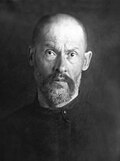 Nicholas PospelovHieromartyr · ArchpriestFeb 4
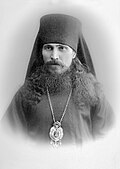 Methodius KrasnoperovHieromartyr · Bishop of PetropavlovskFeb 4
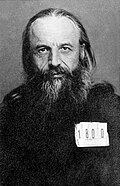 Vasily ZelentsovHieromartyr · Bishop of PrilukiFeb 4