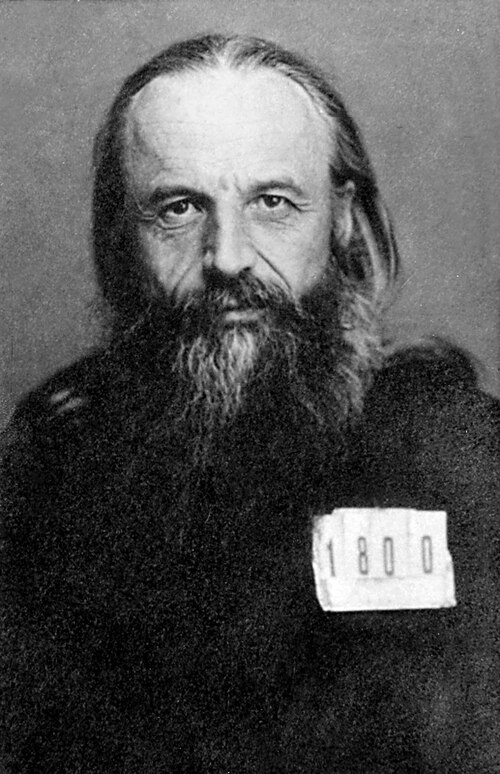
Hieromartyr
Vasily Zelentsov
Bishop of Priluki
Bishop of Priluki and vicar of the Poltava diocese, who died a martyr in Moscow in 1930.
- Feast
- February 4old style February 17
- Reposed
- 193020th century
- Place
- Moscow
- Order
- Martyrs
Life
Saint Basil (in the world Vasily Ivanovich Zelentsov, 1876-1930) the hieromartyr was bishop of Priluki, vicar of the diocese of Poltava, a theologian and missionary who openly criticized Metropolitan Sergius's declaration of loyalty and was shot in Moscow on 7 February 1930. The Ukrainian Orthodox Church canonized him on 11 June 1997, with commemoration on 22 March/4 April, and in August 2000 the Jubilee Council of the Russian Church entered him in the synaxis of the New Martyrs and Confessors of Russia. The Council of Bishops of the Russian Church Outside Russia included him in 1981 in the canonization of the New Martyrs, which was not by name, without a day of his own. He is also commemorated on 4 February.
Youth and mission
He was born on 8 March 1876 in the village of Zimarovo, Ranenburg district, Ryazan governorate, in a priest's family. He graduated from the theological school of Ranenburg (1889), the theological seminary of Ryazan (1896) and the Moscow Theological Academy, with the degree of candidate of theology (1900). He was assistant inspector, librarian and teacher of liturgics, Holy Scripture and the history of the Russian schism at the Krasnoyarsk seminary (1901), member of the board and treasurer of the Alexander Nevsky society, then teacher of Russian and Latin at the theological school of Mariupol (1904), district missionary of the diocese of Yekaterinoslav (1912), teacher at the Yekaterinoslav seminary (1913), district missionary at Mariupol (1914). In 1917 he was elected delegate of the laity of the Ryazan diocese to the Local Council of the Russian Church of 1917-1918, took part in all three sessions and was a member of the commission on the persecutions of the Church and of several departments. In the debate on the relation of Church and state, he upheld the need for the Church's independence and criticized the position of some members of the Council who wished to obtain from the state maintenance in exchange for church freedom. In 1918 he was a missionary in the diocese of Poltava. He was unmarried.
In 1919 he was ordained priest by Archbishop Theophan (Bystrov). From 1920 he was second priest, then rector of the Holy Trinity church in Poltava. He preached much, taught his flock attentive prayer, introduced congregational singing at services and held spiritual talks on Sundays. He took into his care four orphan children of a dead priest. He founded the Christian youth society of the Intercession, seen as an alternative to the Komsomol, and opposed handing over church valuables to the authorities. He was arrested on 30 May 1922 at Poltava, and in a show trial on 12 August 1922 the governorate revolutionary tribunal condemned him to death. Thanks to a protest sent to Lenin by believing workers, the sentence was commuted to five years' imprisonment. He was held in the Kharkiv prison and was released in 1925 under an amnesty, after a petition for pardon in which he wrote that, respecting the right of the people to choose and organize its supreme government itself, he now sought peace with Soviet power. He took with him the child of a dead beggar woman who had begged outside the prison and raised him together with the other four.
Bishop
In August 1925 he was tonsured a monk and raised to archimandrite by Archbishop Gregory (Lisovsky) of Poltava. On 25 August, in the Trinity church, he was consecrated bishop of Priluki, vicar of the diocese of Poltava, by Archbishop Gregory and Bishop Damascene (Tsedrik) of Glukhov, who had come secretly to Poltava. In September 1926 he was arrested in Kharkiv (at Poltava the authorities feared to do it, fearing the outrage of the people, mainly the workers) and sentenced to three years in camps, which he served in the Solovki camp. In the camp he condemned the "Declaration of Metropolitan Sergius", which called for complete loyalty to Soviet power. In autumn 1927 he managed to compose and send out two documents: an "Open Letter from Solovki to the Deputy of the Patriarchal Locum Tenens, Metropolitan Sergius, concerning his Message of 16/29 July 1927" and "Necessary Canonical Corrections to the Message of Metropolitan Sergius". The central idea of the first was that the Church cannot take upon itself before the state, whatever its form of government, the obligation to regard "all the joys and successes of the State as Its own joys and successes, and all its failures as Its own failures". The second showed, among other things, that the Local Council of 15 August 1918 had decided that no member of the Orthodox Church should be brought to church judgment and punishment for political acts as such. At the beginning of 1928 he wrote "My Testament", with sharp criticism of the Declaration, and was one of the authors of the Message of the Solovki bishops, which called for declaring openly to the Bolshevik government that "the Church cannot reconcile itself to the interference, in the sphere of purely church relations, of a state hostile to religion".
In November 1928 he was released from the camp and sent into exile in the Irkutsk region. He lived in the village of Pyanovo, Bratsk district, working on theological writings. In August 1929 he wrote a large work, "In What Fidelity to Christ in Church Life Consists", criticizing the activity of Metropolitan Sergius, in which, among other things, the need to fight Soviet power by every possible means was spoken of. The manuscript was copied by believers and spread widely. Soon after, on 9 December 1929, he was arrested and taken to Moscow, to Butyrka prison. On 3 February 1930 the OGPU college sentenced him to death, and on 7 February he was shot and buried in a common grave at the Vagankovo cemetery in Moscow.
Veneration
On 1 November 1981 the Council of Bishops of the Russian Church Outside Russia canonized the synaxis of the New Martyrs and Confessors of Russia, but without canonization by name, and afterwards Bishop Basil was included among them, without a day of his own. On 11 June 1997 the Holy Synod of the Ukrainian Orthodox Church decided to number him among the saints, with commemoration on 22 March/4 April. The celebrations of his glorification took place at Poltava on 4 April 1998. In August 2000 he was entered by the Jubilee Council among the New Martyrs and Confessors for veneration in the whole Church.
Commemorated the same day February 4
 George of VladimirRight-Believing · Grand Prince of VladimirFeb 4
 Isidore of PelusiumVenerable · Hermit near PelusiumFeb 4
 Theophilus of AdanaSaint · Steward of the Church of AdanaFeb 4
 Abraham of ArbelaSaint · Bishop of ArbelaFeb 4
 Nicholas the StuditeVenerable · Abbot of the Stoudios MonasteryFeb 4
 Cyril of NovoezerskVenerable · Founder of Novoezersk MonasteryFeb 4
 Alexei SharovHieromartyr · ArchpriestFeb 4
 Catherine of SimbirskVenerable Martyr · Nun at SimbirskFeb 4
 John TikhomirovHieromartyr · PriestFeb 4
- Anthony of SupraślVenerable MartyrFeb 4
 Nicholas PospelovHieromartyr · ArchpriestFeb 4
 Methodius KrasnoperovHieromartyr · Bishop of PetropavlovskFeb 4