Confessor
Gheorghe Jimboiu
A confessor of the communist prisons who died in Aiud prison in 1963; venerated by the faithful, not formally canonized.
- Feast
- May 27old style June 9
- Reposed
- 196320th century
- Place
- Aiud prison, Alba County
- Order
- Confessors
Life
Gheorghe (Gicu) Jimboiu was born on 20 October 1921 at Vela, in Dolj, and died on 27 May 1963 in Aiud prison, after fifteen years of detention. He belonged to the group of mystics in the prisons and was regarded by his fellow prisoners as a close disciple of Valeriu Gafencu. He is venerated by some believers as a martyr of the prisons, without synodal canonization.
He was the only child of peasants from Oltenia; he was orphaned of his father while in school and helped his mother. He attended the Commercial Academy in Brașov. As a student he joined a Brotherhood of the Cross, a legionary organization; in 1941, when the Brotherhoods were outlawed, he was arrested and held at Aiud, where he entered the group of mystics. After 23 August 1944 he was released and returned to the faculty, where he stood out by seriousness and clarity. He led the students of Brașov, who were preparing resistance against the communists.
He was arrested again in 1949, at Brașov, and interrogated for a year in harsh conditions, which destroyed his health. He had been named head of the Brașov student group because he had already been condemned as a legionary. Tuberculosis formed a cavity in his lung. He did not pass through the denunciations of Pitești, being sent, ill, to Târgu Ocna. Ianolide describes him as the most beautiful figure there, after Gafencu. He was then moved to Gherla, where he was known by Dumitru Bordeianu, and finally to Aiud.
His fellow prisoners say he said the prayer of the heart, that he had no words of hatred or revenge in his mouth, that he bore even a tooth extraction without anaesthetic in quiet and that he drew people to him. Bordeianu related that for a year he was tormented by the conviction that he no longer believed in God, until he met Jimboiu. At Aiud the regime was wretched and his cirrhosis progressed. After fifteen years of imprisonment, a few days before release, exhausted, he was taken to the infirmary and died on 27 May 1963, conscious and at peace. He was buried without a cross in the political prisoners' cemetery at Aiud. His veneration rests on the testimony of former prisoners; the Synod has not canonized him.
Commemorated the same day May 27
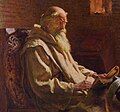 Bede the VenerableVenerable · Monk and historianMay 27
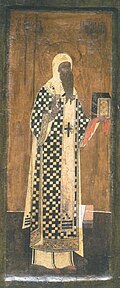 Cyprian of MoscowSaint · Metropolitan of Kiev and all RusMay 27
 John the RussianConfessor · Slave of the Turks in CappadociaMay 27
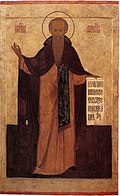 Therapont of BelozerskVenerable · Founder of Ferapontov MonasteryMay 27
 MelangellVenerable · Hermit and abbess of PowysMay 27
 Julius the VeteranMartyrMay 27
- Basil of KhakhuliVenerable · Georgian monkMay 27
- Mikel ParekheliSaintMay 27
- Therapon of SerdicaSaint · Bishop of SerdicaMay 27
- AlypiusMartyrMay 27
- Averikios of PrečistaVenerable MartyrMay 27
 Bruno of WürzburgSaint · Bishop of WürzburgMay 27