Martyr
Heraclius of Sebaste
Martyr of Sebaste, who suffered for Christ.
Life
Holy Martyr Heraclius of Sebaste is one of the Forty Martyrs of Sebaste, Christian soldiers who died of cold in the winter of the year 320 for confessing Christ. The Church commemorates them on 22 March (new style, 9 March in the old style), in one of the most honoured feasts of the year, when the strictness of Great Lent is relaxed and the Liturgy of the Presanctified Gifts is served.
In the year 313 Emperor Constantine the Great signed the law of freedom of faith. His co-ruler Licinius signed the law too, but in his lands the persecution of Christians went on. Around the year 320, in the city of Sebaste in Armenia, there stood a Roman army in which forty Christian soldiers from Cappadocia were serving, brave men who had come out victorious from many battles. The commander Agricolaus wanted to force them to sacrifice to idols, but the soldiers refused. He shut them up in prison. They gave themselves to prayer, and one night they heard a voice that said: "He that endureth to the end shall be saved."
The next day Agricolaus tried flattery: he praised their courage, youth and strength and proposed that they renounce Christ in order to win the honour and favour of the emperor. Hearing a refusal again, he ordered them put in chains. The eldest, Kyrion, answered that the emperor had not given him the right to put them in fetters. Agricolaus was confused and ordered them taken to prison without chains. After seven days a high official, Lysias, came to Sebaste and put them on trial. The saints answered firmly: "Take not only our soldiers' rank, but our lives, for nothing is dearer to us than Christ our God." Lysias ordered them stoned, but the stones missed their mark, and the stone thrown by Lysias struck Agricolaus in the face. The tormentors understood that the saints were guarded by an unseen power. In prison the soldiers spent the night in prayer and again heard the voice of the Lord: "He that believeth in Me, though he were dead, yet shall he live. Be of good courage and fear not, for you shall receive unfading crowns."
It was winter and the frost was fierce. The soldiers were stripped, led to the lake near the city and placed under guard on the ice all night. To break their will, a bath was heated on the shore. In the first hour of the night, when the cold was no longer bearable, one of the soldiers could not endure it and ran toward the bath, but, just crossing the threshold, fell dead. In the third hour the Lord sent comfort to the martyrs: suddenly it grew light, the ice melted and the water of the lake grew warm. All the guards were asleep, only one named Aglaius was awake. Looking toward the lake he saw above each martyr a bright crown. He counted thirty-nine crowns and understood that the soldier who had fled had lost his own. Then Aglaius woke the other guards, threw off his clothes, cried that he too was a Christian and joined the martyrs. Standing in the water, he prayed: "Lord God, I believe in You, in whom these soldiers believe. Number me with them, that I may suffer with Your servants."
The next morning the tormentors saw with astonishment that the martyrs were alive and that their guard Aglaius was glorifying Christ with them. They drew them out of the water and broke their legs. During this agonizing execution the mother of the youngest of the soldiers, Meliton, urged her son not to be afraid and to endure everything to the end. The bodies of the martyrs were placed on carts and taken to be burned. The young Meliton was still breathing and was left on the ground, but his mother lifted him and carried him on her shoulders behind the cart. When Meliton gave his last breath, his mother laid him on the cart beside the bodies of his holy companions. The bodies were burned on a pyre, and the charred bones were thrown into the water, so that Christians could not gather them.
After three days the martyrs appeared in a dream to the blessed Peter, bishop of Sebaste, and commanded him to bury their remains. The bishop, with a few clergy, gathered by night the remains of the glorious martyrs and buried them with honour. Their names have been preserved: Kyrion, Candidus, Domnus, Hesychius, Heraclius, Smaragdus, Eunoicus, Valens, Vivianus, Claudius, Priscus, Theodulus, Eutychius, John, Xanthias, Helianus, Sisinius, Angius, Aetius, Flavius, Acacius, Ecdicius, Lysimachus, Alexander, Elias, Gorgonius, Theophilus, Domitian, Gaius, Leontius, Athanasius, Cyril, Sacerdon, Nicholas, Valerius, Philoctimon, Severian, Chudion, Meliton and Aglaius.
Commemorated the same day March 9
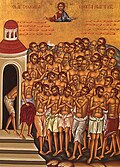 Forty Martyrs of SebasteHoly Martyrs · Soldiers of the Twelfth LegionMar 9
 Bruno of QuerfurtHieromartyr · Missionary ArchbishopMar 9
 Pacian of BarcelonaSaint · Bishop of BarcelonaMar 9
 Caesarius of NazianzusSaint · Brother of Gregory the TheologianMar 9
- Urpasianus of NicomediaMartyrMar 9
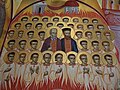 The 42 Martyrs of MomišićiHoly New MartyrsMar 9
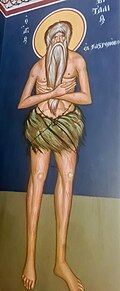 Vitalis of CastronovoVenerable · Hermit and abbot in southern ItalyMar 9
- Aetius of SebasteMartyrMar 9
- Aglaius of SebasteMartyrMar 9
- Alexander of SebasteMartyrMar 9
- Alexandra SamoylovaVenerable MartyrMar 9
- Alexis SmirnovHieromartyrMar 9