Venerable Martyr
Hilarion Gromov
A monastic martyr of the Russian Church, who died in 1937.
- Feast
- September 28old style October 11
- Reposed
- 193720th century
- Place
- St Panteleimon; Moscow metochion, Mount Athos
- Order
- Martyrs
Life
Holy Venerable Martyr Hilarion Gromov (1864-1937), a hieromonk, was born in the world Ioann Andreevich Gromov, in the village of Krupshevo of the Kablukovo volost, Tver district, in a peasant family. He entered the monastery of Saint Panteleimon on Athos as a novice, where he struggled until 1914, when he was moved to the metochion of the Athonite monastery in Moscow. There he received monastic tonsure with the name Hilarion, was ordained hieromonk and appointed senior monk, directing various obediences of the monastery.
From 1922, with the beginning of the persecution of the Russian Church and the mass closing of monasteries, Hieromonk Hilarion served as a supernumerary priest at the church of Saint Gregory of Neocaesarea in Moscow. In December 1930 the OGPU, on the order of the Soviet government, began measures to expel from Moscow clergy, monks, nuns of closed monasteries and active laity. On 17 January 1931 Hieromonk Hilarion was summoned to the OGPU for interrogation. The investigator asked him whether he agitated against Soviet power and what he told believers when they asked whether there was a persecution of religion by Soviet power. Father Hilarion answered: I do not agitate against Soviet power; to believers who ask me about the persecution of religion I always explain that every authority is given by God and therefore we must submit to every authority and bear all persecutions of religion. Learning that the hieromonk considered there was persecution under Soviet power, the investigator let him go, taking an undertaking not to leave the city.
In all, over four hundred monks, nuns and lay people were interrogated and prepared for expulsion in Moscow. They were united in groups, handled by separate investigators. On 29 January 1931 the investigation for the group to which Hieromonk Hilarion belonged was finished and the indictment drawn up, saying that they, monks, nuns, former house owners and merchants, active churchmen-monarchists, grouping around the reactionary churches of Moscow, systematically carried on anti-Soviet agitation about the religious persecution carried out by Soviet power, and that their dwellings were a refuge for every kind of counter-revolutionary element. On 8 February 1931 the Special Council of the OGPU Collegium sentenced all those arrested to three years of exile. Half of those arrested were sent to Kazakhstan, and the other half, to which Hieromonk Hilarion belonged, to the Northern Region, to the building of a railway branch in the remote taiga, where conditions of work and life were the hardest. Many clergy had been exiled there, and many died of disease and excessive labour.
In 1934, at the end of his term, Father Hilarion returned to Moscow and tried to obtain a passport on the documents received in exile, but was refused. He went to Vladimir, received papers and settled with a spiritual son in the town of Petushki, where he lived several years, coming from time to time to Moscow for the spiritual care of his spiritual children. Here he went to the church of the Deposition of the Robe on Donskaya Street, but because of the authorities' supervision of church life he could not serve, and served in the homes of his spiritual children, in many of which small house churches were arranged, especially in the home of Deacon Ioann Khrenov, who had once served at the church of the Forty Martyrs near the Novospassky monastery. Father Hilarion was helped materially by his spiritual son Nikolai Rein.
On 10 January 1937, on one of his visits to Moscow, Father Hilarion was knocked down by a tram. The injury was not fatal, but he needed care, and a spiritual daughter took him in and obtained a passport for him on the documents given him at Vladimir. Afterward, for several months, he lived with various spiritual children, since it was dangerous to stay long in one place, the persecution of the Church not only not abating but growing ever stronger.
On 26 August 1937 Hieromonk Hilarion was arrested, imprisoned in the Butyrka prison in Moscow and interrogated. Father Hilarion did not admit guilt, and the investigator did not insist; the testimony of a false witness whom Father Hilarion knew was enough for him, as was the fact that the priest had been tried for counter-revolutionary activity in 1931. On 5 October 1937 the investigation was closed. Father Hilarion was accused of having been an active participant in a counter-revolutionary church-monarchist group, of having conducted secret services in the homes of like-minded people, systematically agitated against the Soviet regime, expressed fascist sentiments and spread counter-revolutionary provocative rumours of a supposed persecution of religion and clergy in the USSR. On 8 October an NKVD troika sentenced him to death. Hieromonk Hilarion Gromov was shot on 11 October 1937 and buried in an unknown common grave at the Butovo firing range near Moscow.
He is commemorated on 11 October, on 29 May, in the Synaxis of the New Martyrs of Butovo, on 20 May, in the Synaxis of the Venerable Fathers of the Russian Monastery of Saint Panteleimon on Athos, and on 5 September, in the Synaxis of the Saints of Moscow (new style, some days movable).
Commemorated the same day September 28
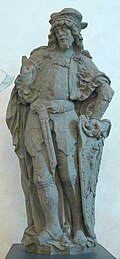 Wenceslaus of BohemiaPassion-Bearer · Duke of BohemiaSep 28
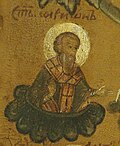 Hilarion of KievSaint · Metropolitan of KievSep 28
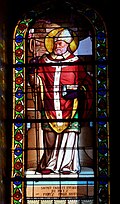 Faustus of RiezSaint · Bishop of RiezSep 28
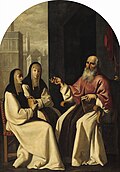 EustochiumVenerable · Consecrated virginSep 28
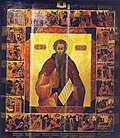 Chariton the ConfessorVenerable · Monk in the Judean desertSep 28
 Salonius of GenevaSaint · Bishop of GenevaSep 28
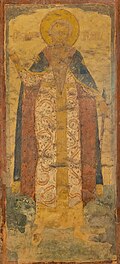 Nicholas SvyatoshaVenerable · Prince and monk of the Caves LavraSep 28
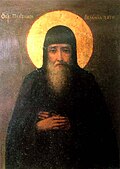 Abraham the Recluse of the Kiev CavesVenerable · Recluse of the Kiev Caves LavraSep 28
 Arethas the RecluseVenerable · Recluse of the Kiev CavesSep 28
 Athanasius the RecluseVenerable · Recluse of the Kiev CavesSep 28
 Damian the HealerVenerable · Priest and healer of the CavesSep 28
 Matthew the ClairvoyantVenerable · Monk of the Kiev CavesSep 28