Martyr
James of Mesukevi
Georgian martyr
A martyr of the Georgian Church, venerated at Mesukevi.
Life
Holy Martyr James of Mesukevi, a Georgian, is numbered among Holy Martyr Sukhius and his sixteen companions, Georgian nobles, among them Andrew, Anastasius and many others. The calendar commemorates him by the name James among them.
Saint Sukhius and his sixteen comrades were nobles at the court of the ruler of Caucasian Albania (today on the territory of Azerbaijan). Accompanying the daughter of the Albanian ruler, Satenik, the wife of King Artaxias of Armenia (88-123), they came to Artashat, the ancient capital of Armenia (the city was later destroyed by the Romans, in 163). There the Christian Greek Chrysos preached, enlightened and ordained priest by the Holy Apostle Thaddeus (about 44, commemorated on 21 August). The nobles believed in the Saviour and firmly resolved to devote their whole life to the service of God. All seventeen newly converted Georgians followed Chrysos into Mesopotamia. During Baptism in the waters of the Euphrates, performed by the priest Chrysos, they were found worthy to see the Lord of glory, Jesus Christ. At the place of Baptism the holy martyrs raised a venerable cross, called the Cross of the Annunciation. At Baptism the priest Chrysos gave all new names: to the eldest, Sukhius (instead of Bagadras), and to his companions: Andrew, Anastasius, Talale, Theodoret, Ivkhirion, Jordan, Quadratus, Lucian, Mimnenos, Nerangios, Polyeuctus, James, Phocas, Domentian, Victor and Zosimus.
After the martyr's end of blessed Chrysos, Saint Sukhius became the spiritual guide of the fellowship. Soon all moved to a wild place on Mount Sukaketi, not far from the mountain village of Bagrevandi. There the former nobles led the strictest ascetic life: their food was the scanty mountain plants and their drink cold spring water. The new ruler of pagan Albania, Datianos, learned that his former nobles had accepted Christianity and settled in prayerful solitude. He charged his confidant Barnabas, with a band of soldiers, to persuade them to return to court and to their former faith. Barnabas found Saint Sukhius and his companions, but they, keeping their vow of service to God, rejected all persuasion.
Then, by Barnabas's order, Saint Sukhius and his companions were nailed to the ground in the form of a cross and burned. Dying, Saint Quadratus, and after him the other martyrs, began to sing the 21st psalm. After the burning, their bodies were cut into pieces and scattered over the whole of Mount Sukaketi, whence the martyrs received the name Mesukevi (more exactly, Sukaketi). This took place in the year 123 (by other data, in 130; an Athonite parchment manuscript of the eleventh century of the Iviron monastery gives the year 100). Their holy remains lay unburied and incorrupt until the fourth century, when local Christians put them in coffins and buried them (the names of the holy martyrs were found written on the rock). The holy hieromartyr Gregory, the Enlightener of Armenia († about 335, commemorated on 30 September), raised a church on that place and founded a monastery. Later a healing spring opened there.
They are commemorated on 28 April and on 22 November (new style, the second being a movable day), in the Synaxis of the Alan Saints.
Commemorated the same day April 15
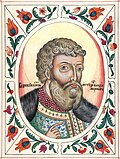 Mstislav the GreatRight-Believing · Grand Prince of KyivApr 15
 AristarchusApostle · Apostle of the SeventyApr 15
 Trophimus the EphesianApostle · Apostle of the SeventyApr 15
 PudensApostleApr 15
- Felix of ByzantiumSaint · Bishop of ByzantiumApr 15
 Basilissa and AnastasiaMartyr · Martyrs of RomeApr 15
 Padarn of WalesSaint · British abbot-bishopApr 15
 Abbo II of MetzSaint · Bishop of MetzApr 15
 Maro of PicenumHieromartyr · Martyr of PicenumApr 15
 Daniel of AchinskRighteousApr 15
 Sukias the AlanVenerable MartyrApr 15
 Leonidas of AthensHieromartyr · Bishop of AthensApr 15