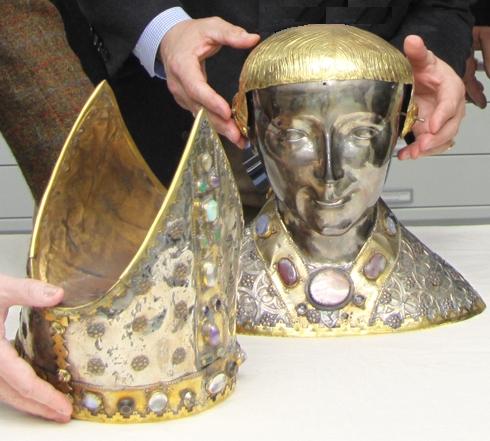
Saint
James of Nisibis
Bishop of Nisibis
Hermit and then bishop of Nisibis in Mesopotamia, who died in 338.
- Feast
- January 13old style January 26
- Reposed
- 3384th century
- Place
- Nusaybin
- Order
- Hierarchs
Life
Saint James of Nisibis, hierarch, was a hermit and then bishop of Nisibis, in Mesopotamia, and died in 338. He was called the Moses of Mesopotamia and was the spiritual father of Saint Ephrem the Syrian. He is commemorated on 13 January.
Beginnings
James was the son of a prince and was born at Nisibis, in Mesopotamia, in the third century; it is said he was a relative of Saint Gregory the Illuminator. He was called a confessor of the faith for his sufferings in the persecution of Maximian. He lived as a hermit in the mountains near Nisibis, where, according to Theodoret, he lived on herbs and fruits and had no clothes, no shelter and no fire. He became famous and was visited by Sheria, bishop of Arbela. According to tradition he worked many miracles. Theodoret relates that he made a boulder burst beside a Persian judge who had given an unjust verdict, and that he cursed some haughty women at a spring, whose hair turned white and the spring dried up; the women repented, the spring returned, but their hair stayed white. Of a man laid out under a sheet, as if dead, by some people who wished to deceive him for burial money, it is told that he really died and was raised through James’s prayer, and the guilty repented.
Bishop
It is not known for certain when he was consecrated bishop of Nisibis. Some sources say about 300, others 308. He seems to have built the first church in Nisibis, and the founding of the school of Nisibis is attributed to him. In 325 he took part in the First Ecumenical Council at Nicaea and opposed Arius. It is said that Ephrem accompanied him, but this is regarded as legend.
The siege
In 337-338 Nisibis was besieged by Shapur II, shah of Persia. According to Theodoret, James went up on the walls, encouraged by the people and by Ephrem, prayed for the city and cursed the besiegers. The Persian army was struck by a swarm of gnats and flies, and Shapur abandoned the siege. According to the Chronicle of 724, James died on the thirtieth day of the siege and was buried within the walls. His bones were moved to Edessa after Nisibis was ceded to the Persians, in 363. It is told that he climbed the mountain where the ark of Noah is believed to have rested and brought back a fragment of it, later kept at Etchmiadzin.
Commemorated the same day January 13
 Hilary of PoitiersSaint · Bishop of PoitiersJan 13
 Kentigern of GlasgowSaint · Bishop of GlasgowJan 13
 Jeremias I of ConstantinopleSaint · Patriarch of ConstantinopleJan 13
 Irenarch the RecluseVenerable · Recluse of RostovJan 13
 Eleazar of AnzerVenerable · Founder of the Anzer SketeJan 13
 Maximos of KafsokalyviaVenerableJan 13
 Vivenzio of BleraSaint · Bishop of BleraJan 13
- Leontius of CaesareaSaint · Bishop of Caesarea in CappadociaJan 13
- Nicholas the GreekSaintJan 13
- Ailell of Ard MachaSaintJan 13
- Andrew of TrierHieromartyrJan 13
- Berno of ClunyVenerable · Abbot of ClunyJan 13