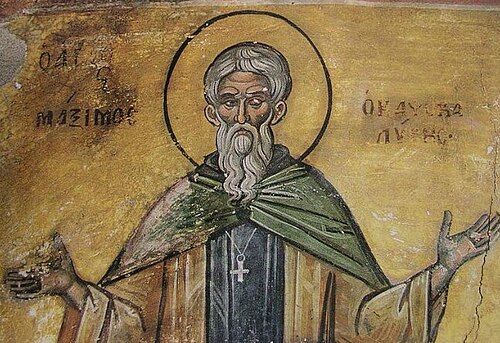
Venerable
Maximos of Kafsokalyvia
Hesychast monk on Mount Athos, known as the Hut Burner, who died in 1365.
- Feast
- January 13old style January 26
- Reposed
- 136514th century
- Place
- Mount Athos
- Order
- Venerables
Life
Venerable Maximos of Kafsokalyvia ("the Hut-Burner", died 1365 or 1380, according to the Serbian source in 1320) was a hesychast monk on Mount Athos, some of whose writings on prayer and asceticism are included in the Philokalia. He is commemorated on 13 January (26 January New Style). The skete of Kapsokalyvia on Athos bears his name.
Life
According to Theophanes of Vatopedi, he was born with the baptismal name Manuel, into a noble family at Lampsacus, a town on the Hellespont, between 1272 and 1285. The stories say that as a child he was devoted to the Mother of God and gave his food and clothing to the poor. When his parents arranged his marriage, at seventeen, he withdrew to Mount Ganos, where he became the disciple of an elderly monk. Then he began his austere life: he slept on the ground, kept long vigils and fasted. He was also a monk at Mount Papikion. After his spiritual father's death he went to Constantinople, where he spent a year, acting as a fool for Christ, pretending to be mad and living in the gateway of a famous church.
Then he settled at the Great Lavra. There he had three visions of the Mother of God, who told him to ascend to the summit of Mount Athos. After the third vision he obeyed and climbed, spent three days at the summit and received a vision of the Mother of God, who told him to remain on Athos. So began about ten years of wandering. He led an austere life, mostly as a recluse in crude shelters, moving from time to time toward more seclusion. He wore only one garment, lived on wild nuts and berries and would regularly burn his hut as he moved on to new places, whence the nickname "the Hut-Burner". The Serbian source says that he played the fool a little and constantly changed his dwelling, and his dwelling was a hut of branches, raised and burned one after another; he was regarded as mad until Saint Gregory of Sinai came to Athos, who discovered in Maximos a singular ascetic, a wonderworking intercessor and an "angel in the flesh".
After about ten years, at the meeting with the renowned hesychast monk Gregory of Sinai, Maximos gave up his wandering life and lived fourteen years as an ascetic in a hut. On Athos he was a close associate of Gregory of Sinai. In his life he was held in high repute as a holy man and spiritual adviser, admired for his austerity and held to have the gifts of foresight, prophecy, healing and exorcism. Legend has it that he was seen flying through the air, that he turned seawater into drinking water and more. About 1350 the Byzantine emperors John VI Kantakouzenos and John V Palaiologos visited him. Patriarch Callistus I of Constantinople, who had been for twenty-eight years a monk and disciple of Gregory of Sinai on Athos, passed through on his way to Serbia and met Maximos, who greeted him in a seemingly humorous manner: "This old man will never see his old lady again". It was a prophecy: Callistus would not see Constantinople ("his old lady") again, since he died before he could return. Maximos took leave of him by chanting "Blessed are the blameless in the way" (Psalm 118). Near the end he gave his hut to Niphon Kausokalybites and moved closer to the Great Lavra, to hear its bells. At his request he was buried in a grave he dug himself. Though he desired seclusion and obscurity, four writers wrote his life: Theophanes, Niphon Kausokalybites's disciple, Makarios Makres, Ioannikios Kochylas and others.
Commemorated the same day January 13
 Hilary of PoitiersSaint · Bishop of PoitiersJan 13
 James of NisibisSaint · Bishop of NisibisJan 13
 Kentigern of GlasgowSaint · Bishop of GlasgowJan 13
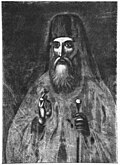 Jeremias I of ConstantinopleSaint · Patriarch of ConstantinopleJan 13
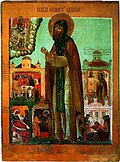 Irenarch the RecluseVenerable · Recluse of RostovJan 13
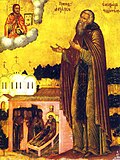 Eleazar of AnzerVenerable · Founder of the Anzer SketeJan 13
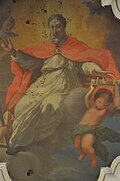 Vivenzio of BleraSaint · Bishop of BleraJan 13
- Leontius of CaesareaSaint · Bishop of Caesarea in CappadociaJan 13
- Nicholas the GreekSaintJan 13
- Ailell of Ard MachaSaintJan 13
- Andrew of TrierHieromartyrJan 13
- Berno of ClunyVenerable · Abbot of ClunyJan 13