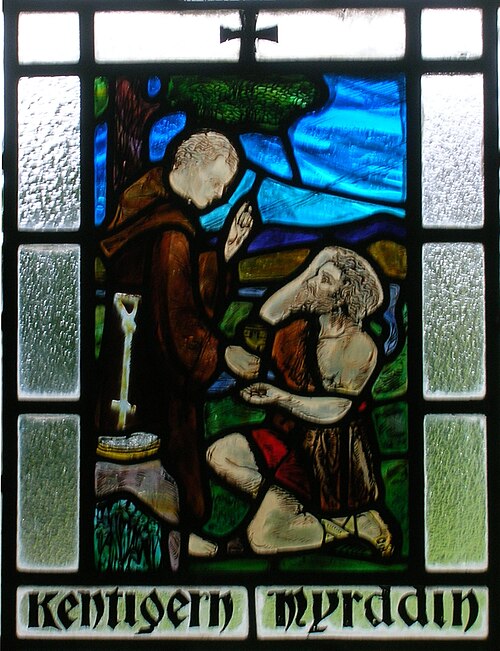
Saint
Kentigern of Glasgow
Bishop of Glasgow
Missionary in the kingdom of Strathclyde, founder and patron saint of Glasgow in the late sixth century.
- Feast
- January 13old style January 26
- Reposed
- 6147th century
- Place
- Glasgow
- Order
- Hierarchs
Life
Saint Kentigern, hierarch, known in Scotland as Mungo, was a missionary in the Brittonic kingdom of Strathclyde in the latter half of the sixth century, and the founder and patron of the city of Glasgow. He is venerated as a saint of the undivided Church, and the Orthodox Church commemorates him on 13 January, or in some calendars on 14 January, and on the third Sunday after Pentecost, together with the Synaxis of the Saints of Britain and Ireland.
Name and sources
In Wales and England the saint is known by the name he received at birth and baptism, Kentigern, which probably means hound lord or chief. In Scotland he is called Mungo, a pet name, perhaps from my dear one. His Life was written about 1185 by Jocelin of Furness, who says he rewrote it from an older Glasgow legend and a document in Old Irish. There also survive an earlier partial Life and a later one by John of Tynemouth.
Birth and childhood
His mother, Teneu, was the daughter of King Lleuddun (or Lot), who ruled a territory in Lothian. The sources differ about his father: according to one manuscript he was Owain, son of Urien, who forced her; according to others the two loved each other. Enraged, her father ordered her thrown from the crag of Traprain Law. She survived and was set adrift in a coracle, which floated across the Firth of Forth to Culross, where Mungo was born.
The child was raised by Saint Serf, who was working among the Picts in that area, and who gave him the name Mungo. At twenty-five he began to preach on the banks of the Clyde, on the site of present Glasgow. He built his church by the Molendinar Burn, where the medieval cathedral stands today. For some thirteen years he laboured there, leading an austere life in a small cell and drawing many by his example and his preaching.
Exile and return
A strong movement against the Christians of Strathclyde, led by a King Morken, forced him to leave the district. He withdrew to Wales, through Cumbria, and stayed for a time with Saint David, then in Gwynedd, where he founded a cathedral at Llanelwy (St Asaph). In that time he made a pilgrimage to Rome. The new king of Strathclyde, Riderch Hael, called him back. Mungo accepted and made Saint Asaph bishop of Llanelwy in his place.
For some years he had his seat at Hoddom in Dumfriesshire, from where he preached in Galloway. He then returned to Glasgow, where a large community gathered around him. Nearby, at Kilmacolm, he was visited by Saint Columba. The two saints embraced, spoke at length and exchanged their pastoral staves. In old age Mungo became very frail. It is said that he fell asleep in the Lord on a Sunday, 13 January, in his bath. He was buried where Glasgow Cathedral stands today, which bears his name.
Miracles and veneration
His Life tells of four miracles worked at Glasgow, which the city's coat of arms recalls: the bird, the tree, the bell and the fish. He is the patron of the city of Glasgow, and according to some sources of all Scotland. Ancient churches in Cumbria bear his name. The cathedral of St Asaph is dedicated to Mungo and Asaph.
Commemorated the same day January 13
 Hilary of PoitiersSaint · Bishop of PoitiersJan 13
 James of NisibisSaint · Bishop of NisibisJan 13
 Jeremias I of ConstantinopleSaint · Patriarch of ConstantinopleJan 13
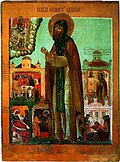 Irenarch the RecluseVenerable · Recluse of RostovJan 13
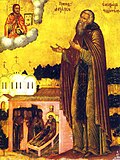 Eleazar of AnzerVenerable · Founder of the Anzer SketeJan 13
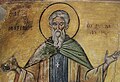 Maximos of KafsokalyviaVenerableJan 13
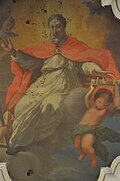 Vivenzio of BleraSaint · Bishop of BleraJan 13
- Leontius of CaesareaSaint · Bishop of Caesarea in CappadociaJan 13
- Nicholas the GreekSaintJan 13
- Ailell of Ard MachaSaintJan 13
- Andrew of TrierHieromartyrJan 13
- Berno of ClunyVenerable · Abbot of ClunyJan 13