Venerable Martyr
Joasaph Shakhov
A monastic martyr of the Russian Church, who died in 1938.
Life
Holy Venerable Martyr Joasaph Shakhov, a hieromonk, was born in 1870 in the village of Ilinskoe in the Yaroslavl district, in the family of the peasant Ivan Shakhov, and at Baptism received the name Nicholas. After the parish school he chose the path of a soldier of Christ and in 1896 came to the Nikolo-Peshnosh monastery, and on 30 May 1898 was received among the brothers. In 1904 the Russo-Japanese war began, and the abbot Sabbas blessed the novice to go to the front, to serve the Church and the Fatherland with arms. The abbot said in his farewell word that, as a soldier of Christ, he should defend faith, tsar and Fatherland. He stayed at the front a year and a half as a private. After the peace he returned to the monastery and on 12 November 1906 was tonsured a monk with the name Joasaph; on 18 November 1907 he was ordained hierodeacon, and on 8 August 1910 hieromonk.
At the front
In 1915, after the outbreak of the First World War, the abbot Juvenal of the monastery sent the hieromonk Joasaph to the German front, where he was priest of the 461st regiment. He did not hide behind the front, but went with the soldiers into battle, carried the wounded off the battlefield, heard their confessions, gave them communion and buried the dead. In the spring of 1917 Bolshevik propaganda reached the trenches too, and the soldiers asked him ever more often: "Father, when will the war end, who needs it, how long shall we suffer?" The priest answered as conscience and the duty of an Orthodox pastor commanded: "We suffer for a common cause, first for the faith, second for the tsar and third for the Fatherland. We must defend it without sparing our blood." He stayed at the front until the summer of 1917, when the monastery recalled him.
The parish of Popovka
The monastery lasted another ten years, and Father Joasaph struggled in it until 1928, when the militant atheists scattered the brothers and closed it. He came then to Kolomna, with the thought of entering the Golutvin monastery, but Archimandrite Nikon, knowing that the days of the monastery were numbered, advised him to serve at a parish. Bishop Paul (Galkovsky) of Yegoryevsk sent him to the Edinoverie church of the Holy Trinity in the village of Popovka, Kolomna district, where the parish took in thirty villages. The zealous pastor saw that things were in a pitiful state and that there were many sectarians, to whom the Orthodox offered no resistance. Just when the godless state was persecuting the Orthodox Church without mercy, the hieromonk Joasaph took up missionary work energetically, trying to enlighten the strayed, and had some success: people began to leave the sects and return to Orthodoxy. He served in this parish ten years, and in 1930 was raised to the rank of hegumen.
Martyrdom
On 8 March 1938 he was arrested and imprisoned at Kolomna. To the investigators he answered that, by his priestly oath and duty, he could not be in solidarity with the ideals of Soviet power, that he disliked the state emblem, the hammer and sickle, and that he would have wished to see on the state banners the image of the Saviour. Taught before the revolution to defend the faith and the anointed of God, he remains with these ideals. Asked whether he had often called the collective farmers to defend the faith, he said: "Yes, I asked the faithful to go to church, to pray to God and to defend the faith from mockery." About the Nativity sermon, in which he had spoken of the coming of Christ, who will lead the struggle with enemies, he said that he had spoken of the Second Coming and told the faithful to be ready to meet Christ, reminding them of the Last Judgment. On 13 March the NKVD troika sentenced him to death and he was taken to Taganka in Moscow. The hegumen Joasaph Shakhov was shot on 22 March 1938 and buried in an unknown common grave at the Butovo firing range near Moscow.
The Church commemorates him on 22 March, the day of his death, in the new style, and on the movable days of the synaxis of the New Martyrs of Butovo (29 May) and of the Saints of Moscow (5 September).
Commemorated the same day March 9
 Forty Martyrs of SebasteHoly Martyrs · Soldiers of the Twelfth LegionMar 9
 Bruno of QuerfurtHieromartyr · Missionary ArchbishopMar 9
 Pacian of BarcelonaSaint · Bishop of BarcelonaMar 9
 Caesarius of NazianzusSaint · Brother of Gregory the TheologianMar 9
- Urpasianus of NicomediaMartyrMar 9
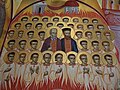 The 42 Martyrs of MomišićiHoly New MartyrsMar 9
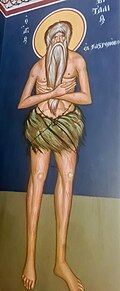 Vitalis of CastronovoVenerable · Hermit and abbot in southern ItalyMar 9
- Aetius of SebasteMartyrMar 9
- Aglaius of SebasteMartyrMar 9
- Alexander of SebasteMartyrMar 9
- Alexandra SamoylovaVenerable MartyrMar 9
- Alexis SmirnovHieromartyrMar 9