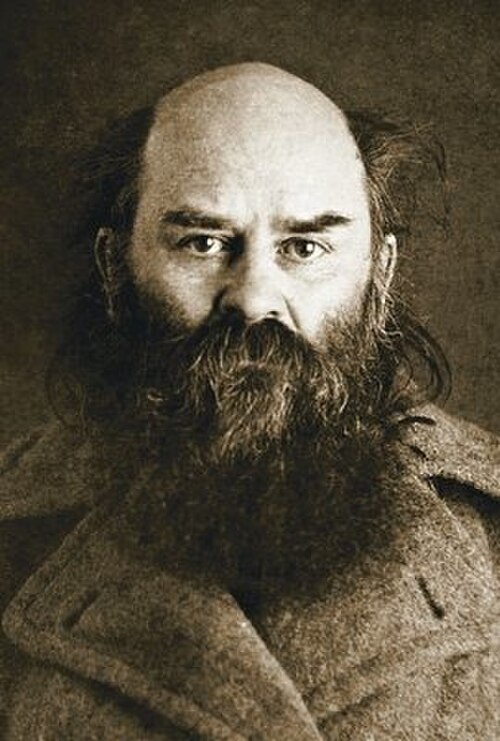
Hieromartyr
Joasaph Udalov
Bishop of Chistopol
Bishop of Chistopol, vicar of the Kazan diocese, who died a martyr in 1937; glorified among the saints in 2008.
- Feast
- November 19old style December 2
- Reposed
- 193720th century
- Place
- Kazan
- Order
- Martyrs
Life
Saint Joasaph (in the world Ivan Ivanovich Udalov, 1886-1937), hieromartyr, was Bishop of Chistopol, vicar of the Kazan diocese, a spiritual son of Schema-Archimandrite Gabriel (Zyryanov), an opponent of the Renovationists and of Metropolitan Sergius's declaration, who passed through exile and camp and was shot on 2 December 1937. He was glorified in 2008. He is commemorated on 19 November (2 December by the new calendar).
Youth and monastic life
He was born on 5 April 1886 at Ufa, in the family of a watchmaker, a merchant by estate. He graduated from the church school in Ufa (1900), the Ufa seminary (1906) and the Kazan Theological Academy (1910), as candidate of theology. His confessor during the seminary was Schema-Archimandrite Gabriel (Zyryanov), and an important influence on him was Archbishop Anthony (Khrapovitsky), who tonsured him a monk with the name Joseph. In 1910 he was ordained hierodeacon and then hieromonk. He taught at the pastoral school in Zhitomir, in 1911 became assistant inspector of the Kazan Academy, from 1912 was abbot of the Transfiguration missionary monastery in Kazan and in 1915 archimandrite.
Bishop
On 12 July 1920 he was consecrated Bishop of Mamadysh, vicar of the Kazan diocese, by Metropolitan Cyril and Bishop Peter (Zverev). Between 1921 and 1922, after the arrest of Metropolitan Cyril and the expulsion of Bishop Anatoly, he led the diocese temporarily. On 12 April 1922 he was named Bishop of Chistopol, vicar of the same diocese. He resisted the Renovationist movement. After Pascha 1923 he served secretly in Kazan, because all the churches of the city had passed to the Renovationists. In 1923 he received the repentance of former Renovationists returning to the Patriarchal Church and rededicated by a short rite the churches that had belonged to them. He could not, however, register the diocesan administration, and in November 1923 the authorities forbade him to serve and arrested him briefly. In 1924 he was summoned to Moscow, arrested and imprisoned at Butyrka, then released in August. On 12 April 1925 he took part in the funeral of Patriarch Tikhon and signed the act passing the Church's authority to Metropolitan Peter. In November 1925 he was arrested in Moscow, accused of aiding a group of monarchist bishops and laymen, did not admit guilt and on 21 May 1926 was sentenced to three years of exile. Between 1926 and 1929 he lived at Turukhansk. In 1929 he asked Metropolitan Sergius to be retired, for health reasons, which was granted. Between 1929 and 1931 he lived at Kozmodemyansk. He viewed Metropolitan Sergius's declaration of 1927 with distrust.
Martyrdom
In the summer of 1931 he was arrested in the case of the organization called the True Orthodox Church. He defended himself, saying that for two years he had lived under OGPU supervision without ever being suspected of anything counter-revolutionary and that, since no personal evidence was brought against him, there was nothing to refute. On 5 January 1932 he was sentenced to three years and was in a camp near Kemerovo, at the mine, wheeling barrows of coal. In 1933 he was accused in the camp of organizing a monarchist church group, and in 1934 his sentence was increased by two years. After release, in 1936, he settled on the outskirts of Kazan with his eighty-year-old mother. He did not enter communion with the bishops of Metropolitan Sergius, but attended their church in the Arsk cemetery. Despite poverty, he sent to priests in prisons and exile the food and clothing received from the faithful. Asked what he thought of Soviet power, he answered that to judge it one must have been in concentration camps.
In November 1937 he was arrested, accused of organizing a counter-revolutionary church underground, did not admit guilt, was sentenced to death on 29 November and shot on 2 December. He was buried in a common grave at the Arkhangelsk cemetery in Kazan. His name was entered in the provisional list of the canonization of the Church Abroad in 1981, but the list was published only at the end of the 1990s. On 23 June 2008 the Holy Synod of the Russian Orthodox Church decided to include him among the New Martyrs, and the glorification took place on 19 December in the Saint Nicholas Cathedral in Chistopol.
Commemorated the same day November 19
 ObadiahProphet · The ProphetNov 19
 Eucherius of LyonSaint · Bishop of LyonNov 19
 Philaret of MoscowSaint · Metropolitan of MoscowNov 19
 Nerses the GreatSaint · Catholicos of ArmeniaNov 19
 Hilarion the GeorgianVenerable · Georgian monk and wonderworkerNov 19
 Barlaam of the Kyiv CavesVenerable · First Abbot of the Caves LavraNov 19
 Porphyrios the KavsokalyviteVenerable · Athonite hieromonkNov 19
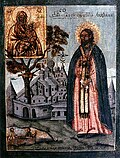 Adrian of PoshekhonyeVenerable Martyr · Abbot of the Dormition MonasteryNov 19
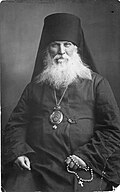 Porphyry GulevichHieromartyr · Bishop of SimferopolNov 19
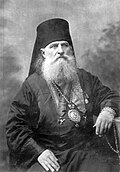 Alexis BelkovskyHieromartyr · Archbishop of Velikiy UstyugNov 19
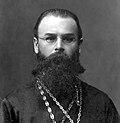 Macarius KarmazinHieromartyr · Bishop of YekaterinoslavNov 19
- Azes of IsauriaMartyrNov 19