
Hieromartyr
Macarius Karmazin
Bishop of Yekaterinoslav
Born into a land surveyor's family, Bishop of Yekaterinoslav, who died a martyr in 1937; canonized in 2000.
- Feast
- November 19old style December 2
- Reposed
- 193720th century
- Place
- Janalyq
- Order
- Martyrs
Life
Saint Macarius Karmazin, hieromartyr (born Grigory Yakovlevich Karmazin, 1875 to 1937), was bishop of Uman and then of Yekaterinoslav, one of the hierarchs who kept the Church in Ukraine standing in the years of persecution. He was shot in Kazakhstan on 3 December 1937 and numbered among the new martyrs and confessors of Russia in August 2000 by the Jubilee Council of Bishops of the Russian Orthodox Church.
A military priest
He was born on 1 October 1875 into the family of a land surveyor and finished the church seminary of Podolia in 1898. He was ordained priest on 23 August 1893 for the church of the village of Vitkovets in the Kamenets district, and from 1900 he served at the church of Bandyshevka in the Yampol district of the same province. From 1902 he was military priest of the 8th Reserve Cavalry Regiment, and from 1912 of the 152nd Vladikavkaz Infantry Regiment.
In the First World War he was concussed on 2 March 1915, then again and wounded on 21 July, and taken to hospital. Healed, he returned to his regiment on 8 September 1915. For his pastoral labour and personal courage he was raised to the rank of archpriest and moved to the 729th Infantry Regiment. He served at Brest-Litovsk, in Galicia, at Riga and elsewhere. From 1918 to 1922 he was a priest in parishes of the diocese of Kyiv and received monastic tonsure.
Bishop
In 1922 he was named bishop of Uman, vicar of the diocese of Kyiv. On 22 January 1923 the Exarch of Ukraine, Metropolitan Michael (Yermakov), foreseeing his arrest, left a testamentary order that, if the ruling bishop were removed, the administration should pass to one of the vicars by seniority, and likewise to another if one of them were arrested. Bishop Macarius was second on the list, after Bishop Demetrius (Verbitsky). On 5 February Metropolitan Michael was arrested, and in the night of 4 April the vicars Demetrius, Nazarius (Blinov) and Basil (Bogdashevsky), Archimandrite Hermogenes (Golubev) and other clergy were arrested.
Bishop Macarius took over the administration of the diocese of Kyiv and in fact stood at the head of the Orthodox hierarchy in Ukraine. Supporters of the Patriarchal Church gathered around him. Together with his closest friend, Bishop Parthenius (Bryansk) of Ananiev, he performed secret ordinations of the firmest and most faithful supporters of Patriarch Tikhon. At his initiative a church administration beyond the control of the political police was set up, groups of clergy and laity working independently of the authorities were strengthened, and money was gathered for the exiled bishops. A great help to him was his cousin Raisa Alexandrovna Rzhevskaya, widow of the chief physician of a hospital train, who kept his belongings, papers and addresses during the arrests and sent him in exile news of the state of the Church.
Exile and martyrdom
In January 1925 he was arrested, and the role of quiet coordinator of the Ukrainian bishops passed to Bishop George (Deliev) of Tarashcha. From 1925 he was bishop of Yekaterinoslav and Novomoskovsk, then arrested again and, after ten months in prison, sent to Kharkiv, where he had to remain until March 1927 without leave to depart. He opposed the so-called Gregorian movement, which denied the need for the patriarchate and was at first supported by the authorities, and he circulated appeals against it.
In 1927 he was arrested and exiled to the Gorno-Shor district of the Tomsk region. After serving his term he lived from 1933 in Kostroma, then in the village of Selishche in the Ivanovo region, where he set up secret house churches in which candidates for ordination were prepared. In the autumn of 1934 he was arrested again, accused of being the inspirer of a "counter-revolutionary church-monarchist" group, and on 17 March 1935 he was sentenced to five years of exile in Kazakhstan, together with Raisa Rzhevskaya. They lived at the station of Ush-Tobe in the Karatal district, where they served in secret with their closest and most tested companions. In 1937 Bishop Porphyry (Gulevich), expelled from Simferopol, joined them.
On 20 November 1937 Bishops Porphyry and Macarius were arrested, accused of propaganda against the government and of ties with counter-revolutionary elements. They did not plead guilty. On 1 December 1937 a troika of the NKVD of the Alma-Ata region sentenced Bishops Porphyry and Macarius and Raisa Rzhevskaya to death, and on 3 December they were shot.
Veneration
Saint Macarius was numbered among the new martyrs and confessors of Russia in August 2000. His day of remembrance is 20 November (3 December New Style). The calendar of the Moscow Patriarchate for 2013 no longer contained this commemoration, unlike that of 2012; Hegumen Damascene (Orlovsky) said at a conference on canonization that changes had been made to the calendar at the initiative of the Synodal Commission for Canonization, with the blessing of Patriarch Kirill. It is not clear from our sources whether this means a change in his status.
Commemorated the same day November 19
 ObadiahProphet · The ProphetNov 19
 Eucherius of LyonSaint · Bishop of LyonNov 19
 Philaret of MoscowSaint · Metropolitan of MoscowNov 19
 Nerses the GreatSaint · Catholicos of ArmeniaNov 19
 Hilarion the GeorgianVenerable · Georgian monk and wonderworkerNov 19
 Barlaam of the Kyiv CavesVenerable · First Abbot of the Caves LavraNov 19
 Porphyrios the KavsokalyviteVenerable · Athonite hieromonkNov 19
 Adrian of PoshekhonyeVenerable Martyr · Abbot of the Dormition MonasteryNov 19
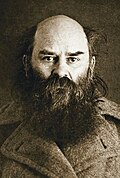 Joasaph UdalovHieromartyr · Bishop of ChistopolNov 19
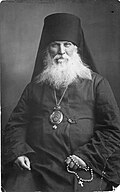 Porphyry GulevichHieromartyr · Bishop of SimferopolNov 19
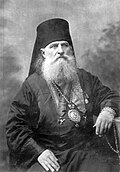 Alexis BelkovskyHieromartyr · Archbishop of Velikiy UstyugNov 19
- Azes of IsauriaMartyrNov 19