Venerable
Porphyrios the Kavsokalyvite
Athonite hieromonk
Athonite hieromonk, widely known for his gift of spiritual discernment; died in 1991.
- Feast
- November 19old style December 2
- Reposed
- 199120th century
- Place
- Mount Athos
- Order
- Venerables
Life
Saint Porphyrios the Kavsokalyvite (1906-1991), born Evangelos Bairaktaris, was a Greek hieromonk known throughout the Orthodox world for his gift of seeing into the hearts of people and for his boundless love for the suffering. The Ecumenical Patriarchate numbered him among the saints on 27 November 2013.
Childhood
He was born on 7 February 1906 in the village of Agios Ioannis in Evia, into a poor but devout farming family, the son of Leonidas and Eleni Bairaktaris. He was the fourth of five children. His father worked the land and was a church chanter; he is said to have known Saint Nectarios and accompanied him on some of his journeys. Unable to feed his family, he went to work on the Panama Canal.
Evangelos went to school for only a year or two and then began to work: tending animals, labouring in a coal mine, then working for a grocer in Chalkida and Piraeus. Even as a child he wished to become a monk, after reading, syllable by syllable while minding the flock, the life of Saint John the Hut-Dweller.
The Holy Mountain
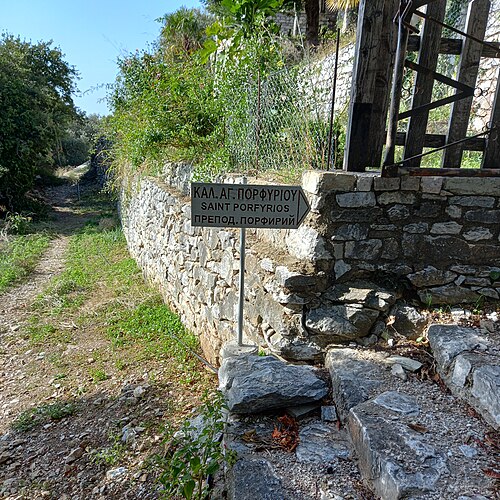
In 1918, after several attempts in which love for his parents had turned him back, he sailed from Piraeus for Athos. On the way he met the monk Pantelimon, who became his spiritual father and, because of the boy's age, passed him off as his nephew. Evangelos served the hieromonk Pantelimon and his brother Ioannikios for six or seven years in the cell of Saint George in the skete of Kavsokalyvia, also practising wood carving. He was tonsured and received the name Nikitas; the sources give his age as fourteen or seventeen. According to the tradition told of him, one morning, while he prayed in a dark corner of the church, a ninety-year-old Russian monk, Zosimas of Karoulia, came in and was lifted from the ground in prayer, wrapped in light. Other accounts say that through a Russian monk named Dimas he received the gift of prayer and of foresight.
Evia and Athens
In 1925 he fell ill with pleurisy and could not be treated on Athos. He returned to Greece, to the monastery of Saint Haralambos, and three times tried to go back to Athos, but illness always forced him to leave. Archbishop Porphyrios III of Sinai, a fellow countryman, was amazed at the young man's spiritual gifts and ordained him deacon and then priest, giving him his own name, Porphyrios, when he was twenty-one. Two years later he was appointed confessor, and in 1938 archimandrite, by Metropolitan Panteleimon of Karystia. He served in the parish of Tsakeia and at the monastery of Saint Nicholas in Ano Vatheia, where he received crowds at confession and listened for hours, sometimes day and night without rest.
In 1940 he was sent to Athens as priest of the chapel of Saint Gerasimos in the Athens Polyclinic, where he served until 1973, first as parish priest and then, for three years, voluntarily. In those years he helped thousands to find peace of soul, and through his gifts of foresight and healing many were freed from illness. He suffered much himself: a broken leg, kidney trouble, a coma and, in 1978, a heart attack at Kallisia, after which he spent twenty days in hospital. In the seventies he made an invention of his own, joining charcoal to the fragrance of incense so that he could use a slower-burning coal in the censer.
The convent at Milesi and the last years
In 1955 he rented from the Pendeli monastery the small monastery of Saint Nicholas at Kallisia, with its estate, which he worked diligently, hoping to build a monastery there. The plan moved in 1980 to Milesi, to an estate he bought, where the convent of the Transfiguration was to rise. It was recognized by decree in 1981, but its foundations were laid only in February 1990.
In 1984 he returned to Athos and settled in the same cell at Kavsokalyvia. His health declined: he had a hernia until death, a heart attack and, in 1987, lost his sight after a botched operation on his left eye. Warned of the approach of his end, he wished to die quietly and left a farewell letter for his spiritual children so that crowds would not gather. He reposed on 2 December 1991 at 4:31 in the morning, surrounded by a few monks of the skete, and the news was given out at dawn on 3 December.
Veneration
Through his work as a spiritual father, Elder Porphyrios became known to an ever wider circle of the faithful. The Holy Synod of the Ecumenical Patriarchate canonized him on 27 November 2013. The Russian Church added him to its calendar in 2014 and the Romanian Orthodox Church in 2017. His memory is kept on 2 December, and he has his own akathist. Several collections of his stories and sayings have been printed since his canonization. In Romania, Metropolitan Andrei of Cluj consecrated in 2019 a chapel dedicated to him at the Rebra-Parva monastery in Bistrița-Năsăud County.
Commemorated the same day November 19
 ObadiahProphet · The ProphetNov 19
 Eucherius of LyonSaint · Bishop of LyonNov 19
 Philaret of MoscowSaint · Metropolitan of MoscowNov 19
 Nerses the GreatSaint · Catholicos of ArmeniaNov 19
 Hilarion the GeorgianVenerable · Georgian monk and wonderworkerNov 19
 Barlaam of the Kyiv CavesVenerable · First Abbot of the Caves LavraNov 19
 Adrian of PoshekhonyeVenerable Martyr · Abbot of the Dormition MonasteryNov 19
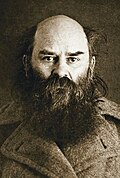 Joasaph UdalovHieromartyr · Bishop of ChistopolNov 19
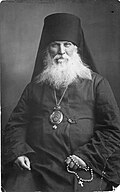 Porphyry GulevichHieromartyr · Bishop of SimferopolNov 19
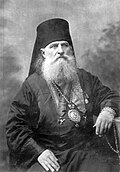 Alexis BelkovskyHieromartyr · Archbishop of Velikiy UstyugNov 19
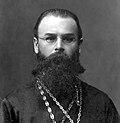 Macarius KarmazinHieromartyr · Bishop of YekaterinoslavNov 19
- Azes of IsauriaMartyrNov 19