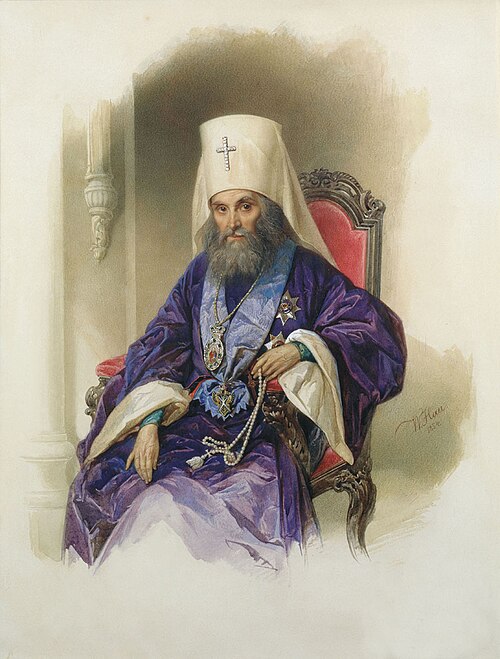
Saint
Philaret of Moscow
Metropolitan of Moscow
Metropolitan of Moscow and Kolomna, the most influential figure of the Russian Church for over forty years; died in 1867.
- Feast
- November 19old style December 2
- Reposed
- 186719th century
- Place
- Moscow
- Order
- Hierarchs
Life
Saint Philaret, Metropolitan of Moscow and Kolomna, in the world Vasily Mikhailovich Drozdov, was for more than forty years, from 1821 to 1867, the most influential figure of the Russian Orthodox Church. A preacher, scholar and author of the Russian catechism, he departed to the Lord on 19 November (1 December) 1867 and was canonized in 1994.
Childhood and learning
He was born on 26 December 1782 at Kolomna, to Mikhail Fyodorovich, deacon of the Dormition Cathedral, and Evdokia Nikitichna, née Filippova, and was baptized on 1 January 1783 with the name Vasily, in honour of Saint Basil the Great, whose memory fell on that day. All his ancestors on both his father's and his mother's side had belonged to the clergy, and his maternal grandfather had been an archpriest. His father taught at the Kolomna seminary and had gathered a rich library at home. At nine he was sent to the seminary of Kolomna, and when it closed in 1799 his father sent him to the seminary of the Trinity-Saint Sergius Lavra, where he studied theology, history, Greek and Hebrew. He showed great gifts for languages and rhetoric and drew the attention of Metropolitan Platon Levshin, patron of the seminary, who showed him marked favour. He graduated in November 1803 and stayed on as teacher of Greek and Hebrew, from 1806 of poetry, and from 1808 of higher eloquence and rhetoric. Though he was growing into maturity, he turned to his father for advice in every difficulty.
In August 1806 he was appointed preacher of the Lavra. From the beginning of that year Metropolitan Platon, who often urged pupils and teachers toward monastic life, had proposed to Vasily that he become a monk. He hesitated a long time and took counsel with his father. At last, on 16 November 1808, in the Trapeza church of the Lavra, the vicar of the Lavra, Archimandrite Simeon, tonsured him a monk with the name Philaret, after Saint Philaret the Merciful. Five days later, on 21 November, Metropolitan Platon ordained him hierodeacon.
In 1809 he was moved to Saint Petersburg, ordained hieromonk on 28 March and appointed inspector of the seminary, then rector of the newly founded Alexandrovsk school attached to it. In 1810 he became lecturer in church history at the Saint Petersburg ecclesiastical academy, in 1811 he received, for zeal in preaching the Word of God, a pectoral cross with precious stones, and on 8 July 1811 he was raised to archimandrite. On 11 March 1812 he became rector of the Academy and professor of dogmatic theology, a post he held until 1819 and in which he deeply renewed the course of studies. The events of 1812 made a deep impression on him. He explained the Russian success by moral causes, in a lecture to the Society of Friends of the Russian Word, and in 1813 he gave his famous speech on the death of Kutuzov.
Ministry
In 1817 he was consecrated bishop of Reval and then vicar bishop of Saint Petersburg. In 1819 he became Archbishop of Tver and a member of the Holy Synod, in 1820 briefly Archbishop of Yaroslavl, and on 3 July 1821 he was moved to Moscow. In 1826 he received the rank of metropolitan. The boldness of his sermons brought him the displeasure of the emperor from 1845 until the accession of Alexander II, and in 1855 he was confined to the limits of his diocese. He is said to have drafted the manifesto freeing the serfs. He was counted among the greatest preachers of his time in Russia. He was a member of the Russian Academy from 1818, an honorary member of the Academy of Sciences from 1827 and a full academician from 1841.
He was the spiritual father of the missionary hieromonk Macarius Glukharev, canonized in 2000 as the Apostle of the Altai. The sources also record harsh measures he took against the Old Believers. He had the altars of the churches at the Rogozhskoye cemetery sealed and took part in the imprisonment of some of their hierarchs and monastics.
Writings
Philaret played a major part in preparing a Russian translation of the Bible, since until then only the Church Slavonic version, hard for the people to understand, was in use. From 1825 to 1856, when the Minister of Education opposed translations into the living languages, he devoted himself chiefly to teaching and Church duties. The catechism he composed in 1822 and 1823, the Christian Catechism of the Orthodox Catholic Eastern Church, became the official catechism of the Russian Church.
He left many volumes of theological and historical works, gathered under the name Filaretica, among them the Colloquy between a Believer and a Skeptic on the True Doctrine of the Greco-Russian Church (1815), the Compend of Sacred History (1816), the Commentary on Genesis (1816), Sermons delivered at Various Times (1820), the Christian Catechism (1823) and Principles of Religious Instruction (1828). From youth he also wrote spiritual poems, and his correspondence in verse with Pushkin is well known.
Veneration
He departed to the Lord in Moscow on 19 November (1 December) 1867. The Russian Orthodox Church glorified him among the holy hierarchs in 1994, on 13 October, and his commemoration is kept on 19 November.
Commemorated the same day November 19
 ObadiahProphet · The ProphetNov 19
 Eucherius of LyonSaint · Bishop of LyonNov 19
 Nerses the GreatSaint · Catholicos of ArmeniaNov 19
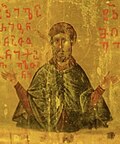 Hilarion the GeorgianVenerable · Georgian monk and wonderworkerNov 19
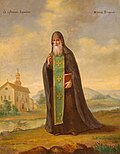 Barlaam of the Kyiv CavesVenerable · First Abbot of the Caves LavraNov 19
 Porphyrios the KavsokalyviteVenerable · Athonite hieromonkNov 19
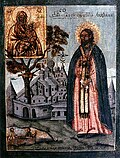 Adrian of PoshekhonyeVenerable Martyr · Abbot of the Dormition MonasteryNov 19
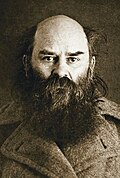 Joasaph UdalovHieromartyr · Bishop of ChistopolNov 19
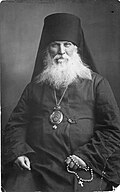 Porphyry GulevichHieromartyr · Bishop of SimferopolNov 19
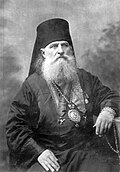 Alexis BelkovskyHieromartyr · Archbishop of Velikiy UstyugNov 19
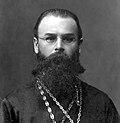 Macarius KarmazinHieromartyr · Bishop of YekaterinoslavNov 19
- Azes of IsauriaMartyrNov 19