Fool-for-Christ
John of Tula
Fool for Christ of Tula, born in 1773 and died in 1850; venerated as a local saint.
- Feast
- January 25old style February 7
- Reposed
- 185019th century
- Place
- Tula
- Order
- Fools-for-Christ
Life
Saint John of Tula (in the world Ivan Stepanovich Kotelnikov), a fool for Christ, was born on 23 September 1773 at Tula, into a merchant family, and fell asleep in January 1850. He is honoured as a local saint of the diocese of Tula, canonized in 1988. He is remembered on 25 January, the day of his repose (12 January on the old calendar), and on 3 August, in the synaxis of the saints of Tula.
Youth and foolishness for Christ
He was the son of the merchant Stepan Romanovich and Anna Dmitrievna Kotelnikov and was baptized in honour of the Apostle John the Theologian. The family belonged to the parish of the church of the Exaltation of the Cross. The Kotelnikov house stood on Posolskaya street (now Sovetskaya) and was demolished in the 1930s. John helped his father, who dealt in timber. On business he often came to Serpukhov, where he met the blessed Euphrosyne Kolyupanovskaya, who lived in ascetic labour near the Vladychny Vvedensky monastery. This acquaintance determined his later road. After his father's death, in 1791, John, aged seventeen, with the blessing of the blessed Euphrosyne, took up the labour of foolishness for Christ, left his parents' house and led a wandering life. Relatives tried to bring him back, by force, by locking him in the house, but each time he returned to the life he had chosen. He wore a short, torn, striped robe, went barefoot and lived on alms. Warm clothing and money received as gifts he gave to the needy. He spent his nights in prayer on the porch of the Dormition cathedral in the Tula kremlin or on the porch of the church of Saint Nicholas (Nikolo-Chasovenskaya).
Wonders
According to the sources of his life, John had the gift of foresight. One case from the hagiographical literature: a shepherd watching his flock saw John walk on the surface of the river Upa. The ascetic ordered the shepherd to keep it secret until his death. John visited the houses of townspeople, rebuked their hidden sins, consoled them in sorrows and foretold fires. So, before the great fire of 1834, he ran through the streets, waving his arms and blowing in every direction. In some houses he asked for water and sprinkled the walls. According to the townspeople, during the fire precisely those houses were left whole. On the eve of the fire he went to all the wooden cells of the Dormition monastery and closed the stove chimneys in each. In the fire that followed, the monastery was left whole, while all the buildings around it burned.
John visited houses where the heads of families were drunk, bringing the wives money and things. Once, in one such house, he found a woman with children in a dreadful state after a quarrel with her drunken husband. The ascetic asked for wine to be brought and poured it on the floor. After that the master of the house stopped drinking. John of Tula is honoured as patron of those who struggle with the sin of drunkenness. At the church of Nikolo-Chasovenskaya the Temperance Society of the city of Tula was founded.
Repose and veneration
John told his relatives the day of his death. In the last hours of his life the priest of the church of the Exaltation of the Cross, Vasily Ivanovich Glagolev, confessed and communed him. He died on 12 January 1850. The reports of his first burial differ: according to some he was buried at the All Saints cemetery, according to others on the porch of the church of Nikolo-Chasovenskaya, on the place of his night prayers. In 1935 the church of Saint Nicholas was closed and soon demolished, and the remains of the ascetic were moved by believers to the All Saints cemetery.
In 1988, at the thousandth anniversary of the baptism of Rus', John of Tula was numbered among the locally venerated saints of the diocese of Tula. His relics were found on 3 August 1990 and stood in the lower church of the All Saints cathedral. Since 2007 the shrine with the relics is in the Dormition cathedral at Tula, in the lower church of All the Saints of Tula. The left side chapel of the Pokrovsko-Feodosievsky church in Tula was consecrated in his name. Particles of the relics are kept in several churches of the Tula region, as well as in monasteries and churches of the Novosibirsk region, of Kazakhstan and of other places. In 2002 the Society of Orthodox Doctors named after John of Tula was founded at Tula. On icons he is shown in rags, barefoot, often with a staff in his hand, with an old man's face, hollow cheeks and a piercing gaze.
Commemorated the same day January 25
 Gregory the TheologianSaint · Archbishop of ConstantinopleJan 25
 Felicitas of RomeMartyrJan 25
 Vladimir of KyivHieromartyr · Metropolitan of Kyiv and HalychJan 25
- Castinus of ByzantiumSaint · Bishop of ByzantiumJan 25
 Peter ZverevHieromartyr · Archbishop of VoronezhJan 25
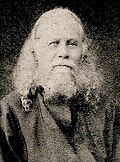 Anatoly of OptinaVenerable · Elder of OptinaJan 25
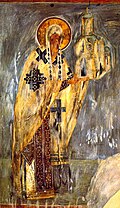 Moses of NovgorodSaint · Archbishop of Novgorod and PskovJan 25
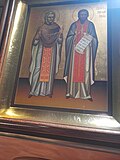 Constantine VeretskyHieromartyr · ArchpriestJan 25
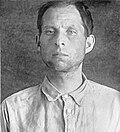 Andrew ArgunovMartyr · Chairman of the parish councilJan 25
- Bretanion of TomisSaint · Bishop of TomisJan 25
 Joasaph of BorovskHieromartyr · Archimandrite of the Trinity LavraJan 25
 Nicholas PopovHieromartyr · ArchpriestJan 25