Hieromartyr
John Prudentov
A hieromartyr of the Russian Church, who died in 1937.
- Feast
- September 12old style September 25
- Reposed
- 193720th century
- Order
- Martyrs
Life
Holy Hieromartyr John Prudentov, a priest, was born in 1868 in the village of Bolshie Dorki in the Vyazniki district, of an ancient priestly line reaching back to the time of the tsar Alexei Mikhailovich. His great-grandfather, grandfather, father and he himself graduated from the Seminary and the Academy of Vladimir. In the seminary they were also given the name Prudentov, from the Latin word meaning wise. His great-grandfather, Father Paul Prudentov, had been a teacher at the Vladimir Seminary. At the fire of 1855, as confessor of the Dormition convent, he ran to bring out of the burning church the relics of Saint Abraham, which he succeeded in doing at great danger, and his own house burned with all he had. Father Paul is a locally venerated saint in Vladimir.
Shepherd and teacher
Father John was truly a good shepherd, giving himself wholly to the Church and with a heart full of love for people, above all for children. At the church in Dorki, where he served, there was a school in which the priest himself taught most of the subjects. In 1902 he built lodging for the teacher and a dormitory for pupils from distant villages. When the school was closed in 1918, he went on teaching the children at home and often walked several kilometres to the villages of Pleshkovo and Kivernikovo, until the authorities stopped these lessons too. Gifted for music, he taught church singing himself. Together with his brother Basil he founded in the village a children's choir, reckoned the best in the Vyazniki district. He had eight children whom he loved beyond measure, but raised strictly. The old people today, who were then children of five to ten, remember him only as "the good father".
In the Prudentovs' house the villagers often gathered, and on feasts no invitation was needed: the priest's house was open to all. In his house or in the school he put up a Christmas tree, at which the whole village gathered, and the children sang and recited poems. Every Sunday he gathered the adult population for "Sunday talks", in which he told and explained what had happened in Russia that week. At the church a library considerable for a village had been gathered, for children and adults. One case led to an exchange of letters with Saint John of Kronstadt: the landowner Oboldeev had opened a tavern in the village, which brought him great income, and the peasants were tempted. The father went round the villages with preaching, persuading the communities to decide on closing the tavern. He denounced the landowner before the authorities, but the latter had influence with the governor of Vladimir. Then he wrote to Saint John of Kronstadt asking help in prayer and soon received from him a letter of comfort and a resolution of support from the chairman of the Council of Ministers, S. Yu. Witte. The letter of the pastor of Kronstadt was kept in the family as a treasure, in the corner with the icons, through all the Soviet years, until it was lost in the robbery of 1978. Priestly service and teaching he combined with the hard labour of a peasant, most of the farm work being on his shoulders. In the civil war he gave one of his two horses for the needs of the front. They did not want to take the horse from a village priest, but he insisted: "No, no, take it, you need it more than I." A spiritual friendship bound him to the holy hieromartyrs Paul Svetozarov and John Rozhdestvensky, who were martyred in 1922; a prayer book is kept that he received as a gift from Father Paul, with the inscription "For edification in prayer", which was with him in exile too.
Persecution
In the summer of 1920, in the neighbouring village of Pustosh, two Bolshevik agitators, going by bicycle from Palekh to Shuya, stopped at the well and began to speak to the women returning from the haymaking about the advantages of Soviet power. The quarrel grew hot, and the women killed one of them with pitchforks. The alarm bell was rung, and peasants came from the neighbouring villages with tools. The priest's son Alexander, hearing the bell, went to Pustosh too and persuaded the people not to kill the second Bolshevik and to let him go in peace. He set off quickly for Shuya, but returned with a punitive detachment. The Red soldiers shot a few unarmed people found by chance on the road. Alexander, recognized by his cap and pince-nez and because he was a priest's son, hid, then left for Moscow. The case did not remain without consequences for Father John: in 1930 they tried to charge him with taking part in the revolt in Pustosh, with incitement and anti-Soviet agitation, and with having rung the alarm bell.
On 20 October 1930 he was arrested. From the documents kept in the archive in Ivanovo it appears that he did not admit guilt of organizing the revolt, but the commission judged his influence over the population extremely dangerous. In the indictment words are quoted that are attributed to him: that in 1921, when church valuables were taken, he had called the faithful in church not to give them to Soviet power, and that in the church lodge he spoke of the hard life of the peasants, saying that Soviet power corrupts the people, above all the youth, and calling on the faithful not to listen to the godless. On 25 December 1930 the OGPU troika of Shuya sent him for three years of exile in the Northern Region, in Siberia, to the village of Kolomino in the Krivosheino district, Tomsk region. It is told that there they urged him to give up the priesthood, promising to send him home. He answered: "I serve my God as long as I live."
He returned home in the autumn of 1933, in his seventh decade, with his health broken and without means of livelihood. As early as 1929 the local council of the poor had decided on the closing of the churches and the stopping of services. Almost everything had been taken from the priest's house, and the farm buildings had been dismantled. The local authorities did not leave "the former servant of the cult" in peace, however: they sent him one after another notices for delivery of meat and farm produce to the state. Of the two old invalids, whose farm was two garden beds and a goat, it was demanded to deliver in three days rye, oats, potatoes, hay, wool, meat and money. For failure they were threatened with a new trial, and to Father John's petitions the answers were cynical.
Martyrdom
In 1937 he was arrested. Again interrogations, charges of counterrevolutionary agitation against the collective farms. Asked whether he admitted guilt, he answered: "I do not admit." The protocols, judged fabricated, put into his mouth that he admitted to having said that the collective farms made by force had led to the impoverishment of the peasants, that Soviet power persecutes religion, but that religion has existed, exists and will exist, and that they must fight together to the end. On the basis of them, on 22 September the troika of the UNKVD of the Ivanovo region sentenced him to death. The sentence was carried out on a waste ground in the village of Balino, near the city of Ivanovo (now the Balino cemetery), on 25 September 1937, at 11 pm. In the secret file the last photograph of Father John has been kept, taken a few hours before his death: a holy old man with white hair, a martyr and confessor.
The Church commemorates him on 25 September, the day of his death, in the new style, on 20 June in the Synaxis of the Saints of Ivanovo, and on the movable day of the synaxis of the new martyrs.
Commemorated the same day September 12
 AutonomusHieromartyr · Bishop in BithyniaSep 12
 EanswytheVenerable · Princess and abbess of KentSep 12
- George of ChkondidiSaint · Archbishop of ChkondidiSep 12
 Athanasius of VysotskVenerable · First abbot of Vysotsky MonasterySep 12
 Gregory of KydoniesHieromartyr · Metropolitan of KydoniesSep 12
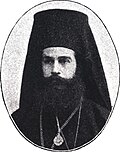 Ambrosios of MoschonisiaHieromartyr · Metropolitan of MoschonisiaSep 12
- Dositheus of TbilisiHieromartyr · Archbishop of TbilisiSep 12
- Felix and CyprianHoly Hieromartyrs · Bishops of AfricaSep 12
- Daniel of ThassosSaintSep 12
- Serapion of CataniaHieromartyrSep 12
- Vassian of TiksnaVenerableSep 12
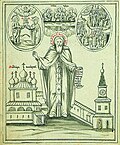 Athanasius the Younger of VysotskVenerable · Abbot of Vysotsky MonasterySep 12