Hieromartyr
Joseph of Damascus
Priest and educator
Orthodox priest and educator of Damascus, killed in 1860 and glorified as a saint in 1993.
Life
Saint Joseph of Damascus (1793-1860), hieromartyr, was a priest, preacher and teacher of the Patriarchal School of Damascus, killed with thousands of Christians in the massacre of 1860. The Church of Antioch glorified him among the saints in 1993. He is commemorated on 10 July.
Childhood and formation
The sources do not agree on his birthplace: one says he was born at Beirut on 15 May 1793, in the family of a Lebanese craftsman of Syrian descent, George Haddad, while another says he was born in Damascus, where his father had moved from Beirut and worked in a weaving workshop. The family was poor and devout. He learned Arabic well, and then Greek, but had to leave school after a few years because his parents could no longer support him. He worked in the workshop by day and studied at night, by himself. His elder brother, a learned man, inspired his love of books. He studied Holy Scripture, comparing at night the Old and New Testaments in Arabic with the Greek text, and learned Hebrew from a Jewish pupil.
His parents, fearing that he would die of exhaustion, as his brother Moses had, wished to marry him, and in 1812 he married Mariam, a girl of Damascus. The faithful wanted him as their pastor and asked Patriarch Seraphim to ordain him, and in 1817 the patriarch made him deacon and priest in the same week. Patriarch Methodius gave him the rank of grand economos of the al-Mariamiyeh cathedral.
Preacher and father of the poor
For years he preached at the cathedral in a remarkable way, drawing many to the faith, and his hearers called him the new Chrysostom. A Greek Catholic said of him that he was the most learned and best preacher among the Orthodox Arabs of his time. He took special care to comfort the poor, the sick and the suffering. In the cholera epidemic of 1848 he tended the sick without fear, although one of his children, Mhanna, died of cholera. He tried to remove customs that did not come from Christian tradition, especially pagan ones tied to betrothal, marriage and burial. In 1845 he restored the church of Saint Nicholas near the cathedral, which burned in 1860.
From 1836 to 1860 he directed the Patriarchal School of Damascus, which under him became the leading Orthodox institution of higher learning in the Middle East. Many of his pupils became bishops and archpriests in Syria, Turkey, Lebanon, the United States and Brazil, among them Raphael Hawaweeny of Brooklyn, the first Orthodox bishop consecrated on American soil.
Martyrdom
He was killed on 10 July 1860, in the Damascus massacre, when crowds of Druze and Muslims, led by Druze feudal lords, destroyed part of the old city and killed more than eleven thousand Orthodox and Greek Catholic Christians who were sheltering in the churches and monasteries of the Bab Tuma quarter. The Church of Antioch glorified him as a saint in 1993.
Commemorated the same day July 10
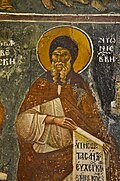 Anthony of the CavesVenerable · Founder of the Kiev Caves LavraJul 10
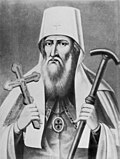 Anthony of TobolskSaint · Metropolitan of Tobolsk and SiberiaJul 10
- ApolloniusMartyrJul 10
 George of ThessalonikiSaintJul 10
- Martyrs of Nitria and ScetisHoly MartyrsJul 10
 The 45 Martyrs of Nicopolis in ArmeniaHoly MartyrsJul 10
 Alexander the SoldierMartyrJul 10
- Alexander of NicopolisMartyrJul 10
- Alexander PopovHieromartyrJul 10
 Amalberga of MaubeugeVenerableJul 10
 Amalberga of TemseVenerableJul 10
- AmaliaSaintJul 10