Holy Martyrs
Martyrs of Nitria and Scetis
Thousands of desert monks of Nitria and Scetis, accused of Origenism and tortured around 398 under Patriarch Theophilus.
Life
The Martyrs of Nitria and Scetis were, according to tradition, ten thousand inhabitants of the deserts of Nitria and Scetis in Egypt, accused of Origenism and tormented around 398 in the time of Patriarch Theophilus of Alexandria. It is held that the real cause of their killing was that they had given refuge to the priest Isidore. The Orthodox Church sets a common commemoration of these saints on 10 July by the old calendar, as of the venerable desert dwellers of Egypt slain by fire and smoke, and on the day of the feast in honour of the Synaxis of All the Saints who shone forth in the land of Egypt.
From the Life of Saint John Chrysostom it is known that about ten thousand monks were burned alive in the caves of Nitria by order of Bishop Theophilus of Alexandria. This arose from the conflict between Theophilus, on the one hand, and his former confidant, the priest Isidore, and the Tall Brothers, Ammonius, Bishop Dioscorus of Hermopolis, Eusebius and Euthymius, on the other. Failing to seize Isidore and the brothers, who had hidden in a deep ditch, Theophilus ordered the soldiers to smoke all the monks out of their cave cells. The Serbian source says that the soldiers, plied with wine, went about the monasteries, caves and huts and cut down with the sword all the ascetic monks they found, while many suffocated in the smoke. The Serbian source names the priest Isidore as Isidore of Pelusium, who was on the side of Saint John Chrysostom.
Saint John Chrysostom tried to defend the hermits, falsely accused of holding the teaching of Origen. The memory of the slain monks is found in the Synaxarion of the Church of Constantinople (end of the tenth century). A Praise of the monk Euthymius (commemorated in the Byzantine synaxarion on 19 September) has been preserved, probably written by Saint John Chrysostom (BHG no. 1192) and devoted to the events on Mount Nitria.
Commemorated the same day July 10
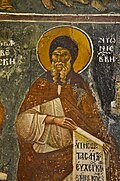 Anthony of the CavesVenerable · Founder of the Kiev Caves LavraJul 10
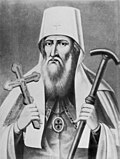 Anthony of TobolskSaint · Metropolitan of Tobolsk and SiberiaJul 10
- ApolloniusMartyrJul 10
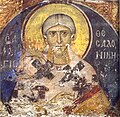 George of ThessalonikiSaintJul 10
- Joseph of DamascusHieromartyr · Priest and educatorJul 10
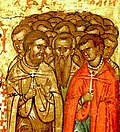 The 45 Martyrs of Nicopolis in ArmeniaHoly MartyrsJul 10
 Alexander the SoldierMartyrJul 10
- Alexander of NicopolisMartyrJul 10
- Alexander PopovHieromartyrJul 10
 Amalberga of MaubeugeVenerableJul 10
 Amalberga of TemseVenerableJul 10
- AmaliaSaintJul 10