Venerable
Julius the Myrmidonian
A venerable father, commemorated in the Orthodox calendar; little is known of his life.
- Feast
- June 21old style July 4
- Era
- 5th century
- Order
- Venerables
Life
Holy Venerable Julius the Myrmidonian was a priest and, together with his brother, the deacon Julian, raised a hundred churches in the first half of the fifth century. The Church commemorates him on 4 July (new style).
The two brothers, natives of Myrmidonia, were ordained for their virtuous life, Julius a presbyter and Julian a deacon. Moved by zeal for spreading the faith, Julius received, with his brother, permission to build churches and went to preach in the far regions of the East and West of the Roman Empire, where pagan shrines and sacrifices to idols still existed. They brought many pagans to Christianity, persuading them not only by word but by miracles. At Constantinople they asked the pious Emperor Theodosius the Younger (408-450) to have churches raised in place of the shrines. With the patriarch's blessing and the emperor's consent they built many churches, in which the people considered it their duty to help.
An incident is told of them that some passers-by, fearing to be called to work, pretended to be carrying a dead man, and Saint Julius asked them whether they were not lying. They stood their ground, and his brother Julian told them: "Let it be to you according to your word." Going on, they saw that the one who had pretended to be dead had really died. Foreseeing his approaching death, Julius sought a place for the hundredth church, which he considered the last. On lake Mukoros he saw a beautiful island, uninhabited because of snakes. He prayed and reached the island as in a boat, on his mantle, planted a cross and, in the name of God, commanded all the snakes to leave the island. They swam across the lake and settled on Mount Kamunkin. There he laid the foundation of a church dedicated to the Holy Twelve Apostles.
Meanwhile Julian finished a church near the city of Gavdian and resolved to make a tomb beside it for his brother. Julius visited him and urged him to hurry the work, foretelling that he himself would be laid in the tomb. Indeed the deacon Julian soon died and was buried in his own tomb. Julius buried him with honour and returned to the island, where he soon passed to the Lord and was buried in the church he had raised. From his grave many sick received healing.
Commemorated the same day June 21
 Nicholas IIPassion-Bearer · Emperor of RussiaJun 21
 Julian of TarsusMartyrJun 21
 Luarsab II of KartliMartyr · King of KartliJun 21
 Anastasia of SerbiaVenerable · Wife of Stefan NemanjaJun 21
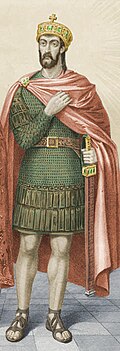 Archil of KakhetiMartyr · Georgian prince of KakhetiJun 21
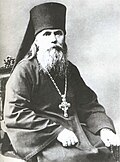 George LavrovConfessor · Archimandrite of Danilov MonasteryJun 21
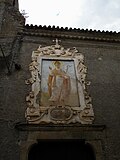 Julian of OrtaSaint · DeaconJun 21
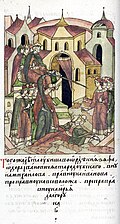 Fyodor IvanovichRight-Believing · Prince of StarodubJun 21
- Alexander IvanovskyHieromartyr · PriestJun 21
- Vasil DimitrovSaintJun 21
- Abraham of PinegaVenerable · Venerable of PinegaJun 21
- AgofredusVenerableJun 21