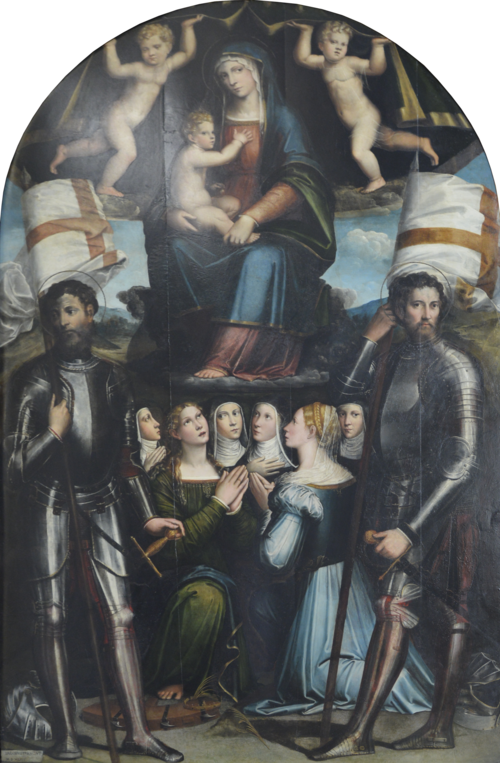
Martyr
Justina of Antioch
Virgin of Antioch who resisted the spells of the magician Cyprian and died a martyr with him in 304.
Life
Saint Justina of Antioch, martyr, was a Christian virgin who overcame by prayer and fasting the spells of the magician Cyprian, brought him to the faith and received the crown of martyrdom with him at Nicomedia in the year 304. The Church commemorates them both on 2 October.
Her life according to tradition
According to the hagiographic sources, Justina was born in Antioch, the daughter of a pagan priest. At eighteen she happened to hear the preaching of a Christian deacon, wished to learn more about the faith and began to attend church. She received baptism and persuaded her parents to do the same. A rich young pagan, Aglaides, asked for her hand, but she refused him, although he persisted. Aglaides turned to the famous magician Cyprian, asking him to bewitch her and promising a rich reward.
Cyprian sent evil spirits upon her, but all his spells were in vain: Justina scattered them by prayer and fasting, and by a Sign of Christ they were conquered. When the city was struck by an epidemic, the crowd believed that Cyprian was taking revenge on the city for Justina's resistance. The frightened people begged her to marry Aglaides, but she calmed them and, trusting in God, promised that the sickness would cease. After her prayer the plague stopped.
Cyprian, brought to despair, made the Sign of the Cross himself and was freed from the toils of the devil. He burned his books of sorcery before Bishop Anthimus, was baptized and received the gift of miracles. He rose through the ranks of the clergy as deacon, priest and bishop, successor to Anthimus, while Justina became abbess of a convent.
Martyrdom
In the time of Diocletian's persecution they were accused of turning the people away from paganism. The governor, Eutolmius, ordered them arrested and sent to Nicomedia, where the emperor was. According to some sources they were first tortured at Damascus. Diocletian ordered them put to death. They were beheaded on the bank of the river Gallus, a tributary of the Sangarius, together with a man named Theoctistus, who declared himself a Christian on seeing Cyprian's faith.
The bodies lay unburied for several days, then were taken by Christian sailors to Rome, where they were buried on the estate of a woman named Rufina. In the year 1001 the relics of Cyprian and Justina were solemnly translated to Piacenza.
Tradition and veneration
The story spread as early as the fourth century and is mentioned by Saint Gregory of Nazianzus and by Prudentius, who both, however, confuse Cyprian with Saint Cyprian of Carthage, a mistake often repeated. It was also retold by Empress Aelia Eudocia in a poem. In the West the story passed into literature, as in Calderón's play, The Wonder-Working Magician. The Roman Catholic Church removed their feast from its calendar in 1969, while the Orthodox Church commemorates them together on 2 October.
Commemorated the same day October 2
 Theodore UshakovRight-Believing · Admiral of the Russian FleetOct 2
 Leodegar of AutunHieromartyr · Bishop of AutunOct 2
 Andrew the Fool for ChristFool-for-Christ · of ConstantinopleOct 2
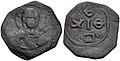 Theodore GabrasNew Martyr · Byzantine governor in PontusOct 2
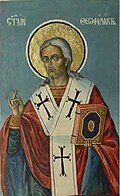 Theophylact of NicomediaSaint · Bishop of NicomediaOct 2
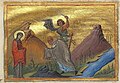 Cyprian of AntiochHieromartyr · Bishop and former sorcererOct 2
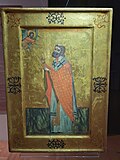 Pajsije of PećSaint · Patriarch of PećOct 2
 David and ConstantineHoly MartyrsOct 2
- George of PhiladelphiaSaint · Saint of Philadelphia in Asia MinorOct 2
- AlexandraVenerable · Venerable of EgyptOct 2
- Alexandra BulgakovaMartyrOct 2
 BeregisusVenerableOct 2