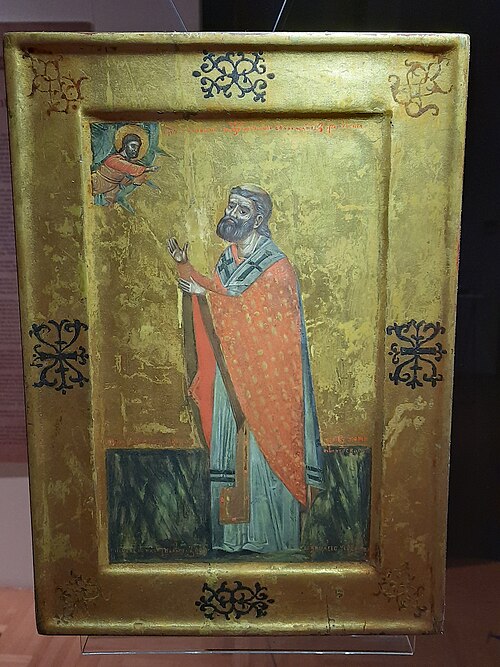
Saint
Pajsije of Peć
Patriarch of Peć
Patriarch of the Serbian Patriarchate of Peć from 1614 to 1647, also a writer, poet, composer and diplomat.
Life
Saint Pajsije I, also called Pajsije of Janjevo, was Archbishop of Peć and Patriarch of the Serbs from 1614 to 1647, one of the longest tenures in the history of the Patriarchate of Peć. A scholar, writer, hymnographer and wise diplomat, he strengthened the Serbian Church under Ottoman rule, renewed monasteries and churches, rescued old manuscripts and defended Orthodoxy in dialogue with Rome. The Serbian Orthodox Church numbered him among the saints in 2017.
Origins and youth
He was born around 1542 in the town of Janjevo in Kosovo, then in the Ottoman Empire, the son of the Serbian priest Dimitrije. He studied at the school maintained by the wealthy merchants of his native town and then at the nearby monastery of Gračanica. He was a disciple and servant of Patriarch Jovan Kantul. From his youth he showed himself a great lover of books and a cultured man who cared for the manuscripts scattered among the monasteries.
Metropolitan and patriarch
In 1612 he was elected Metropolitan of Novo Brdo and Lipljan, with his seat at Gračanica, and was consecrated on 15 July 1612 by Patriarch Jovan and the metropolitans of the synod. A document survives that he signed “humble Pajsije, Metropolitan of Novo Brdo”.
In 1614 Patriarch Jovan was summoned to Constantinople to answer the charge of having collaborated with the pope and the Western rulers gathered in the Christian league against the Turks. On leaving he appointed Pajsije locum tenens. Judging that the patriarch would not return, the Serbian bishops elected Pajsije patriarch at a council held at Gračanica on 4 October 1614. A few days later Patriarch Jovan was hanged in Constantinople.
The pastor
Pajsije's accession marked a turning point. His predecessor's bold policy had ended tragically, and the new patriarch understood that open rebellion could not set things right. He chose a path of prudence towards both the Turks and Rome and devoted himself wholly to ordering the inner life of the Church, strengthening the spirit of the people through constant services and through writing. He lived under four sultans (Ahmed I, Mustafa I, Osman II and Murad IV), adapting to each.
He tirelessly visited his dioceses, especially those in the border regions and beyond the frontiers of the Empire. In 1620 he visited the half-ruined Monastery of Žiča, began its repair and took its Tetraevangelion with him to keep it safe until the monastery was restored. In 1623 he was at the Monastery of Ubožac, in 1626 at Bečkerek (today Zrenjanin), in 1627 in Srem, and in 1629 at Timișoara and at the monasteries of Privina Glava and Gornjak, where he signed a book on 29 December 1629. From Privina Glava he took a Horologion, which he bound and returned in 1630. On 7 October 1632, with Metropolitan Avesalom of Belgrade, he venerated the relics of Saint Stefan Štiljanović at the Monastery of Šišatovac, and on 30 August 1632 he visited the Monastery of Vojlovica.
He also cared for the Orthodox Serbs in the Habsburg Monarchy: in 1631, with Metropolitan Jeftimije, he visited the eparchy of Marča, whose bishop was Maxim Predojević, as the commander of Slavonia reported to the War Council in Graz. In 1635 he stayed at Dečani, where he settled more permanently from 1641; in 1641 he was at Ravanica and in 1642 at Prizren.
Builder and scholar
Under his leadership came an unexpected surge of church building and decoration. Throughout his patriarchate he paid for the work of iconostasis carvers and icon painters. The church of Saint Demetrius at Peć was repaired, roofed with lead and partly adorned with new frescoes, and the roof of Gračanica was renewed. In 1614 monks from Hilandar painted the church of the Monastery of Morača, and Serbian nobles rebuilt the Monastery of Dobrilovina. Western diplomats travelling through the Balkans testified that the Patriarchate of Peć was well organised.
Pajsije was a great lover and collector of books. He searched for, copied, bound and restored old manuscripts, placing them in safer monasteries or returning them to their owners. In a book he always carried with him he noted in 1647 the name of Dorotej and the city of Niš, a witness to his care for that region, where churches and monasteries were restored and books copied.
Writings
Under him Serbian literature and theology flourished greatly, and hagiography was revived. He wrote the “Life of Tsar Uroš”, the last ruler of the Nemanjić line, whom he also canonised, and his service, with troparion, kontakion and stichera arranged according to the typikon. In the life of Uroš he sought to link this ruler to the unbroken thread of Serbian history from the Nemanjići to his own day, confessing that he wished to learn whence the Serbs came and for what purpose. He also wrote the service and the Prologue life of Saint Simeon (Stefan the First-Crowned) and a life of the despot Stefan Štiljanović.
Between East and West
Pajsije sought support in Moscow, from where the Serbian Church had long received service books and aid. His name appears in Russian documents from 1622, in the time of Patriarch Philaret and Tsar Michael. In 1641, at the request of Metropolitan Simeon of Skopje, Tsar Michael issued a charter allowing the patriarch's envoys to come to Moscow for alms every seven or eight years. In 1643 an archimandrite from Peć who came to the Russian border wrote that the patriarch, nearly a hundred years old, was “in bondage in the Turkish land, in chains” and had fallen into great debt because of the taxes. In 1641 he had been forced to go to Constantinople to seek protection against the local Ottoman officials.
With Rome he engaged in theological debate with Popes Gregory XV and Urban VIII, above all on the procession of the Holy Spirit. Rome was then trying to bring the Serbs into union, and in 1640 the Congregation for the Propagation of the Faith sought to win over Metropolitan Mardarije of Montenegro and Patriarch Pajsije. In 1642 the papal envoy Francesco Leonardi came to Peć. Pajsije, with two bishops, discussed matters with him and firmly opposed the Filioque. In a synodal letter sent to Rome he declared that he would be ready to recognise a primacy of honour for the pope only if the pope renounced the Filioque, unleavened bread and the other new teachings. His prudent policy aimed to preserve his people's interests between East and West.
His end
Despite his very great age, in 1646 he went on pilgrimage to Jerusalem, returning the following year. In the village of Budosavci he was gored by a bull and died a few days later, on 2 November 1647, at Peć. He was buried in the Patriarchal Monastery of Peć. His successor, Patriarch Gavrilo I, would die a martyr in Turkish captivity at Bursa in 1659.
Veneration
Since 2017 the Serbian Orthodox Church has honoured him as a saint, with his feast on 3 October (16 October in the New Style).
Commemorated the same day October 2
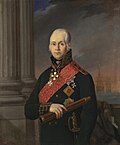 Theodore UshakovRight-Believing · Admiral of the Russian FleetOct 2
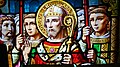 Leodegar of AutunHieromartyr · Bishop of AutunOct 2
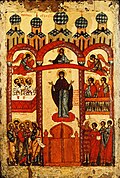 Andrew the Fool for ChristFool-for-Christ · of ConstantinopleOct 2
 Theodore GabrasNew Martyr · Byzantine governor in PontusOct 2
 Theophylact of NicomediaSaint · Bishop of NicomediaOct 2
 Cyprian of AntiochHieromartyr · Bishop and former sorcererOct 2
 Justina of AntiochMartyrOct 2
 David and ConstantineHoly MartyrsOct 2
- George of PhiladelphiaSaint · Saint of Philadelphia in Asia MinorOct 2
- AlexandraVenerable · Venerable of EgyptOct 2
- Alexandra BulgakovaMartyrOct 2
 BeregisusVenerableOct 2