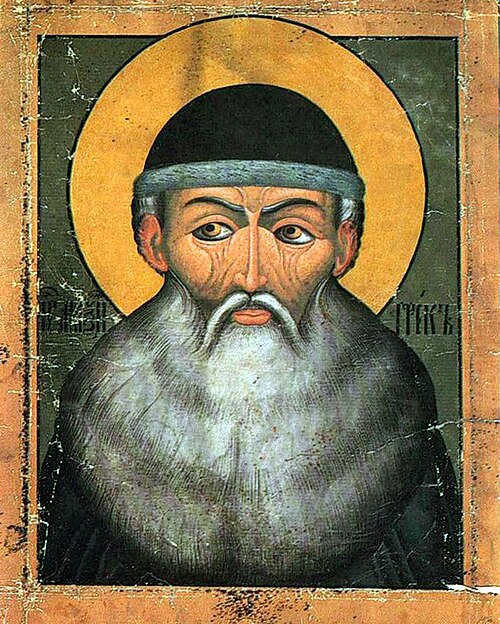
Venerable
Maximus the Greek
Monk and scholar in Russia
Greek monk from Mount Athos, writer and translator in Russia, who died at the Trinity Lavra of St. Sergius.
- Feast
- January 21old style February 3
- Reposed
- 155616th century
- Place
- Trinity Lavra of St. Sergius
- Order
- Venerables
Life
Venerable Maximus the Greek was a Greek monk and scholar from the Holy Mountain, called to Russia to translate and correct the church books. He remained there until his death, after enduring nearly three decades of condemnation and imprisonment, and he is honoured as a confessor and teacher of the Russian Church.
Years of learning
He was born around 1470 at Arta in Epirus, with the name Michael Trivolis, into a Greek family of good standing. He studied for many years in Italy, in Florence and Venice, where he came to know the scholars of the age and worked on editions of Greek writings. In Florence he heard the sermons of Savonarola and spent some time in a Latin monastery.
Seeking the fullness of truth, he returned to the faith of his fathers and entered the Vatopedi Monastery on the Holy Mountain as a monk, receiving the name Maximus.
Work in Russia
In 1518, at the request of Grand Prince Vasily III, he was sent to Moscow to translate Greek books. He translated the Psalter with commentaries and other writings and corrected the errors in the service books. He wrote many spiritual and teaching works, rebuking superstition, the love of wealth in some monasteries, and the injustices of the time.
As a foreigner who rebuked without fear, he made many enemies. In 1525 and 1531 he was condemned by councils in Moscow and imprisoned, first at the Joseph-Volokolamsk Monastery and then at Tver. According to tradition, while in prison he wrote a canon to the Holy Spirit in charcoal on the wall of his cell. Although the Eastern patriarchs asked that he be allowed to return to Athos, permission was never given.
Final years and veneration
Toward the end of his life he was moved to the Holy Trinity Lavra of Saint Sergius, where he could once more write and pray in peace. He reposed on 21 January 1556 and was buried in the Lavra.
The Russian Orthodox Church numbered him among the saints in 1988, and in 1996 his relics were uncovered. He is commemorated on 21 January, and the uncovering of his relics is remembered on 21 June.
Commemorated the same day January 21
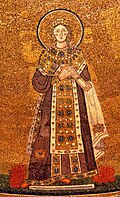 Agnes of RomeMartyr · of RomeJan 21
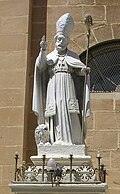 Publius of MaltaHieromartyr · Bishop of Malta and AthensJan 21
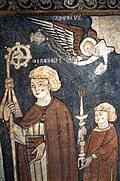 Fructuosus of TarragonaHieromartyr · Bishop of TarragonaJan 21
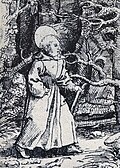 Meinrad of EinsiedelnVenerable Martyr · Hermit of EinsiedelnJan 21
 Neophytos of NicaeaMartyr · Martyr of NicaeaJan 21
 Patroclus of TroyesMartyr · Martyr of TroyesJan 21
 Eugenius of TrebizondMartyrJan 21
 Callistratus of GeorgiaSaint · Catholicos-Patriarch of GeorgiaJan 21
 Publius of AthensHieromartyr · Bishop of AthensJan 21
 Zosimus of SyracuseSaint · Bishop of SyracuseJan 21
- Anastasius the ApocrisiariusVenerable · Disciple of Saint MaximusJan 21
- Apollonios the AnchoriteVenerable MartyrJan 21