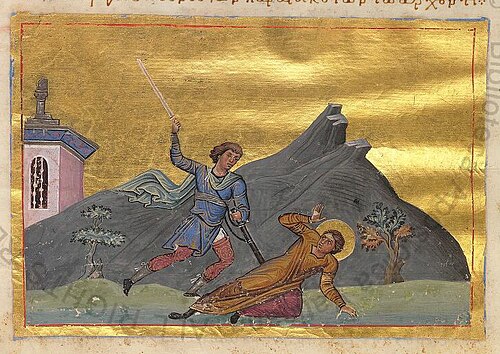
Martyr
Neophytos of Nicaea
Martyr of Nicaea
Born at Nicaea to Christian parents, he openly denounced paganism and was killed by soldiers in 303.
- Feast
- January 21old style February 3
- Reposed
- 3104th century
- Place
- İznik
- Order
- Martyrs
Life
Saint Neophytos the Martyr of Nicaea was a young man of Bithynia who confessed faith in Christ during the great persecution of Diocletian, around the year 303. The Church remembers him on 20 or 21 January, and the Greek and Russian tradition honours him as a wonder-working child who became a martyr at fifteen.
He was born in Nicaea in Bithynia to God-fearing Christian parents named Theodulus (in some sources Theodore) and Florentia. According to his life, from the age of ten he worked wonders, drawing water from the stones of the city wall with a touch of his hand and quenching the thirst of those who were parched. The same life says that one day a dove came into his house and showed him his calling, guiding him to a lion's cave on Mount Olympus.
He lived in the cave until he was fifteen, coming down to his native city only once, to bury his parents and give his goods to the poor. When Diocletian's persecution broke out, Neophytos came to Nicaea of his own will and began to denounce the pagan faith.
The angry persecutors hung him from a tree, beat him with oxhide thongs and scraped his body with iron. Then they threw him into a blazing furnace, but after three days and three nights Neophytos was unharmed and still would not abandon his faith. At last they killed him by driving a spear into his chest. The Latin sources say only that he was killed by Roman soldiers in the year 303.
A basilica was built in his honour in 390 on the lakeshore where he had been killed. An earthquake later sank it beneath the waters of Lake Iznik (Nicaea), and in 2014 the submerged Byzantine basilica, believed to have been dedicated to him, was discovered. He is remembered on 20 January in the Latin Church, on 21 January in the Greek Church and on 29 January in the Armenian Church.
Commemorated the same day January 21
 Agnes of RomeMartyr · of RomeJan 21
 Maximus the GreekVenerable · Monk and scholar in RussiaJan 21
 Publius of MaltaHieromartyr · Bishop of Malta and AthensJan 21
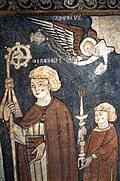 Fructuosus of TarragonaHieromartyr · Bishop of TarragonaJan 21
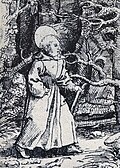 Meinrad of EinsiedelnVenerable Martyr · Hermit of EinsiedelnJan 21
 Patroclus of TroyesMartyr · Martyr of TroyesJan 21
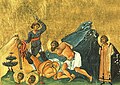 Eugenius of TrebizondMartyrJan 21
 Callistratus of GeorgiaSaint · Catholicos-Patriarch of GeorgiaJan 21
 Publius of AthensHieromartyr · Bishop of AthensJan 21
 Zosimus of SyracuseSaint · Bishop of SyracuseJan 21
- Anastasius the ApocrisiariusVenerable · Disciple of Saint MaximusJan 21
- Apollonios the AnchoriteVenerable MartyrJan 21