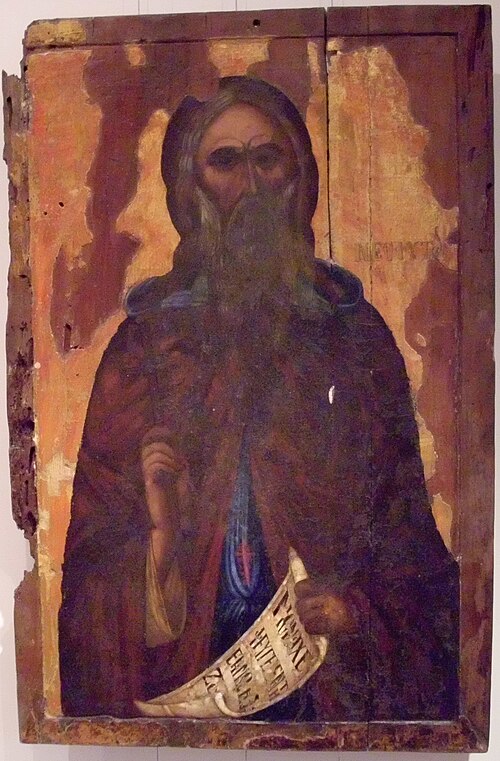
Venerable
Neophytos the Recluse
Monk and priest of Cyprus
Cypriot monk and priest known as the Recluse, whose writings preserved the history of the early crusades.
- Feast
- January 24old style February 6
- Reposed
- 121413th century
- Place
- Kato Drys
- Order
- Venerables
Life
Saint Neophytos the Recluse was a Cypriot monk, priest, hermit and writer, from 1134 to 1214, or 1219 according to other sources. His writings preserved a history of the early crusades and make him one of the most notable Byzantine writers. The Orthodox Church remembers him on 24 January, 12 April and 28 September.
He was born in the mountain village of Kato Drys near Lefkara, to farming parents, Athanasios and Eudoxia, one of eight children. His parents arranged a marriage for him, and he fled at seventeen to the monastery of Saint John Chrysostom at Koutsovendis. After much ado the marriage contract was broken, and Neophytos was received into the monastery as a novice. In 1152 he was tonsured a monk. In the monastery he learned to read and write and was made assistant sacristan. He wished to be a hermit, but the abbot would not let him, because of his youth. In 1158 he was allowed a pilgrimage to the Holy Land, where he sought hermits to take him in, without success. He returned to Cyprus and tried to go to Mount Latmos in Asia Minor, but was arrested at Paphos and imprisoned. He was soon released, but the guards had stolen his travel money.
In June 1159 he went to the hills above Paphos, where he found a cave used by an earlier hermit. He enlarged it into three caves, known today as the Cell, the Bema and the Naos. After a time people learned of him and began bringing food and gifts, and after some years he was regarded as a saint. In 1170 Bishop Basil Kinnamos ordained him a priest and told him to take a disciple. So the monastery that bears his name began. He wrote its first rule in 1187. He spent the rest of his life in prayer, reading and writing, and between 1197 and 1199 he carved out of the rock the church of the Holy Cross, called the New Zion, and was its abbot.
Though he learned to read only after the age of eighteen, he is regarded as the most prolific writer of Cyprus in the middle Byzantine period. He wrote On the Calamities of Cyprus (in 1196 according to some sources, 1191 according to others), a discourse on the Hexaemeron, a Pentecostarion, ten discourses on the commandments of Christ and a Testament. His chronicle is one of the few Greek sources on the Third Crusade in Cyprus and on the pursuit of the Byzantine ruler Isaac Komnenos by King Richard the Lionheart. Neophytos takes a critical stance toward the crusaders, and the chronicle is anti-Latin.
Commemorated the same day January 24
 Xenia of St. PetersburgFool-for-Christ · Patron of St. PetersburgJan 24
 Xenia of RomeVenerableJan 24
 Cadoc of LlancarfanVenerable · Abbot of LlancarfanJan 24
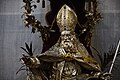 Felician of FolignoHieromartyr · Bishop of FolignoJan 24
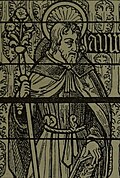 Savinianus of TroyesMartyr · Martyr of TroyesJan 24
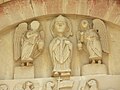 Exuperantius of CingoliSaint · Bishop of CingoliJan 24
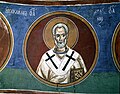 Macedonius the Barley-EaterVenerable · Hermit of SyriaJan 24
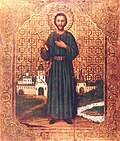 John of KazanMartyr · Martyr of KazanJan 24
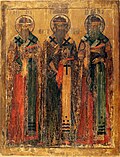 Gerasim of PermSaint · Bishop of PermJan 24
- Babylas of SicilyHieromartyr · Hermit in SicilyJan 24
- Alexander TelemakovHieromartyr · PriestJan 24
- Demetrius of TsilibinoVenerable · Founder of a hermitageJan 24